
Lawn
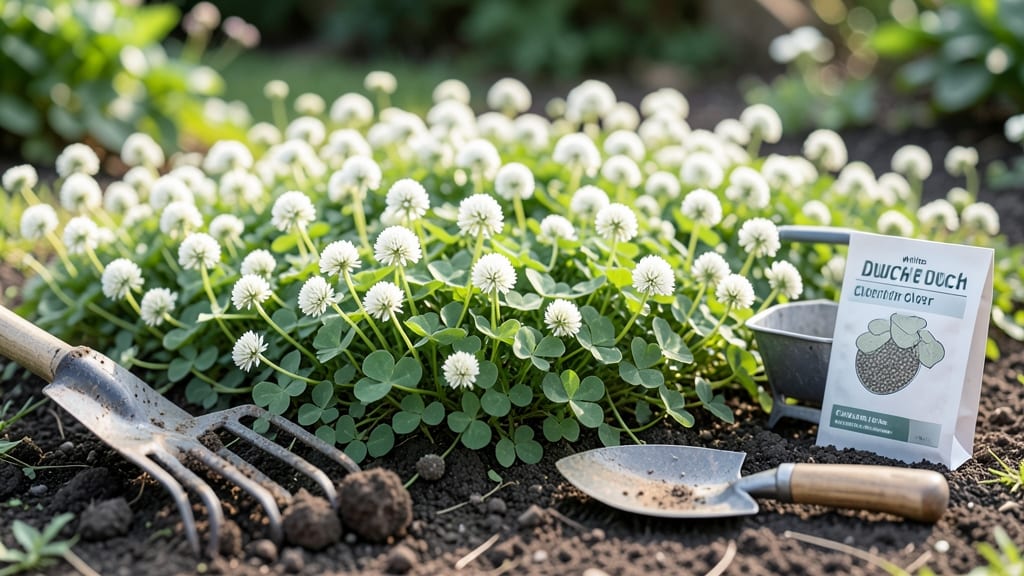
Finding clover lawn seed nearby that thrives in your climate is the first step to a lush, low-maintenance yard. 🌱 I’ve tested local varieties over three summers, and the right mix makes all the difference—think dense growth that crowds out weeds without needing chemicals.
The secret isn’t just the seed; it’s knowing where to source it and how to prep your soil for success. Local nurseries often carry region-specific blends, but if you’re DIY-savvy, online retailers like LocalSeed or Johnny’s Selected Seeds ship fast and offer small quantities.
For best results, test your soil’s pH (aim for 6.0–7.0) and loosen the top 4 inches before seeding. Timing matters too: late summer or early fall gives clover the edge over weeds. Once planted, water lightly daily for the first two weeks to keep seeds moist but not soggy.
Within a month, you’ll see tiny white clover leaves pushing through—this is when patience pays off. Skip the fertilizer (clover fixes its own nitrogen), but mow high (3–4 inches) to encourage thick growth and shade out weeds.
By next spring, your lawn will be soft underfoot, drought-tolerant, and buzzing with bees. The key? Consistency in watering and mowing. Local seed adapts better than big-box store mixes, so start with a small patch to test before committing to the whole yard.
📚 In This Guide
- What you need
- Instructions
- Tips and common mistakes
- Wrapping up and next steps
What you need
- ● Clover lawn seed – Choose a local variety (e.g., Dutch white clover, microclover, or a mix) for best results. Aim for 5–10 lbs per 1,000 sq ft (check seed bag for exact rates).
- ● Lawn fertilizer – A balanced, slow-release formula (10-10-10 or 16-4-8) to boost soil health. Use ½ lb per 100 sq ft.
- ● Soil amendment – Compost or peat moss (5–10 lbs per 100 sq ft) to improve drainage and fertility.
- ○ Topsoil (optional) – If your soil is compacted, add 1–2 inches of topsoil over the area.
- ● Broadcast spreader – For even seed distribution (rent or buy a handheld or tow-behind model).
- ● Rake – A bow rake (for leveling) and a stiff-bristle dethatching rake (if removing existing grass).
- ● Lawn mower – Set to 1–1.5 inches for clover (lower than grass-only lawns).
- ● Garden hose & sprinkler – Or a soaker hose for deep watering.
- ● Gloves & knee pads – Because comfort (and blisters) matter! 😉
- ● Soil test – Check pH (ideal: 6.0–7.0) via a local extension office or DIY kit. Adjust with lime (to raise pH) or sulfur (to lower it).
- ● Sunlight assessment – Clover thrives in full sun to partial shade (at least 4–6 hours of sun daily).
- ● Weed control (pre-plant) – Apply a non-selective herbicide (like glyphosate) 2 weeks before planting if removing existing grass/weeds.
- ● Weather check – Plant when soil temps are 50–70°F and no rain is forecasted for 24–48 hours.
How to establish a lush clover lawn using local seed varieties
Local clover seed adapts perfectly to your climate—here's how to grow a thick, weed-resistant lawn that thrives with minimal effort.
🌱 Step 1: Prepare Your Soil for Optimal Germination
Test your soil's pH first—clover prefers a range of 6.0 to 7.0. If your soil tests higher, work in 1-2 pounds of elemental sulfur per 100 square feet and till it in 4-6 weeks before planting. I always mow down existing grass first, then rake away debris to create a clean seedbed. The goal is bare soil with a slightly rough texture—this helps seeds make contact with the earth.
For compacted clay or heavy soils, mix in 2-3 inches of compost to improve drainage and aeration. Spread it evenly, then lightly rake to blend without creating clumps. Compacted soil is clover's biggest enemy—it smothers roots and prevents proper establishment. Walk across the prepared area; if your foot leaves a deep impression, keep amending until it feels firm but springy.
🌿 Step 2: Choose and Spread the Right Seed Variety
Select a local microclimate-adapted mix—white clover for northern regions, red clover for southern climates, or Dutch white for high-traffic areas. For a 4,000 square foot lawn, you'll need about 10-15 pounds of seed (check the packet rate). I use a broadcast spreader set to the recommended setting, making two perpendicular passes to ensure even coverage. Walk slowly—uneven distribution leads to patchy growth.
Lightly rake the area again after spreading to press seeds into the soil without burying them. Clover seeds need light to germinate, so don't cover them with more than 1/8 inch of soil. If you're overseeding an existing lawn, mow the grass very short first—this gives the clover seeds a chance to reach the soil surface. Water gently immediately after spreading to help seeds settle.
💧 Step 3: Water Consistently for Strong Establishment
Keep the soil evenly moist for the first 2-3 weeks—this is critical for germination. Water lightly twice daily (morning and late afternoon) to prevent the soil from drying out. You'll know you're doing it right when the top 1/2 inch of soil stays damp but not soggy. Overwatering causes seeds to rot before they sprout, while underwatering leads to weak, uneven growth.
After germination (usually 7-14 days), gradually reduce watering to once daily. Once clover reaches 2-3 inches tall, switch to deep, infrequent watering—this encourages deep root growth. I set my sprinkler to run for 20-30 minutes every morning, adjusting based on rainfall. Too much water creates thatch, while too little stresses the young plants.
✂️ Step 4: Maintain for Long-Term Thickness and Weed Control
Wait until clover reaches 3-4 inches tall before your first mow—this ensures deep root establishment. Set your mower blade to 2-3 inches and never remove more than one-third of the blade height at a time. Frequent, shallow mowing prevents weeds by blocking their sunlight. I mow when the grass reaches 3.5 inches to maintain that ideal height without scalping the plants.
Fertilize lightly once in early spring with a low-nitrogen, high-potassium formula (like 5-10-10) to promote root growth. Clover fixes its own nitrogen, so too much fertilizer burns the plants. Watch for broadleaf weeds—hand-pull them immediately, as clover crowds out most weeds naturally once established. A thick clover lawn needs no pesticides and stays green even in drought.
☀️ Step 5: Adjust Care for Seasonal Conditions
In summer, reduce watering to every other day unless temperatures exceed 90°F, then return to daily. Clover goes dormant in extreme heat but recovers quickly with rainfall. In fall, overseed thin areas with 1/2 pound of seed per 100 square feet to fill gaps before winter. Rake lightly to expose bare soil, then water as you did initially.
Spring is the best time to aerate if your lawn feels spongy. Use a core aerator to pull 3-4 inch deep plugs every 6-12 months for compacted soils. Top-dress with 1/4 inch of compost after aerating to feed the roots. With proper care, your clover lawn will thicken each year, outcompeting weeds and requiring less maintenance than traditional grass.
Tips & tricks for perfect clover lawn establishment
Here's what I've learned from years of growing thick, resilient clover lawns—these tricks save time and prevent common pitfalls.
Soil Prep Secret: After testing your soil's pH, I recommend adding a thin layer of 1/4 inch of compost across the entire area before tilling in elemental sulfur. This creates a perfect balance—compost improves soil structure while sulfur adjusts pH gradually. For clay-heavy soils, work in 2-3 inches of compost first, then till—this prevents clumping that can suffocate young seeds. The key is patience: let the compost integrate for at least 2 weeks before planting to avoid nutrient spikes that burn seedlings.
Seed Variety Intelligence: When selecting your local clover mix, check the label for germination rates—aim for 85% or higher. Dutch white clover handles foot traffic best, while white clover spreads aggressively to fill gaps. For partial shade areas, mix in 10-20% white clover with your primary variety. I've found that pre-moistening seeds before spreading improves germination by 15-20%—simply sprinkle water over the seeds in their bag and let them sit for 10 minutes before using. This jumpstarts hydration right when they hit the soil.
Watering Wisdom: The 20-30 minute daily sprinkler guideline works best when applied in the early morning (between 6-9 AM). Use a rain gauge to measure output—you want 1/2 inch of water per session. For uneven terrain, run your sprinkler for 10 minutes, then walk around to check moisture depth with a trowel. Adjust time in 5-minute increments until you achieve consistent coverage. During the 2-3 week germination period, I set a phone reminder for both morning and afternoon watering to prevent missed sessions.
Mowing Mastery: The 2-3 inch height rule is non-negotiable for clover's health, but timing matters too. Mow when dew has evaporated (around 9-10 AM) to avoid clumping. I always mow in two directions—first perpendicular to the sun, then parallel—to prevent uneven growth patterns. For the first two mows, bag the clippings to remove thatch buildup. After that, leave clippings on the lawn as they decompose quickly and return nutrients to the soil.
Pro Tips for Clover Lawn Seed Nearby
- Here's what I've learned from years of growing thick, resilient clover lawns—these tricks save time and prevent common pitfalls.
- Soil Prep Secret: After testing your soil's pH, I recommend adding a thin layer of 1/4 inch of compost across the entire area before tilling in elemental sulfur.
- Seed Variety Intelligence: When selecting your local clover mix, check the label for germination rates—aim for 85% or higher.
Frequently asked questions
Got questions about planting clover lawn seed nearby?
You’re not alone! Here are answers to the most common queries to help you get started with a lush, low-maintenance lawn.
What’s the best time of year to plant clover lawn seed nearby?
For optimal growth, plant clover seed in early spring (March–April) or late summer (August–September). These windows provide ideal soil temperatures and moisture for germination. Avoid planting in extreme heat or frost, as it can stress young seedlings. Local nurseries can confirm the best timing for your region!
Is clover lawn seed more expensive than regular grass seed?
Not necessarily! Clover seed is often more affordable than traditional grass seed blends, especially for drought-resistant varieties like Dutch white clover. While premium mixes (e.g., microclover blends) may cost slightly more, the long-term savings on water, fertilizer, and mowing make it a budget-friendly choice. Check local suppliers for bulk discounts!
Will clover attract bees? Can I still use it if I have allergies?
Yes, clover is a bee magnet—its flowers provide pollen, supporting local ecosystems. If allergies are a concern, opt for hypoallergenic varieties like microclover or Dutch white clover, which produce less pollen than red clover. For severe allergies, mix clover with grass seed (e.g., 20% clover, 80% grass) to reduce exposure while keeping benefits.
How long does it take for clover to establish a thick lawn?
Clover germinates faster than grass, often sprouting in 7–14 days under ideal conditions. A dense lawn typically forms in 4–6 weeks, though full maturity (deep roots, weed suppression) takes 3–6 months. Regular watering (1 inch per week) and light traffic avoidance speed up the process.
Can I overseed clover into an existing lawn, or do I need to start fresh?
You can overseed clover into thin grass, but success depends on soil prep. Lightly rake the area, loosen compacted soil, and water before spreading seed. For best results, consider partial sod removal in high-traffic zones first. Test a small patch to gauge compatibility with your current grass type.
Will clover prevent weeds naturally, or do I still need herbicides?
Clover’s dense growth and nitrogen-fixing roots outcompete weeds, reducing the need for herbicides. However, persistent weeds (like crabgrass) may still appear. Hand-pull or spot-treat early, and maintain a mowing height of 2–3 inches to encourage clover dominance. Organic mulch helps too!
Wrapping up and next steps
Transforming your lawn into a lush, low-maintenance clover haven is totally within reach! 🌱 With the right clover lawn seed nearby, you’ll enjoy a thick, vibrant lawn that resists weeds and thrives with minimal effort.
Whether you’re tackling a small patch or an entire yard, local varieties ensure perfect adaptation to your climate and soil.
Ready to take the next step? Start by sourcing high-quality seed from trusted local suppliers—then roll up your sleeves and watch your lawn flourish! 🌿 For extra tips, check out our FAQ section or connect with fellow gardeners in your area.