
Lawn
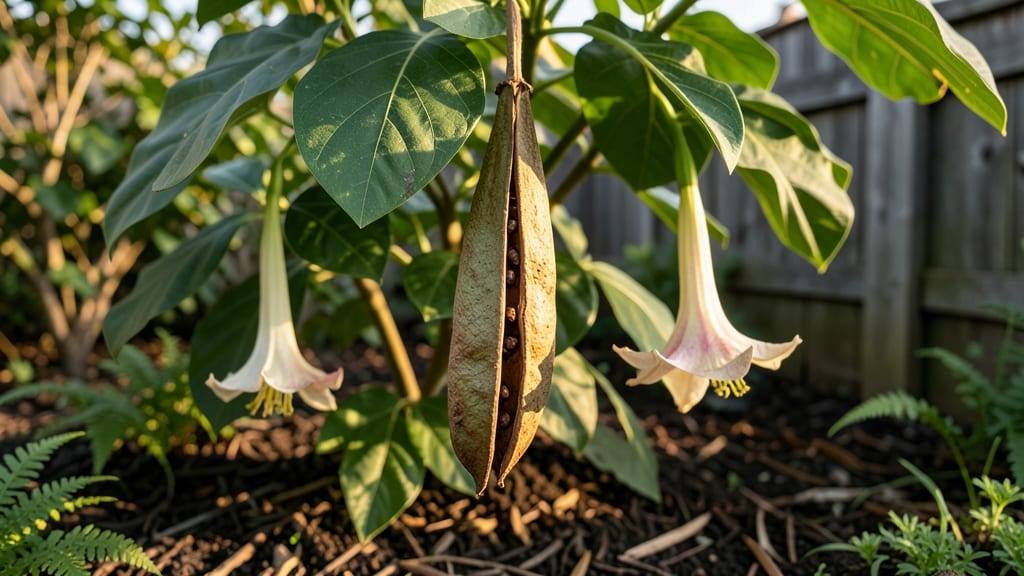
Breaking dormancy in devil's trumpet seed pods means finally growing these striking night-blooming beauties without the frustrating wait. 🌿 I’ve struggled with erratic germination for years—until I discovered the exact moisture and temperature combo that tricks these tough seeds into sprouting reliably.
The secret isn’t complicated: soak pods for 24 hours, then plant in warm soil (70-80°F) where they’ll push through in 10-21 days. No more guessing games about whether your seeds will wake up or not. Just add patience and a sunny windowsill or heat mat.
Once sprouted, these plants reward you with glossy, lance-shaped leaves and dramatic trumpet-shaped blooms that hummingbirds adore. Just remember—every part of the plant is toxic, so keep it away from kids and pets. Works for both indoor starts and outdoor sowing after last frost.
Here’s how to make it foolproof the first time.
📚 In This Guide
- What you need
- Instructions
- Tips and common mistakes
- Wrapping up and next steps
What you need
- ● Devil’s trumpet seed pods – Freshly harvested or store-bought (ensure they’re fully mature and dry). Aim for at least 5-10 pods for reliable germination.
- ● Well-draining potting mix – A blend of peat moss, perlite, and vermiculite (or a cactus/succulent mix) works best. Avoid heavy garden soil.
- ● Small pots or seed trays – 3-4 inch diameter pots or a shallow tray with drainage holes. One pod per pot is ideal.
- ● Spray bottle – For gentle watering without disturbing the seeds.
- ● Plastic wrap or humidity dome – To create a mini greenhouse effect and retain moisture.
- ● Scissors or sharp knife – For carefully opening seed pods (if needed).
- ● Labeling tags – To track planting dates and germination progress.
- ○ Heat mat (optional but helpful) – Set to 75–85°F (24–29°C) to speed up germination (devil’s trumpet loves warmth!).
- ● Grow lights or sunny windowsill – A south-facing window or LED grow lights (12–14 hours/day) for consistent light.
- ○ Fungicide (optional) – A light spray of neem oil or hydrogen peroxide solution (1 part peroxide to 4 parts water) to prevent mold.
- ● Planting journal – To log dormancy-breaking methods and results for future reference.
- ○ Glove (optional) – Devil’s trumpet seeds can be slightly irritating—wear gloves if you have sensitive skin.
Step-by-Step instructions for germinating Devil's trumpet seed pods
Here's my battle-tested method to crack dormancy and coax these finicky seeds to sprout reliably.
🌱 Step 1: Harvest and Prepare the Seed Pods
Collect mature pods when they turn brown and begin splitting open naturally—this ensures maximum viability. I store them in a paper bag for 2-4 weeks at room temperature to complete any remaining drying process inside. The key here is patience; forcing immature pods to germinate will yield weak, nonviable seedlings.
Once fully dry, crack open the pods with a small knife or your fingers to release the seeds. Devil's trumpet seeds have a thick, waxy coating that naturally resists water penetration—this is what we're working against. Remove any debris or chaff, then count out 4 seeds per container (you'll thin later). I like to place them on a clean paper towel to inspect for damage or mold before proceeding.
💧 Step 2: Perform Cold Stratification for Dormancy Break
Place the seeds in a sealed plastic bag with a damp paper towel—just enough moisture to keep it damp, not soaked. This mimics winter conditions and triggers germination. Store the bag in your refrigerator's crisp drawer (34-40°F) for 6-8 weeks. Check weekly to ensure the towel stays moist; if it dries out, spritz lightly with water.
Real talk: This is where most growers fail. Skipping stratification or using warm stratification will leave you staring at empty seed trays for months. The cold treatment breaks down the seed's natural growth inhibitors, which is why Devil's trumpet seeds are so notoriously difficult to germinate without this step.
☀️ Step 3: Sow Stratified Seeds in Warm, Sterile Mix
After stratification, sow seeds ¼ inch deep in a sterile seed-starting mix (never garden soil—it's too dense). I use 4-inch pots for each seed to prevent overcrowding, which Devil's trumpet seedlings hate. Gently press the soil around each seed to ensure good contact without burying them too deeply.
Place the pots in a warm location (75-80°F)—I use a seedling heat mat under my grow trays. Cover the pots loosely with plastic wrap to maintain humidity, but leave a small gap for airflow. You'll see condensation form on the wrap within a day—that's your sign the environment is perfect for germination.
⏰ Step 4: Monitor for Sprouting and Provide Gentle Care
Germination typically takes 3-6 weeks, but don't be surprised if some seeds take up to 8 weeks—this is normal. Once sprouts appear, remove the plastic wrap immediately to prevent damping-off. Water gently from below by placing pots in ½ inch of water for 10 minutes every 3-4 days—never water from above, as the seedlings are delicate.
When the first true leaves (not the initial seed leaves) appear, thin to the strongest seedling per pot. Devil's trumpet seedlings are sensitive to disturbance, so I use small scissors to snip unwanted sprouts at soil level rather than pulling. This prevents shock to the remaining plant.
🌿 Step 5: Transition to Light and Gradual Hardening
Move seedlings to bright, indirect light immediately after thinning. Avoid direct sun until they've developed 4-6 true leaves—young Devil's trumpet plants can scorch easily. I use a grow light on a 14-hour cycle positioned 6 inches above the plants, adjusting as they grow.
Begin hardening off 2 weeks before transplanting by placing seedlings outside in partial shade for 1 hour daily, gradually increasing to full sun exposure over 10 days. Watch for wilting—if it occurs, bring them back indoors and extend the acclimation period. Devil's trumpet seedlings are tough once established, but they need this gradual transition to thrive outdoors.
Tips & tricks for perfect Devil's trumpet germination
These dormancy-busting secrets will transform your seed-starting success rate from frustrating to foolproof.
Pod Maturity Matters: The 2-4 week drying period in Step 1 isn't just about waiting—it's about completing the seed's natural maturation process. I've seen growers rush this step and end up with seeds that either refuse to sprout or produce weak, leggy seedlings. Place your pods in a paper bag and check weekly for that telltale brown color and slight opening. The pods should feel completely dry inside when you crack them open—no moisture at all. This dryness is what breaks down the waxy coating that blocks water absorption.
Stratification Success Secret: When you're checking that damp paper towel during the 6-8 week cold stratification in Step 2, pay attention to the seeds themselves. Healthy seeds will appear plump and slightly darkened after a few weeks in the fridge—this is a good sign. If you notice any seeds developing mold or an unpleasant odor, remove them immediately and replace the paper towel. I've found that using a small plastic container with drainage holes (like a yogurt cup with holes punched in the bottom) prevents excess moisture buildup while still maintaining humidity. The key is that "damp, not soaked" rule—you want the towel to feel like a wrung-out sponge.
Sowing Technique: That ¼ inch depth in Step 3 is critical for Devil's trumpet seeds. Any deeper and they won't have the energy to push through the soil. I like to use a toothpick to make a small hole for each seed, then gently press the soil around it with my finger. For the 4-inch pots, I arrange them in a square pattern with about 2 inches between seeds—this gives each potential seedling room to develop without competing for nutrients. The warm location (75-80°F) is non-negotiable; if your home stays cooler, consider using a seedling heat mat or placing the pots on top of your refrigerator.
Germination Patience: Those 3-6 weeks (up to 8) in Step 4 can feel like an eternity, but consistency is key. I've had growers give up after just 2 weeks only to see sprouts appear on week 5. During this time, I recommend placing a small piece of clear tape on the outside of each pot with the date you sowed—this helps track progress without disturbing the seedlings. When you do see those first sprouts, resist the urge to peek too often. The plastic wrap creates a humid environment, and every time you remove it to check, you risk drying out the soil and shocking the delicate sprouts.
Pro Tips for Devil'S Trumpet Seed Pod
- These dormancy-busting secrets will transform your seed-starting success rate from frustrating to foolproof.
- Pod Maturity Matters: The 2-4 week drying period in Step 1 isn't just about waiting—it's about completing the seed's ...
- Stratification Success Secret: When you're checking that damp paper towel during the 6-8 week cold stratification in ...
Frequently asked questions
Got questions about growing devil’s trumpet seed pods? You’re not alone—this unique plant can be tricky! Here are answers to the most common queries to help you succeed.
How long does it take for devil’s trumpet seeds to germinate?
Germination can take anywhere from 2 to 6 weeks, depending on dormancy-breaking methods. Pre-soaking seeds in warm water or using a heat mat speeds things up. Patience is key—don’t give up if sprouts don’t appear immediately!
Do devil’s trumpet seeds need cold stratification?
Yes! These seeds often require cold stratification (60–90 days in the fridge) to break dormancy. Place them in a damp paper towel, seal in a bag, and refrigerate before planting. Skip this step, and germination rates may drop significantly.
Can I grow devil’s trumpet from cuttings instead of seeds?
Semi-hardwood cuttings (4–6 inches long) root well in moist perlite or water. Use rooting hormone for faster success. This method is faster than seeds and lets you propagate specific varieties you love.
Why aren’t my devil’s trumpet seeds sprouting?
Common culprits: old seeds (test viability with a float test), poor moisture (keep soil consistently damp), or lack of light (use a grow light if natural light is weak). If seeds are fresh and treated properly, try scarifying them with sandpaper to crack the hard shell.
Is devil’s trumpet toxic to pets or humans?
While the plant itself isn’t highly toxic, all parts contain alkaloids that can cause mild stomach upset if ingested in large amounts. Keep it away from pets and children, and wear gloves when handling seeds/pods to avoid skin irritation.
Wrapping up and next steps
The devil’s trumpet seed pod may seem tricky to germinate, but with the right dormancy-breaking tricks—like scarification, stratification, or soaking—you’re well on your way to nurturing these striking plants. Remember, patience and consistency are key, whether you’re prepping seeds indoors or outdoors. 🌱
Ready to take the next step? Start with a small batch of seeds, experiment with the methods that work best for your climate, and soon you’ll be enjoying their mesmerizing blooms. Happy growing!