
Size
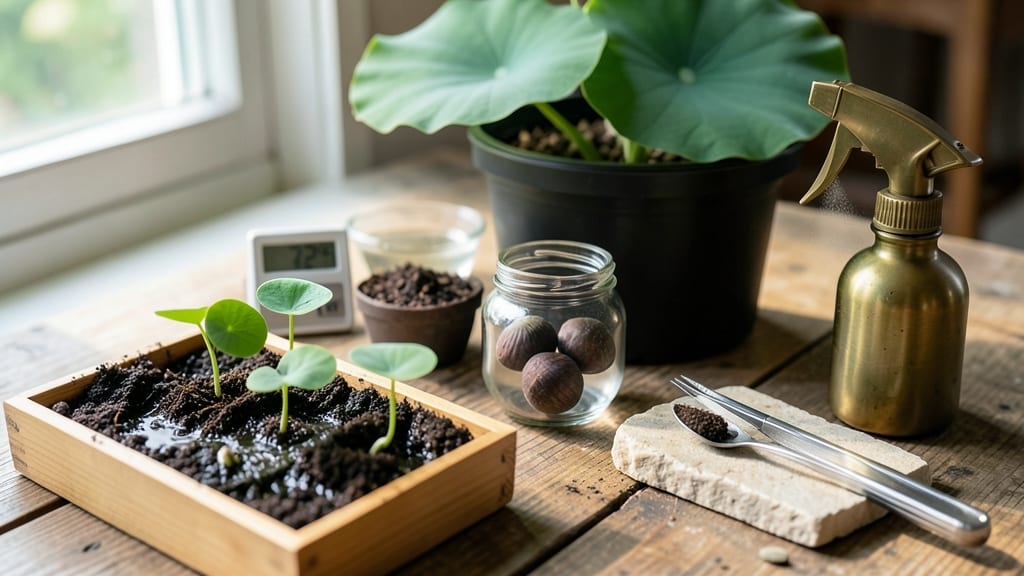
Growing lotus from seed turns your garden into a living time capsule—each seed holds next season's golden blooms waiting to unfold. 🌿 I've saved seeds from my own lotus plants for years, and the process is simpler than it seems, especially when you focus on the right soil, water, and timing.
The key isn't forcing growth but creating the perfect conditions for nature to do its work.
You'll need just three things to start: fresh seeds (harvested when pods turn brown and papery), a shallow container with drainage, and a mix of sandy loam soil and compost. Lotus seeds need warmth—think 70-80°F soil temperatures—and consistent moisture, but no soggy bottoms.
Plant them shallow, barely covering them, and keep the soil damp like a wrung-out sponge. Germination can take 2-4 weeks, so patience is your best tool.
Once sprouted, your seedlings will grow slowly at first, but within a year, you'll see broad, paddle-shaped leaves emerging from the water or moist soil.
The real magic happens in their second or third year, when—if conditions are right—they'll reward you with vibrant blooms that open one at a time, like nature's own slow-motion show. The secret to success? Avoid overcrowding and give them space to stretch their roots.
Common challenges like slow germination or no blooms usually come down to two things: not enough sunlight (they need 6+ hours of direct light daily) or impatience. Lotus plants are built for longevity, not speed, so think of this as a 5-year investment in beauty.
With the right setup, your garden will become a serene, self-sustaining lotus sanctuary year after year.
📚 In This Guide
- What you need
- Instructions
- Tips and common mistakes
- Wrapping up and next steps
What you need
- ● Lotus seeds: 10–20 viable seeds (purchased or harvested from mature lotus pods—ensure they’re fully dried and plump).
- ● Growing containers: For seeds: Small pots (3–4 inches deep) with drainage holes (2–3 pots).
- ● For mature plants: Large pots (12+ inches deep) or a pond/container garden (1–2 per plant).
- ● Potting mix: Well-draining, organic soil (e.g., 50% garden soil + 50% perlite/sand). Lotus roots thrive in loose, airy mediums!
- ● Water: Dechlorinated water (rainwater or tap water left out for 24 hours).
- ○ Fertilizer (optional but helpful): Balanced liquid fertilizer (5-5-5 or 10-10-10) or compost tea for organic growth.
- ● Basic gardening tools: Trowel or small shovel
- ● Pruning shears (for harvesting pods/seeds)
- ● Glove (lily pads can be slippery!)
- ● Growing environment: Sunlight: Full sun (6–8 hours daily) for containers or a pond edge.
- ● Water depth (for mature plants): 1–2 feet of water (if growing in a pond).
- ○ Optional (but handy!): Pond liner or waterproof tray (if creating a mini pond)
- ● Floating plant platform (for container gardens)
- ● Seed-starting heat mat (to speed up germination)
Step-by-Step guide to harvesting and growing lotus seeds
Here's how to turn this season's blooms into next year's garden—naturally and sustainably.
🌿 Step 1: Select and Harvest Mature Blooms
Wait until the lotus flower's petals have fully fallen away, revealing the seed pod. The pods will feel firm and slightly woody to the touch—this indicates full maturity. Harvest them in the late afternoon when humidity is lower, as this reduces the risk of mold during storage.
Use clean, sharp garden shears to cut the seed pod from its stem, leaving about 1 inch of stem attached. This small stem section helps maintain the pod's structural integrity during drying. Place the harvested pods in a single layer on a breathable surface like a mesh screen or paper towel in a shaded, dry location.
☀️ Step 2: Dry the Seed Pods Properly
Allow the pods to dry completely in a well-ventilated area away from direct sunlight. This process typically takes 2-3 weeks, depending on your climate's humidity levels. You'll know they're ready when the pods feel light in weight and the outer casing begins to crack open naturally.
Gently tap the dried pods over a clean container to release the seeds. The seeds will appear dark brown and slightly wrinkled. Store them in a sealed, airtight container lined with a silica gel packet to absorb any remaining moisture. This ensures viability for up to 3 years when stored in a cool, dark place.
💧 Step 3: Prepare the Seeds for Planting
Before sowing, soak the lotus seeds in lukewarm water for 24-48 hours. This softens the tough outer coating and kickstarts germination. Change the water daily to prevent bacterial growth. You'll notice the seeds swell slightly—this is a good sign that they're absorbing moisture.
After soaking, plant the seeds in a container filled with moist, nutrient-rich soil mixed with 10-20% perlite for drainage. Press each seed about 1 inch deep into the soil, spacing them 6 inches apart to allow room for growth. Keep the soil consistently moist but not waterlogged, as lotus seeds are sensitive to excess moisture.
🌱 Step 4: Provide Ideal Growing Conditions
Lotus seeds thrive in full sun, requiring at least 6-8 hours of direct sunlight daily. Place your containers in a location where they'll receive ample light, or supplement with a grow light if natural light is insufficient. Maintain soil temperatures between 70-80°F for optimal germination.
Germination can take 2-4 weeks, depending on temperature and moisture levels. Once seedlings emerge, thin them to the strongest 2-3 plants per container, ensuring they have enough space to develop. Fertilize lightly with a balanced, water-soluble fertilizer every 4-6 weeks during the growing season to support healthy growth.
⏰ Step 5: Transplant and Maintain for Next Season
When seedlings reach 4-6 inches tall and have developed 3-4 true leaves, they're ready for transplanting into your garden pond or container. Choose a location with at least 18 inches of water depth to accommodate the plant's mature size. Plant them in clusters of 3-5 plants for a fuller, more natural appearance.
After transplanting, monitor the plants closely for the first 2 weeks to ensure they're adjusting well. Lotus plants are hardy but can be sensitive to sudden changes in water levels or temperature. Mulch the surrounding soil with organic matter to retain moisture and suppress weeds, which helps the young plants establish strong roots.
Tips & tricks for perfect lotus seed cultivation
Real talk: Growing lotus seeds from scratch is easier than you think—once you know these pro secrets.
Harvesting Precision: In Step 1, focus on pods that feel firm and slightly woody—these are the only ones worth harvesting. I learned this the hard way after trying to use immature pods that never dried properly. The 1-inch stem attachment isn't just decoration; it acts like a natural stabilizer during drying, preventing the pods from splitting prematurely.
Drying Strategy: The 2-3 week drying period in Step 2 is non-negotiable, but here's what nobody tells you—humidity is your enemy. If your climate is particularly damp, consider using a small fan on low setting to circulate air while keeping pods shaded. This can shave off 3-5 days from the drying time without risking mold. Watch for that telltale crack in the casing—it's your cue that seeds are ready.
Soaking Science: During the 24-48 hour soak in Step 3, the seeds will swell noticeably. This is critical because the tough outer shell needs to soften enough to allow moisture penetration. Pro tip: Use a glass jar instead of plastic—it lets you monitor the seeds' progress without removing them. Change that water daily religiously; stagnant water breeds bacteria that can kill your seeds before they even sprout.
Transplant Timing: When you're ready to transplant those 4-6 inch seedlings in Step 5, don't rush the process. The first 2 weeks after transplanting are make-or-break. I've seen perfectly healthy seedlings fail because they were moved to water that was either too cold or too warm. Aim for water temperatures between 70-80°F—this matches the soil temperature range you maintain for germination, creating continuity for your plants.
Pro Tips for Lotus Seed Grow A Garden
- Real talk: Growing lotus seeds from scratch is easier than you think—once you know these pro secrets.
- Harvesting Precision: In Step 1, focus on pods that feel firm and slightly woody—these are the only ones worth harvesting.
- Drying Strategy: The 2-3 week drying period in Step 2 is non-negotiable, but here's what nobody tells you—humidity is your enemy.
Frequently asked questions
Got questions about growing lotus seeds for next season’s blooms?
Here are answers to the most common ones—so you can harvest with confidence and zero waste!
How do I know if my lotus seeds are truly viable for planting?
Fresh lotus seeds should be plump, firm, and dark brown (not shriveled or hollow). Test viability by floating them in water—sinkers are good; floaters are often empty. Store viable seeds in a cool, dry place (like a paper bag) until spring planting. Pro tip: Label seeds by variety to avoid surprises!
When is the best time to harvest lotus seeds for replanting?
Harvest seeds when they’re fully mature but still firm—usually late summer to early fall (August–September in most climates). Wait until the seed pods turn brown and crack open naturally. If you harvest too early, seeds won’t ripen; too late, and they’ll scatter or rot. Morning harvests yield the freshest seeds!
Can I grow lotus seeds indoors if I don’t have a pond?
Yes! Use a large container (at least 12” deep) with 3–6 inches of water and 3–4 inches of soil at the bottom. Place seeds half-buried in soil and keep water temps between 70–80°F. A sunny windowsill or grow light works—just mimic outdoor conditions. Rotate pots weekly for even growth!
What should I do if my lotus seeds sprout mold or rot?
Mold or rot usually means too much moisture, poor drainage, or old seeds. Fix it by:
- Rinsing seeds in hydrogen peroxide (1:10 ratio with water) for 10 mins to kill fungus.
- Planting in fresh, sterile potting mix with perlite or sand for drainage.
- Avoiding overwatering—keep soil moist but not soggy.
How long does it take for saved lotus seeds to bloom again?
Patience is key! Lotus seeds grown from seed typically take 3–5 years to bloom—longer than propagated plants. Factors like water depth, sunlight, and soil nutrients speed up (or slow down) growth. Feed with fish emulsion in spring to boost blooms faster!
Wrapping up and next steps
Growing lotus seeds for next season’s blooms is a rewarding journey that blends sustainability with beauty! By carefully harvesting, drying, and storing seeds—along with nurturing your lotus plants—you’re not just creating a zero-waste garden; you’re setting the stage for stunning, organic blooms year after year. 🌸
Ready to take the next step? Start small: plant just a few seeds this season and watch your garden transform into a thriving lotus haven. Share your progress with fellow gardeners or experiment with creative displays—your green thumb will thank you!