
Size
Growing a mango tree from a seed is the ultimate kitchen-to-garden adventure—and it starts with that single pit you saved from your last smoothie. 🌱 I’ve turned more than a dozen grocery-store seeds into thriving seedlings, and the best part?
You’ll see your first true leaves within 30 days if you follow the right steps. The trick isn’t just planting—it’s creating the perfect mini-greenhouse conditions to trick the tropical seed into thinking it’s back in its native soil.
This isn’t about instant gratification—mango trees from seed take years to bear fruit, but the journey is worth it. You’ll need just three things to start: a seed with no mold, a small pot with drainage, and patience (the hardest part is waiting for that first sprout).
Most people quit when nothing happens in the first two weeks, but that’s when the magic starts—root growth begins before you even see a shoot. The key is keeping the soil warm and moist, like a rainforest floor, not a desert.
By month three, you’ll have a 3-foot-tall seedling with broad, glossy leaves that’ll make your neighbors ask where you bought it. The real payoff? A tree that thrives in zones 10-11 (or can be overwintered indoors elsewhere) and eventually grows 20-30 feet tall—all from a $2 fruit.
The biggest mistake? Transplanting too soon. Let those first roots establish for at least 6 months before moving to a permanent spot, or you’ll end up with a sad, stunted tree.
Here’s the plot twist: not all mango seeds grow true to the parent tree. That Alphonso pit might grow into a completely different variety—but that’s half the fun. Whether you’re in Florida, California, or a container on your balcony, this method works. Let’s get that seed sprouting!
📚 In This Guide
- What you need
- Instructions
- Tips and common mistakes
- Wrapping up and next steps
What you need
- ● Mango seed: 1 fresh, viable seed (remove from ripe mango flesh, rinse, and let dry for 1-2 days).
- ● Small pots or containers: 2-3 (4–6 inches wide) with drainage holes. Tip: Use biodegradable pots for easy transplanting!
- ● Potting soil: 2–3 bags of well-draining, organic soil mix (or a blend of 50% potting soil + 50% perlite/sand).
- ● Watering can or spray bottle: For gentle hydration (avoid overwatering!).
- ● Plastic wrap or humidity dome: 1 sheet (to retain moisture during germination).
- ○ Fertilizer (optional): A balanced, water-soluble fertilizer (e.g., 10-10-10) for later stages.
- ● Location: A warm, sunny spot (60–90°F / 15–32°C) with indirect light for germination, then full sun for growth.
- ● Patience: Germination can take 2–4 weeks (or longer!).
- ● Space: Plan for a mature tree (30–100 ft tall)—outdoor gardens or large containers work best.
- ● Seedling heat mat ($10–$20) to speed up germination.
- ● Grow lights ($20–$50) if natural light is limited.
- ● Mulch (e.g., straw or wood chips) to retain soil moisture.
- ● Pruning shears (for shaping the tree later).
Step-by-step instructions for growing a mango tree from seed
Here's how to transform that pit into a thriving tropical tree with just patience and precision.
🌱 Step 1: Clean and Prepare the Seed
The first 24 hours determine whether your seed will sprout or rot. Rinse the mango pit thoroughly under cool water to remove all fruit residue—this prevents mold and fungal growth. I like to scrub it gently with a soft brush, especially around the edges where the seed attaches to the fruit.
Place the clean pit in a small bowl of lukewarm water for 3-5 days, changing the water daily. You'll see a tiny white root emerge from the bottom—this signals the seed has broken dormancy. Wait until the root reaches about ½ inch before planting. If the pit floats, it's still too dry; keep it submerged until it sinks.
🪴 Step 2: Choose and Fill the Growing Container
Select a 6-inch diameter pot with drainage holes—mango roots need airflow but also moisture. I use a mix of 50% potting soil and 50% perlite for fast drainage while retaining enough moisture. Fill the pot to 1 inch below the rim, leaving room for the seed.
Make a small hole in the center with your finger, about 1 inch deep. The seed should sit with the root pointing downward and the flat side facing the pot's edge. Gently press the soil around it to secure it without compacting—you want the seed stable but not stressed. Water lightly until the soil looks evenly moist but not soggy.
☀️ Step 3: Provide Warmth and Humidity
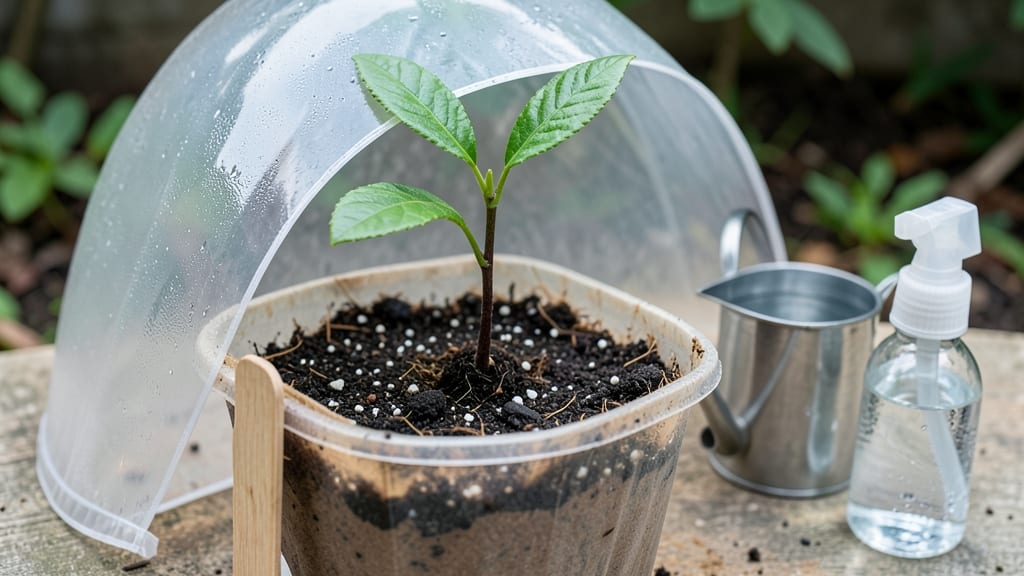
Mango seeds need 75-85°F soil temperature to germinate. Place the pot in a warm spot—near a sunny window or on a seedling heat mat. Cover the pot with a clear plastic bag or humidity dome to trap moisture; condensation on the inside signals perfect humidity levels.
Keep the soil consistently moist but never waterlogged. I check daily by pressing my finger ½ inch deep—if it feels dry, add a light spray. Germination takes 2-4 weeks, so be patient. The first sign is a tiny shoot emerging from the top of the pit, followed by the root growing stronger.
🌿 Step 4: Transplant and Encourage Early Growth
Once the seedling reaches 4-6 inches tall with a few true leaves (not the initial seed leaves), it's time to transplant. Choose a 12-inch pot and use a well-draining mix of 60% potting soil, 20% perlite, and 20% compost. Dig a hole twice as wide as the root ball to encourage spreading.
Move the pot to a bright, indirect light spot—direct sun now will scorch tender leaves. Rotate the pot ¼ turn weekly so the stem grows straight. Water when the top 1 inch of soil feels dry, and fertilize lightly with a balanced 10-10-10 mix every 4-6 weeks to support leafy growth.
⏰ Step 5: Transition to Outdoor Conditions
After 6-8 months, when the tree reaches 2-3 feet tall, it's ready for outdoor acclimation. Place it in a sheltered spot for 2 hours daily, gradually increasing exposure over 2 weeks. Mango trees thrive in full sun and warm climates—if your zone drops below 50°F, bring it indoors.
Here's the thing—your seedling won't bear fruit for 3-5 years, but the journey is worth it. Watch for new leaves, stronger roots, and eventual flowering. With consistent care, you'll have a stunning tropical tree that reminds you of your first harvest every time you see it.
Tips & tricks for growing a mango tree from seed
Transforming that humble mango pit into a thriving tropical tree is easier than you think—here's how to maximize your success from day one.
Seed Preparation Secret: The critical 24-hour cleaning phase isn't just about removing fruit residue—it's about breaking the seed's natural dormancy barrier. After scrubbing, soak the pit in lukewarm water that's not hot (above 90°F can damage the embryo). I've found that adding 1 teaspoon of hydrogen peroxide to the soaking water for the first 24 hours helps prevent any hidden bacterial growth without harming the seed.
Soil Mix Precision: While the 50-50 potting soil and perlite mix works perfectly, here's the pro move: add 1 tablespoon of worm castings to the mix when repotting to the 12-inch container. This gives your seedling an instant nutrient boost without overwhelming it. The key is to mix it thoroughly—don't just sprinkle it on top where roots won't reach it.
Germination Environment: That 75-85°F soil temperature range is non-negotiable, but here's how to achieve it reliably: place your seedling pot on top of a laptop with low battery mode enabled (just 10-15% charge). The gentle heat from the laptop's underside creates the perfect microclimate without risking overheating. Monitor with your finger—soil should feel warm like a baby's bath water, not hot like a freshly baked cookie.
Transplanting Timing: Waiting for that 4-6 inch height with true leaves is crucial, but here's what nobody tells you: the first set of leaves (called cotyledons) are actually the seed's food supply. You want to see the second set of leaves (true leaves) before transplanting—that's when the plant starts photosynthesizing on its own. These leaves will be smaller but more numerous, signaling true growth has begun.
Pro Tips for Mango Seed Grow A Garden
- Transforming that humble mango pit into a thriving tropical tree is easier than you think—here's how to maximize your success from day one.
- Seed Preparation Secret: The critical 24-hour cleaning phase isn't just about removing fruit residue—it's about breaking the seed's natural dormancy barrier.
- Soil Mix Precision: While the 50-50 potting soil and perlite mix works perfectly, here's the pro move: add 1 tablespoon of worm castings to the mix when repotting to the 12-inch container.
Frequently asked questions
Got questions about growing a mango tree from seed? You’re not alone! Here are answers to the most common queries to help you get started on your tropical adventure.
How long does it take for a mango seed to sprout?
A mango seed typically sprouts within 14–30 days if kept in warm, moist conditions. Place it in a well-draining mix (like coconut coir) and maintain humidity with a plastic bag or tray. Patience is key—some seeds take longer, especially if stored dry for months. Keep the soil consistently moist (not soggy) and place it in a warm spot (70–85°F).
Can I grow a mango tree indoors?
Yes! Start indoors in a sunny window or under grow lights to give your seedling a strong start. Use a 6-inch pot with drainage holes and keep it near a south-facing window (or supplement with 12+ hours of light daily). Once the tree outgrows its pot (usually after 6–12 months), transplant it outdoors in a warm climate or bring it inside during winter. Just remember—mango trees love warmth and thrive best in USDA zones 10–11.
Will my mango seed tree bear fruit?
Probably not for 3–5 years (or longer!). Seed-grown mango trees often take years to mature and bear fruit, and even then, the fruit may not taste like the parent tree. For faster, reliable results, graft a known variety onto your seedling later. If you’re patient, enjoy the tree’s lush foliage and potential for unique, wild mangoes—though they might be small or sour!
What if my mango seed rots or mold grows?
Rotting or mold usually means too much moisture or poor drainage. If you spot black spots, slimy soil, or foul smells, act fast:
- Remove the seed and let it dry for 1–2 hours.
- Repot in fresh, sterile potting mix with perlite or sand for drainage.
- Avoid overwatering—stick your finger in the soil; water only when the top inch feels dry.
- Spray with a fungicide (like neem oil) if mold persists.
Can I grow a mango tree in a cold climate?
Mango trees hate frost and won’t survive outdoors in cold climates (zones below 10). However, you can:
- Grow it as a container plant and move it indoors before temperatures drop below 50°F.
- Plant it in a greenhouse or sunroom with supplemental heat.
- Try a dwarf variety (like ‘Cogshall’ or ‘Julie’) that tolerates cooler temps slightly better.
Wrapping up and next steps
Growing a mango tree from a seed is a rewarding journey that turns a simple kitchen scrap into a thriving tropical treasure! 🌱 With patience, care, and the right techniques, you’ll nurture a plant that could one day bear fruit—all from something you’d otherwise toss.
Whether you’re a gardening newbie or a seasoned green thumb, this project is a fun way to connect with nature and watch life grow right before your eyes.
Now that you’re armed with tips and tricks, take the next step: grab that mango pit, follow the steps, and let your little seedling sprout into something extraordinary. Share your progress with fellow plant lovers—your garden adventure is just beginning! 🌟