
Propagation
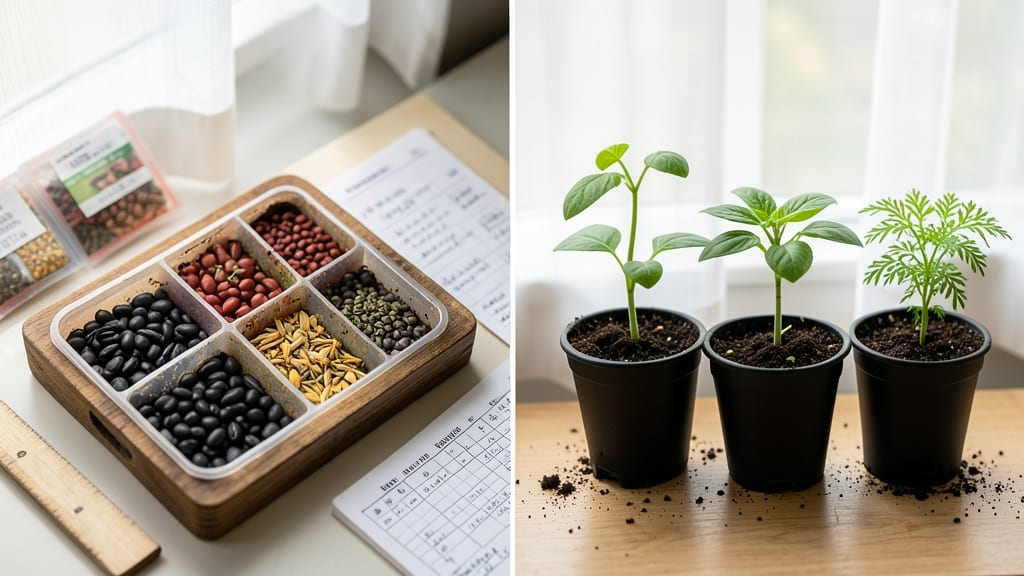
Understanding seed germination times means the difference between perfect starts and wasted time. 🌱 I’ve learned the hard way—some seeds pop up in days, while others take weeks, and patience (or lack of it) can make or break your seed-starting season.
The secret isn’t just waiting—it’s setting up the right conditions. Temperature, moisture, and even soil type can cut germination times in half or double them. My fastest starts? Radishes in 3-5 days when kept cozy and damp. My slowest?
Delphiniums, which can take 30+ days if the soil’s too cold. You’ll spot the difference immediately: crisp, white roots breaking through the soil, then those first true leaves unfurling. That’s the moment you know you’ve done it right—no more guessing when to thin or transplant.
For the rest, track your seeds with a simple chart. Note the variety, planting date, and conditions. Over time, you’ll spot patterns and adjust for faster, more reliable starts every season.
📚 In This Guide
- What you need
- Instructions
- Tips and common mistakes
- Wrapping up and next steps
What you need
- ● Seeds: Choose high-quality, fresh seeds (check the packet for variety-specific germination times). Pro tip: Store seeds in a cool, dry place to maintain viability!
- ● Seed trays or containers: 2–4" deep trays with drainage holes (biodegradable pots are eco-friendly!).
- ● Seed-starting mix: Lightweight, sterile potting soil (avoid garden soil—it’s too dense!). Quantity: Enough to fill your trays 2–3" deep.
- ● Watering can or spray bottle: A gentle spray helps avoid disturbing seeds.
- ○ Heat mat (optional but helpful): For warm-season seeds (e.g., peppers, tomatoes), a 70–85°F mat speeds up germination.
- ● Grow lights or sunny windowsill: 12–16 hours of light daily (LED grow lights are ideal for consistency).
- ● Humidity dome or plastic wrap: Keeps moisture in for delicate seeds (remove once sprouts appear!).
- ○ Thermometer (optional): Monitors soil temperature—critical for temperature-sensitive seeds like beans or lettuce.
- ● Labels & markers: Track varieties and planting dates (trust us, you’ll thank yourself later!).
- ● Know your last frost date: Adjust planting times based on your climate zone (Zone 5–10? Check local guidelines!).
- ● Research seed-specific needs: Some seeds (like okra) need darkness to germinate—adjust planting depth accordingly.
- ● Patience & consistency: Germination times vary wildly (from 3 days for radishes to 30+ for some trees!).
Understanding seed germination times: a variety-by-variety guide
Here's how to predict—and perfect—germination for your favorite plants.
🌱 Step 1: Group Seeds by Germination Speed Categories
Most seeds fall into three broad speed categories, and knowing which group yours belongs to helps you plan. Fast germinators (like radishes or lettuce) sprout in 3-7 days under ideal conditions, while moderate seeds (tomatoes, beans) take 7-14 days. Slow germinators (peppers, parsley) can take 14-30 days or longer, especially if your home runs cooler.
I always check the seed packet first—it lists the expected range—but I’ve found that real-world conditions (like cooler indoor temps or inconsistent moisture) can push germination 2-3 days slower than advertised. For example, a packet might say "5-10 days," but in a 65°F room, you might not see sprouts until 10-14 days. That’s why I set reminders 2 days after the expected deadline to check for moisture or warmth issues.
⏰ Step 2: Adjust for Temperature and Moisture Conditions
Germination speed doubles when soil stays 70-80°F versus 60°F. A seedling heat mat (or even a warm windowsill) can cut 50% off germination time for slow starters like peppers. I place a small thermometer in the soil to monitor—if it dips below 65°F, I move the tray to a warmer spot or add a heat mat.
Moisture matters just as much. Too little, and seeds dry out; too much, and they rot. I use a spray bottle to keep the soil evenly damp but not soggy—like a wrung-out sponge. For stubborn seeds, I’ll cover the tray with plastic wrap to lock in humidity, but I remove it as soon as sprouts appear to prevent mold. Watch for condensation on the wrap: that’s your signal the moisture balance is right.
🌿 Step 3: Track Germination Progress with Visual Cues
Instead of guessing by days, I track germination by physical signs. Fast germinators like radishes push through the soil in 3-5 days with a tiny white root followed by a hooked shoot. Moderate seeds (tomatoes, beans) show first true leaves (not the initial seed leaves) in 7-10 days
Slow germinators like parsley or lavender often take 2-3 weeks to crack the soil, but you’ll spot them earlier by the plump, swollen seed just beneath the surface. If nothing emerges by 200% of the expected time (e.g., 30 days for a 10-day seed), I’ll gently dig one up to check for rot or viability. Real talk: I’ve lost count of how many times I’ve replanted "failed" seeds only to see them sprout days later. Leggy seedlings or slow starts usually mean insufficient light. If your seedlings stretch toward the window with pale stems, move them within 2-3 inches of a grow light immediately. I’ve seen 10-day-old seedlings suddenly bolt (flower) because they thought they were outdoors—always keep them in low light until first true leaves appear. Damping-off (a fungal rot that collapses seedlings at the soil line) is another culprit. If you see blackened stems, I pull the affected plants immediately and switch to a sterile seed-starting mix for the next batch. The fix? Space seedlings properly (per packet instructions) and avoid overhead watering after germination. You’ll know you’ve got it right when the soil surface stays damp but not wet. I keep a germination journal with notes on variety, soil temp, moisture, and actual days to sprout. Last year, my pepper seeds took 28 days in a 68°F room but only 14 days with a heat mat. Now I adjust my schedule based on past data—no more rushing to transplant before seedlings are ready. Here’s the thing—your home’s microclimate matters more than the seed packet’s averages. If your kitchen stays 65°F, plan for 2-3 extra days of waiting. If your basement is 70°F, you might beat the packet’s timeline. The goal isn’t perfection; it’s consistency. Once you’ve tracked a few batches, you’ll predict germination like a pro.✂️ Step 4: Troubleshoot Common Delays
📝 Step 5: Document and Refine Your Process
Tips & tricks for perfect seed germination
Here's what nobody tells you about making those seed packets work for you—without the guesswork.
Seed Packet Secrets: The germination timeline on your seed packet is just a starting point. I've learned the hard way that real-world conditions—especially cooler indoor temperatures—can push those timelines by 2-3 days. For example, if a packet says 5-10 days, expect 7-14 days in a 65°F room. Set a reminder 2 days after the expected deadline to check for moisture or warmth issues before giving up.
Temperature Hack: Germination speed literally doubles when soil stays between 70-80°F versus 60°F. I keep a small thermometer in my seed trays because I've seen 14-day seeds take 28 days in a 68°F kitchen. A seedling heat mat or warm windowsill can cut 50% off germination time for stubborn varieties like peppers. Pro tip: If your soil dips below 65°F, move trays to a warmer spot immediately.
Visual Progress Tracking: Forget counting days—watch for physical signs instead. Fast germinators like radishes show a tiny white root in 3-5 days followed by a hooked shoot. For moderate seeds, look for first true leaves (not the initial seed leaves) in 7-10 days. Slow germinators like parsley might take 2-3 weeks to crack the soil, but you'll spot them earlier by the plump, swollen seed just beneath the surface. This visual method prevents premature transplanting.
Troubleshooting Delays: If nothing emerges by 200% of the expected time (like 30 days for a 10-day seed), gently dig one up to check for rot. I've replanted "failed" seeds that sprouted days later—don't assume they're dead! For damping-off (blackened stems), switch to a sterile seed-starting mix and space seedlings properly. The fix is simple: soil should stay damp but not wet after germination.
Pro Tips for Seed Germination Times
- Here's what nobody tells you about making those seed packets work for you—without the guesswork.
- Seed Packet Secrets: The germination timeline on your seed packet is just a starting point.
- Temperature Hack: Germination speed literally doubles when soil stays between 70-80°F versus 60°F.
Frequently asked questions
Got questions about seed germination times? You’re not alone! Here are answers to the most common queries to help you grow with confidence.
How long do most seeds take to germinate?
Germination times vary widely—fast growers like radishes sprout in 3–7 days, while slowpokes such as pepper seeds can take 10–20 days or longer. Always check the seed packet for variety-specific estimates!
What if my seeds aren’t sprouting after the expected time?
Don’t panic! First, ensure consistent moisture (not soggy) and warmth (70–85°F for most seeds). If nothing emerges after 2–3x the expected time, test viability by soaking seeds in water—sinkers are likely good, floaters may be dead. Try fresh seeds or a new batch.
Can I speed up germination with heat?
Many seeds (like tomatoes or beans) germinate faster with warmth. Use a seedling heat mat (70–90°F) or place trays on top of a fridge. Just avoid overheating—above 90°F can damage tender sprouts.
Are there seeds that germinate without light?
Yes! Light-sensitive seeds (e.g., lettuce, carrots) should stay in darkness until sprouts appear (about 1–2 inches tall). Others, like marigolds, thrive with light from day one. Always follow variety guidelines to avoid leggy or stunted seedlings.
What’s the best way to track germination progress?
Label trays with seed types and dates, then log sprouting days in a simple table or app. Pro tip: Use clear lids or domes to create a humid microclimate—just remove them daily to prevent mold. Patience pays off!
Wrapping up and next steps
Understanding seed germination times is your first step to a thriving garden! 🌱 From the speedy radish (just 4 days!) to the patient peony (up to 3 months), each seed has its own timeline—but with the right conditions, you’ll be well on your way to success.
Don’t let delays discourage you; instead, use this knowledge to plan ahead and create the ideal environment for your plants.
Ready to take the next step? Start small with fast-germinating seeds like beans or lettuce to build confidence, then expand to your dream garden. Happy growing—your green thumb is closer than you think! 🌿