
Lawn
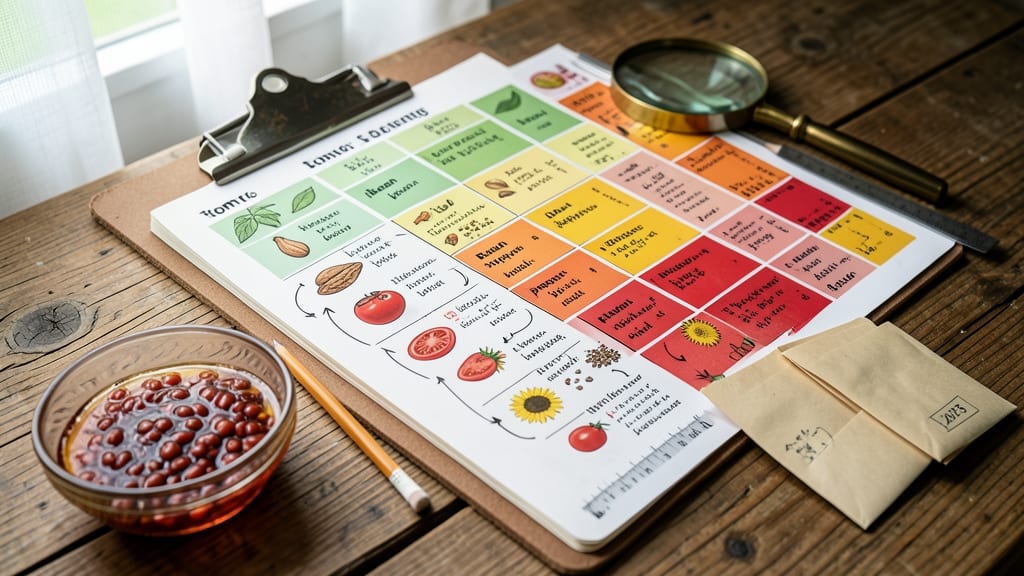
Your seed saving chart isn't just a list—it's the key to next year's garden. 🌱 I learned the hard way that timing matters: harvest too early, and seeds won't germinate; wait too long, and they lose viability.
This zone-specific system keeps me organized and saves money while preserving heirloom varieties I love.
Start with a simple spreadsheet or printable chart tracking each plant's maturity date, seed type (like dry or fleshy), and your local frost dates. I mark my chart with colored dots for easy reference—red for high-priority seeds, blue for new varieties.
The best part? You'll know exactly when to harvest for maximum germination rates.
By following this method, you'll save 50-70% on seeds annually while ensuring the best quality. My tomatoes and peppers now produce seeds that outperform store-bought varieties, and the process takes less than 10 minutes per week during harvest season.
Works for any garden size, from urban containers to large plots. Whether you're saving basil seeds from your windowsill or heirloom tomatoes from your backyard, this system adapts effortlessly. Let's get those seeds ready for next year!
📚 In This Guide
- What you need
- Instructions
- Tips and common mistakes
- Wrapping up and next steps
What you need
- ● Printed or digital seed-saving chart template (downloadable from trusted sources like blank">Seed Savers Exchange or blank">Burpee)
- ● Permanent markers or fine-tip pens (black, blue, or green for clarity)
- ● Ruler (12-inch or metric) for precise measurements
- ● High-quality printer paper or cardstock (8.5" x 11" or A4 size)
- ○ Laminator + laminating sheets (optional but recommended for durability)
- ● USB drive or cloud storage (to back up digital versions)
- ● Seed catalog or zone map (USDA Plant Hardiness Zone Guide or local agricultural extension service resources)
- ● Dry-erase markers (if laminating for reusable updates)
- ● Sticky notes or tabs (to highlight key deadlines)
- ● Plastic sleeve protector (for digital charts on tablets)
- ● Color-coded highlighters (to differentiate zones or plant families)
- ● Seed viability testing kits (e.g., paper towel germination tests)
How to use a seed saving chart for your climate zone
Here’s how to match your region’s growing season to the perfect seed-saving window.
🌱 Step 1: Identify Your USDA Hardiness Zone
First, locate your zone using the USDA Plant Hardiness Zone Map—this determines your last frost dates, which anchor your seed-saving timeline. I always check my local cooperative extension office website for microclimate adjustments (like urban heat islands or valley frost pockets) that can shift deadlines by 1-2 weeks.
Write down your zone number and note whether you’re in a short-season (Zones 1-5) or long-season (Zones 6-11) region. This tells you which crops can reliably mature seeds before winter. For example, tomatoes in Zone 9 might need two harvests to save seeds from both early and late varieties.
☀️ Step 2: Locate Key Seasonal Deadlines on the Chart
Find your zone on the chart’s vertical axis, then trace horizontally to the seed maturity window for each crop. The chart divides plants into three categories: cool-season (lettuce, peas), warm-season (tomatoes, peppers), and perennial (asparagus, rhubarb).
Note the earliest harvest date for seed production—this is when flowers first appear—and the latest viable harvest before seeds lose viability. For instance, in Zone 7, you’ll see tomatoes need to be harvested for seeds by late September, while cool-season crops like spinach can wait until early October.
⏰ Step 3: Adjust for Crop-Specific Timing
Not all plants follow the same schedule. Refer to the chart’s days-to-maturity column for each crop—this tells you how many days after flowering seeds are ready. For example, basil seeds mature in 10-14 days after flowers open, while peppers take 30-45 days.
Real talk: Some plants (like tomatoes) need two harvests—first when flowers appear, then again when seeds fully ripen. Mark these dates on your calendar with reminders to check for seed pods or dried flowers. If you miss the window, seeds may not germinate next year.
🌿 Step 4: Verify Seed Viability Before Storage
After harvesting, test seeds for viability by placing a damp paper towel in a sealed bag with 10-20 seeds. Store it in a warm spot for 5-7 days. If 80%+ germinate, they’re ready for storage. The chart includes a viability test section—compare your results to the zone-specific thresholds (e.g., Zone 5 seeds should germinate at 75%+).
If germination drops below 50%, the seeds may not store well. This often happens with late-harvested seeds in cooler zones. For those, consider drying and storing immediately, even if viability is slightly lower.
🪴 Step 5: Store Seeds by Zone-Specific Conditions
Use the chart’s storage conditions column to guide you. Most seeds thrive in a cool, dry place (32-41°F), but some (like onions) prefer room temperature. Label each envelope with the crop, harvest date, and zone—this prevents mix-ups when you’re ready to replant.
Here’s the thing—seeds from Zones 1-4 often last 2-3 years due to cooler climates, while Zones 8-11 seeds may only stay viable for 1 year because of higher humidity. Adjust your storage strategy accordingly, and always test a few seeds before planting next season.
Tips & tricks for perfect seed saving timelines
Mastering seed saving requires precision—these insights will help you navigate the nuances of your climate zone like a pro.
Zone-Specific Nuances: Pay attention to microclimates within your zone. A south-facing slope might be 1-2 zones warmer than the official map suggests. I've seen gardeners in Zone 6 successfully grow tomatoes for seed saving by planting near a sunny wall, effectively extending their growing season by 3 weeks. Always test your microclimate by observing when nearby plants flower and set seed.
Visual Cues for Harvest Timing: The chart's days-to-maturity numbers are your baseline, but visual cues confirm readiness. For tomatoes, seeds are ready when the fruit is fully ripe and begins to soften—look for a slight give when gently squeezed. For peppers, seeds mature when pods turn completely their mature color and feel slightly papery to the touch. These visual checks help you adjust for environmental variations that might affect timing.
Storage Environment Matters: While most seeds thrive at 32-41°F, humidity is equally critical. Use silica gel packets in your seed storage containers to maintain proper moisture levels. I keep my seeds in airtight containers with a small packet of silica gel and a humidity indicator card—this simple addition has dramatically improved my seed viability over the years. Remember that Zone 8-11 seeds need extra protection from humidity due to their shorter storage lifespan.
Double Harvesting Strategy: For crops like tomatoes that require two harvests, create a system to track both flower appearance and seed maturity. I use color-coded sticky notes on my calendar: yellow for first harvest (flower appearance) and red for second harvest (seed maturity). This visual system prevents me from missing either critical window, especially when managing multiple varieties simultaneously.
Pro Tips for Seed Saving Chart
- Mastering seed saving requires precision—these insights will help you navigate the nuances of your climate zone like ...
- Zone-Specific Nuances: Pay attention to microclimates within your zone. A south-facing slope might be 1-2 zones warme...
- Visual Cues for Harvest Timing: The chart's days-to-maturity numbers are your baseline, but visual cues confirm readi...
Frequently asked questions
Got questions about seed saving? You’re not alone! Here are some common ones to help you navigate the process like a pro.
What’s the best time to harvest seeds for saving?
Timing depends on the plant! Most seeds are ready when the plant’s pods, flowers, or fruits are fully mature—often dry, brown, or split open. Check your seed saving chart for zone-specific deadlines. Harvest before seeds scatter naturally (like tomatoes or beans) to avoid waste.
How long can I store saved seeds before they lose viability?
Seed lifespan varies by type. Most last 1–5 years if stored properly (cool, dark, dry place). Check your chart for specific varieties—some, like lettuce, may only stay viable for 1 year, while others, like peas, can last 4+ years. Test germination yearly to confirm freshness.
Can I save seeds from hybrid plants?
Not reliably! Hybrid seeds (like F1 tomatoes) may not produce true-to-type plants. Stick to heirloom or open-pollinated varieties for consistent results. Your seed saving chart often labels these—look for terms like “OP” (open-pollinated) or “heirloom.”
What if my seeds don’t germinate after saving?
Troubleshoot with these steps:
- Check storage: Moisture or heat can kill seeds. Store in airtight containers with silica gel.
- Test viability: Soak a few seeds in water—sinkers are likely viable.
- Adjust conditions: Some seeds need stratification (cold treatment) or scarification (scratching the seed coat).
Do I need to adjust seed saving for my hardiness zone?
Zones affect plant maturity rates. Your seed saving chart includes zone-specific deadlines to ensure seeds ripen fully before frost. For example, Zone 5 may harvest beans earlier than Zone 10. Always align with your local last-frost date.
Wrapping up and next steps
Mastering seed saving with a zone-specific chart puts you in control of your garden’s future—no guesswork, just thriving plants! Whether you’re a beginner or a seasoned gardener, knowing the right deadlines ensures you collect seeds at their peak viability. 🌱
Now that you’re armed with this knowledge, take the next step: start a seed-saving journal to track your progress, share tips with fellow gardeners, or even experiment with heirloom varieties. Your garden—and future harvests—will thank you!