
Lawn
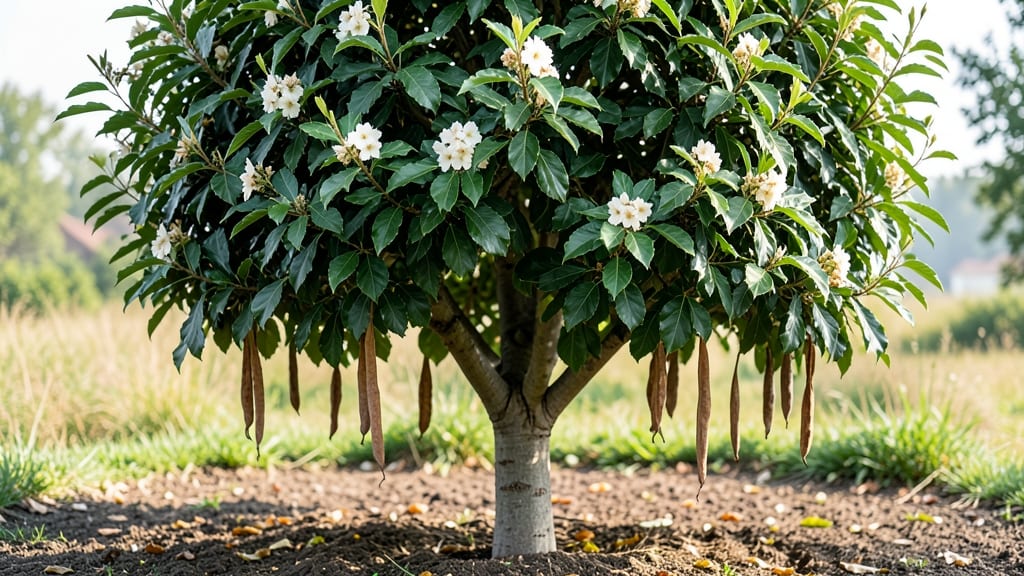
Bradford pear tree seed pods hold the key to growing your own tree—if you know which flowers to watch. 🌸 Last spring, I learned the hard way that not all Bradford pears produce fruit (or seeds) because only female trees do.
The male trees nearby pollinate them, but you’ll need to identify both to start your seedling journey.
Harvesting comes in late fall when the pods turn brown and split open. Inside, you’ll find flat, papery seeds that need stratification—a cold, damp treatment—to break dormancy. This mimics winter’s natural process and can take 60-90 days in the fridge before planting.
Patience is key, as germination can be slow, often taking 3-6 months to sprout.
Once sprouted, young seedlings need bright light and well-draining soil to thrive. They’ll grow slowly at first but reward you with sturdy branches over time. Compared to grafting, this method is cheaper but less predictable—your tree may not match the parent’s exact traits, like disease resistance or growth habit.
If you’re in a hurry, grafting onto a rootstock is faster, but seed-grown trees develop stronger root systems. Either way, start small: one pod per pot gives each seedling room to grow. Next year’s garden could start with these tiny seeds!
📚 In This Guide
- What you need
- Instructions
- Tips and common mistakes
- Wrapping up and next steps
What you need
- ● Bradford pear tree (Pyrus calleryana) – Ensure it’s mature (5+ years old) for reliable flowering and fruiting.
- ● Hand lens or magnifying glass – For closely inspecting flower structures (male vs. female).
- ● Pruning shears or small scissors – For carefully trimming branches or collecting seed pods.
- ○ Gloves (optional but recommended) – To protect hands from thorns or sap.
- ● Notebook & pen – To record observations like flower locations, dates, or pod development.
- ● Camera or smartphone – For documenting flowers, pods, and tree features.
- ● Plastic bags or containers – For safely storing collected seed pods (label them!).
- ● Spray bottle with water – To mist flowers for better visibility under magnification.
- ● Field guidebook on pear trees – For deeper insights into identification and care.
- ● Permanent markers – To label branches or bags with dates/notes.
- ● Small pruning saw – If working with thicker branches.
- ● Drying rack or mesh bags – For air-drying collected seed pods before storage.
- ● Tree identification app – Like PictureThis or iNaturalist for quick verification.
- ● Best time for flower observation: Late winter to early spring (February–March).
- ● Pod collection window: Late summer to early fall (August–October).
- ● Weather check: Overcast or early morning for clearer flower visibility.
- ● Tree health: Ensure your tree is pest-free and well-hydrated for optimal flowering.
How to identify male and female Bradford pear flower structures for fruit production
Here’s how to spot the differences this spring—and plan for next year’s harvest.
🌿 Step 1: Observe Flower Clusters in Early Spring
Bradford pear trees bloom in late winter or early spring, so grab a magnifying glass and examine the clusters. Female flowers grow in small, compact groups of 3-5 buds, each with a slightly swollen base. Male flowers appear as longer, cylindrical clusters with buds spaced farther apart. Look for these clusters emerging before leaves unfurl.
I always check the outermost buds first—they often reveal the flower’s sex before others open. If you see a mix of bud shapes in one cluster, that tree is likely self-fertile, meaning it can produce fruit alone. But if all clusters are uniform, you’ll need a second tree for pollination.
☀️ Step 2: Compare Open Flowers for Definitive Sex Identification
Once flowers open, female blooms have 5 petals with a tiny, rounded center where fruit will develop. Male flowers, meanwhile, have longer, more prominent stamens (the pollen-producing parts) that stick out beyond the petals. The stamens in male flowers are often yellow-tipped, while female flowers may show a slight greenish tint at the base.
Here’s the thing—some flowers can look ambiguous at first glance. If you’re unsure, wait until after blooming when female flowers develop tiny, pea-sized fruitlets. Male flowers, however, will wilt and drop pollen without forming fruit. This is the clearest way to confirm sex.
📝 Step 3: Record Findings for Next Year’s Planting
Use a small notebook or phone app to sketch your tree’s flower clusters. Note whether you spotted mostly female, mostly male, or a mix. If your yard has only one tree, you’ll need to plant a second one of the opposite sex within 50 feet for successful pollination. Bradford pears are self-fertile but produce far more fruit with cross-pollination.
I like to mark trees with a bright ribbon in late winter so I remember which ones to observe. This also helps if you’re working with multiple trees—you’ll avoid confusion when planning for fruit production. Labeling now saves headaches later when seed pods start forming.
⏰ Step 4: Time Your Observations for Best Results
Bradford pears bloom earliest in the morning, so plan to check between 7-9 AM when flowers are fully open. Humidity and temperature affect bloom timing—warmer springs can delay flowering by 3-5 days, while cooler weather speeds it up. If you miss the initial bloom, watch for new flower buds forming later in the season.
Don’t skip this step—timing matters. If you observe too late, you might miss the early-stage female flowers before they develop fruitlets. I’ve learned the hard way: a single missed check can mean missing a year’s harvest potential.
🌱 Step 5: Plan for Next Year’s Fruit Production
Once you’ve identified your tree’s sex, note whether it’s self-fertile or needs a pollinator. If you’re planting a second tree, choose a variety like Callery pear or Oriental pear—they’re compatible and improve fruit set. Space trees 30-50 feet apart for optimal cross-pollination.
Here’s what I do: I plant a second Bradford pear in a nearby yard if my own tree is male. This ensures abundant seed pods the following year. If you’re unsure, buy a pre-labeled tree from a nursery—they often specify sex at the time of sale.
Tips & tricks for perfectly identifying Bradford pear flower structures
Real talk: Even experienced gardeners sometimes mix up male and female flowers. Here’s how I’ve learned to nail this identification every time.
Timing Secret: The 7-9 AM window is critical because that’s when flowers are fully open and most visible. I set a reminder on my phone for that time slot—it’s the difference between clear identification and frustration. If you’re running late, check again around 11 AM when secondary blooms often appear. The earlier you observe, the easier it is to spot the defining characteristics before flowers start wilting.
Visual Cue Strategy: In Step 1, when examining those 3-5 bud clusters, focus on the spacing between buds. Female buds are tightly packed like grapes on a vine, while male buds have noticeable gaps. I use my thumb and forefinger to measure the space—if I can fit a fingernail between buds, it’s likely male. This tactile check helps when visual differences are subtle, especially on cloudy days when lighting can be deceiving.
Post-Bloom Confirmation: The instructions mention waiting until after blooming for definitive confirmation, and this is non-negotiable. Female flowers develop those pea-sized fruitlets within 48 hours of blooming, while male flowers start shedding pollen. I’ve seen gardeners miss this step and end up with incorrect records—don’t make that mistake. Keep a small notebook by your tree during bloom season to jot down these observations immediately after they appear.
Equipment Upgrade: While a magnifying glass works, I’ve found a small digital camera with macro mode is a game-changer. Snap photos of both bud clusters and open flowers from multiple angles. The images become valuable reference points later when planning your orchard layout. You can even email them to a fellow gardener for a second opinion if you’re unsure.
Pro Tips for Bradford Pear Tree Seed Pods
- Real talk: Even experienced gardeners sometimes mix up male and female flowers.
- Timing Secret: The 7-9 AM window is critical because that’s when flowers are fully open and most visible.
- Visual Cue Strategy: In Step 1, when examining those 3-5 bud clusters, focus on the spacing between buds.
Frequently asked questions
When should I expect seed pods to appear on my Bradford pear tree?
Bradford pear trees typically produce seed pods late summer to early fall—usually around August to October, depending on your climate. If your tree has no pods, it may be male (non-fruiting) or too young (3–5 years to bear fruit reliably). Check for flowers in early spring to confirm sex!
How do I tell if my tree is male or female?
Male trees have long, dangling catkins (tassel-like flowers) in spring, while female trees produce small, round blossoms that develop into seed pods. If your tree has both types of flowers, it’s likely self-fruitful (like Bradford pears). For certainty, observe flower structures before they fall!
Why are my seed pods falling early or staying green?
Early pod drop often signals poor pollination, disease (fire blight), or drought stress. Green pods may lack maturity or face pest damage (e.g., borers, scale insects). Prune affected branches, water deeply, and apply copper fungicide if fungal issues are suspected. Healthy pods turn brown and papery when ripe.
Are Bradford pear seed pods harmful to pets or wildlife?
While non-toxic to pets, the pods can cause digestive upset if ingested in large quantities (like any fruit). Birds and squirrels love them! To deter pests, rake up fallen pods or plant native alternatives like serviceberry trees. Always supervise pets near trees with ripe fruit.
Can I propagate a new tree from Bradford pear seed pods?
Yes! Collect brown, dry pods, remove seeds, and plant them in moist potting mix indoors (they need stratification—refrigerate for 6–8 weeks). Germination takes 4–6 weeks. However, seedlings may not replicate the parent tree’s traits. For guaranteed Bradford pears, graft or buy certified trees instead.
Wrapping up and next steps
Understanding the male vs. female flowers on your Bradford pear tree is the first step to predicting—and even influencing—next year’s abundant seed pods! 🌸 Whether you’re aiming for a showy spring display or hoping to manage fruit drop, this knowledge empowers you to make informed decisions.
Now that you’re equipped with the facts, take action: mark flowering branches this season and consider planting a companion tree if you’re craving more fruit.
Ready to transform your yard? Start planning your tree’s future today—your future self (and the birds!) will thank you. 🌳✨