
Planting
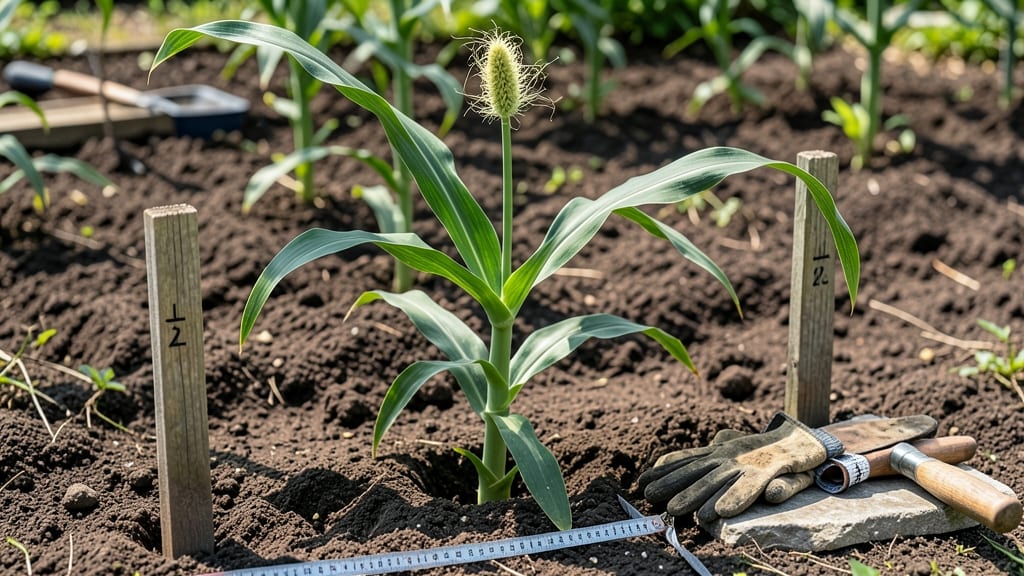
Getting your corn seed spacing right means the difference between a 12-foot-tall jungle of stalks and a productive row of ears. I learned this the hard way—my first attempt had seeds packed too close, and the plants spent all their energy fighting each other instead of growing ears.
The right spacing gives each plant room to develop strong roots, sturdy stalks, and those sweet, plump ears we all crave.
Most home gardeners should aim for 1 inch between seeds and 30-36 inches between rows. This works for standard sweet corn varieties, but check your seed packet—dwarf or super-sweet varieties might need slightly tighter spacing.
Soil fertility and rainfall also play a role: richer soil lets plants grow closer together, while dry conditions demand more space to prevent competition for water.
When you nail the spacing, you’ll see thicker stalks, more ears per plant, and fewer problems with pests or disease. The plants will stand tall and proud, not leaning or breaking under their own weight.
Plus, harvesting becomes a breeze—no more tangled messes or missed ears hidden in the shade.
Even experienced gardeners mess up spacing sometimes, so don’t stress if your first try isn’t perfect. Pay attention to how the plants grow and adjust next season. With the right spacing, you’ll be pulling ears straight off the stalk by midsummer—no bending or guessing required.
📚 In This Guide
- What you need
- Instructions
- Tips and common mistakes
- Wrapping up and next steps
What you need
- ● Corn seeds: High-quality, certified seeds (quantity depends on row length; check seed packet for spacing recommendations, typically 10-14 seeds per foot for optimal spacing).
- ● Seed planter or drill: Manual or mechanical (e.g., EarthWay Precision Planter or Brillion Planter for larger plots).
- ● Measuring tape or spacing wheel: For marking rows and ensuring 24-36 inches between plants (adjust based on variety).
- ● Garden markers or flags: Biodegradable or reusable (e.g., toothpicks + labels for small gardens).
- ● Soil testing kit: To check pH and nutrient levels (ideal pH: 6.0-7.0 for corn).
- ● Fertilizer: Balanced formula (e.g., 10-10-10) or organic options like compost or manure.
- ● Water source: Hose, sprinkler, or drip irrigation system (consistent moisture is key!).
- ● Gloves and knee pads: For comfort during planting.
- ● Seedling heat mat: For early starts in cooler climates.
- ● Row cover: Lightweight fabric to protect young plants from pests.
- ● Laser level or string line: For ultra-straight rows on larger plots.
- ● Post-hole digger: If planting in raised beds or mounds.
- ● Planting calendar: To track spacing and growth stages.
Step-by-step guide to planting corn for optimal yield
Here's how to space corn seeds like a pro—no guesswork, just consistent rows and bountiful harvests.
Prepare Your Soil and Mark Planting Rows
Corn thrives in loose, well-drained soil with a pH between 6.0 and 6.8. Before planting, loosen the top 6 inches of soil with a broadfork or tiller to improve root penetration. Remove any weeds or debris that could compete with young seedlings.
Use a garden hose or string line to mark your planting rows. Corn needs 30-36 inches between rows to allow proper airflow and sunlight penetration. For a 4-foot-wide bed, two rows spaced 18 inches apart works perfectly. I like to use wooden stakes at each end to keep the lines straight—corn plants grow tall, and crooked rows lead to tangled stalks later.
Plant Seeds at the Correct Depth and Spacing
Corn seeds should be planted 1-1.5 inches deep. Use a hand trowel or corn planter to make holes at 4-inch intervals within each row. I find it easiest to measure spacing by holding the seed packet next to the row—most packets show the recommended spacing clearly. Drop 2-3 seeds per hole to ensure at least one strong seedling emerges (germination rates vary).
Cover the seeds lightly with soil and tamp down gently to remove air pockets. Pressing too hard can damage the seeds, but a light firming helps maintain soil contact. Water immediately after planting to settle the soil and provide moisture for germination. You’ll see sprouts within 7-14 days, depending on soil temperature—warmer soil speeds this up.
Thin Seedlings for Stronger Stalks
Once seedlings reach 4-6 inches tall, thin them to leave only the strongest plant per hill. Use small scissors or your fingers to snip or pull the weaker seedlings at soil level—never yank them out, or you’ll disturb the roots of remaining plants. This step is critical: overcrowded corn plants compete for nutrients and sunlight, resulting in shorter, weaker stalks.
After thinning, give the remaining plants a light watering to help them recover. You’ll notice the surviving seedlings perk up within a day or two. Space between plants should now be 4 inches apart in the row. If you’re growing sweet corn varieties, you can thin slightly later (around 8 inches tall) to ensure you have enough ears for harvest.
Maintain Proper Spacing as Plants Grow
Corn plants grow quickly, so monitor their spacing as they mature. By the time tassels (the pollen-producing structures) appear, you may need to adjust spacing again if plants are still too close. Aim for 12-18 inches between mature stalks—this prevents disease spread and ensures each plant gets enough nutrients.
Watch for signs of overcrowding: yellowing leaves, stunted growth, or ears that don’t develop fully. If you notice these, thin aggressively but carefully to avoid damaging the remaining plants. Mulch around the base with 2-3 inches of straw or grass clippings to retain moisture and suppress weeds, which compete for space and resources.
Harvest at Peak Ripeness for Best Flavor
Corn is ready to harvest when the silks turn brown and the kernels are plump and milky when pierced with a fingernail. Use a sharp knife to cut stalks 6-8 inches above the ground, or grasp the stalk firmly and twist it sharply at the base. Harvest in the morning for the freshest ears—corn sugars convert to starch quickly after picking.
Leave a few stalks in the ground if you want to save seeds for next year. These should be allowed to dry completely on the stalk before husking. Proper spacing throughout the growing season directly impacts how many ears you’ll harvest per plant, so your early efforts pay off in the kitchen.
Tips & tricks for perfect corn planting layout
These precision planting secrets will transform your corn harvest from average to exceptional.
Soil Preparation Secret: Before loosening that top 6 inches of soil, work in a handful of compost or well-rotted manure. This gives your corn roots an immediate nutrient boost and improves water retention. I like to mix it in while the soil is still loose—it distributes evenly without clumping. The goal is to create a crumbly texture that encourages deep root growth, which directly impacts your final ear yield per stalk.
Row Marking Hack: For perfectly straight rows, use a long piece of PVC pipe instead of a garden hose. Lay it flat on the ground where you want your first row, then use a string line to mark the parallel rows. The PVC gives you a perfectly straight edge to align with, and you can reuse it for multiple beds. This is especially helpful if you're planting multiple rows—consistency is key for even sunlight exposure throughout the season.
Seed Spacing Shortcut: When planting your 2-3 seeds per hole at 4-inch intervals, use a simple DIY spacing tool. Cut notches every 4 inches along a wooden dowel or even a sturdy plastic ruler. Slide the dowel along your marked row and drop seeds into the holes created by the notches. This ensures perfect spacing without constantly measuring, and it's much faster than eyeballing distances. I've found this reduces planting time by nearly 40% while maintaining precision.
Thinning Timing Tip: The 4-6 inch height guideline for thinning is perfect, but there's one trick to make it easier: thin on a cloudy day. The reduced sunlight prevents stress on the remaining seedlings. Also, use a pair of small pruning shears instead of your fingers—they give you more control and make quick work of multiple seedlings. I've noticed plants recover faster when thinned with clean cuts rather than pulled, which can tear roots.
Pro Tips for Corn Seed Spacing
- These precision planting secrets will transform your corn harvest from average to exceptional.
- Soil Preparation Secret: Before loosening that top 6 inches of soil, work in a handful of compost or well-rotted manure.
- Row Marking Hack: For perfectly straight rows, use a long piece of PVC pipe instead of a garden hose.
Frequently asked questions
Got questions about corn seed spacing?
You’re not alone! Here are some of the most common ones—plus straightforward answers to help you plant with confidence.
What’s the ideal corn seed spacing for high yields?
For most corn varieties, aim for 30–36 inches between rows and 6–12 inches between seeds within the row. Tighter spacing (6–8 inches) works for shorter varieties, while wider gaps (10–12 inches) suit taller, high-yielding hybrids. Always check your seed packet for variety-specific recommendations!
When is the best time to plant corn seeds with proper spacing?
Plant corn after the last frost when soil temps hit 50–60°F (10–15°C). For optimal spacing, wait until the soil is workable (not muddy) and seeds can germinate quickly. Early planting risks frost damage, while late planting may reduce yield. Aim for spring planting 2–3 weeks before your area’s last frost date.
Can I adjust corn seed spacing for small gardens or containers?
In small gardens or containers, reduce row spacing to 18–24 inches and plant seeds 4–6 inches apart. Use dwarf or bush varieties (like ‘Golden Bantam’) to maximize space. Just ensure each plant gets at least 1–2 square feet of growing area to avoid competition.
What if my corn plants look crowded after germination?
If seedlings are too close, thin them to your target spacing (6–12 inches apart) when they’re 4–6 inches tall. Use scissors or a small trowel to snip unwanted plants at soil level—never pull, as it disturbs roots. Crowded corn competes for sunlight/nutrients, leading to weaker stalks and lower yields.
Does temperature affect how I should space corn seeds?
Cooler soils (below 50°F) slow germination, so increase spacing slightly (8–10 inches) to reduce competition until plants establish. In hot climates, wider spacing (10–12 inches) improves airflow, preventing fungal diseases like corn smut. Always monitor weather and adjust as needed!
Wrapping up and next steps
Mastering corn seed spacing is your secret weapon for a bountiful harvest—every inch counts! 🌽 By following precision planting techniques, you’re not just saving seeds and resources; you’re setting the stage for stronger plants, fewer weeds, and maximum yield per row.
Whether you’re a seasoned farmer or a backyard gardener, these insights will help you optimize your next planting season.
Ready to put it into action? Grab your measuring tools, sketch a quick planting map, and start small—even a single row with perfect spacing can make a difference! For extra confidence, test different spacing in a small plot to see what works best in your climate. Happy planting! 🌱