
Propagation
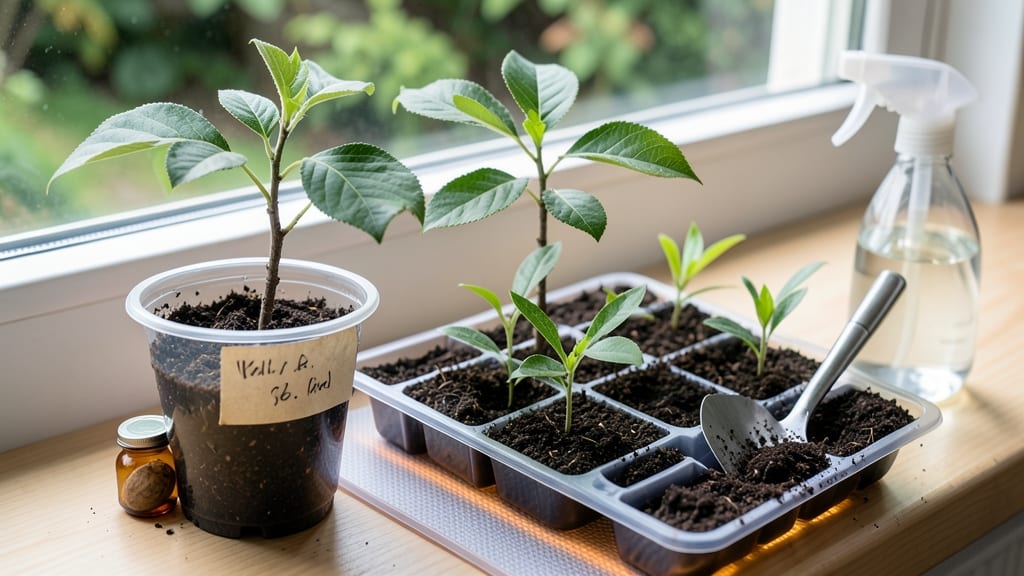
Growing a peach tree from seed indoors is the ultimate test of patience—and the reward is a tree that carries your family’s history in every pit. 🌱 The first year won’t produce fruit (seed-grown trees take 5-10 years to bear), but the journey itself is worth it: a tree with roots deeper than any nursery-bought sapling.
I’ve grown three this way, and while none have fruited yet, the thrill of watching a seedling reach for the sky is unmatched.
The secret starts with the seed—save one from a ripe, locally grown peach (store-bought fruit often has treated seeds that won’t sprout). You’ll need a warm spot (70–80°F), bright indirect light, and a 4-inch pot with well-draining soil.
Germination can take 3–6 weeks, so keep the soil consistently moist but never soggy. The first leaves will be tiny and delicate, but they’re a sign your tree is fighting its way into the world.
By year two, your seedling will need more space—transplant it into a 5-gallon container and start hardening it off for outdoor life.
Here’s the twist: seed-grown trees may not produce fruit identical to the parent (peaches are notoriously unpredictable this way), but the process teaches you more about tree care than buying a grafted sapling ever will.
The real magic happens when you watch it grow from a toothpick-sized sprout to a 6-foot-tall young tree.
This method isn’t for the impatient, but the lessons—patience, observation, and the slow joy of nurturing something from scratch—are priceless. Whether you’re doing it for the adventure or the eventual fruit, there’s no better way to connect with a tree than by growing it from the ground up.
Ready to start?
📚 In This Guide
- What you need
- Instructions
- Tips and common mistakes
- Wrapping up and next steps
What you need
- ● Peach pit: A fresh, organic peach pit (avoid store-bought seeds treated with chemicals). Quantity: 1-2
- ● Small pots or containers: 4-6 inch diameter pots with drainage holes (or a seed tray). Quantity: 1-2 per seed
- ● Well-draining potting mix: A blend of 50% peat moss or coco coir, 30% perlite or vermiculite, and 20% sand (or a pre-mixed seed-starting mix). Quantity: ~1 cup per pot
- ● Plastic wrap or humidity dome: To create a mini greenhouse effect.
- ● Spray bottle: For gentle watering.
- ○ Grow lights or sunny windowsill: A south-facing window or a 12-16 hour LED grow light (optional but helpful).
- ○ Fertilizer (optional): A balanced liquid fertilizer (5-5-5 or 10-10-10) diluted to half-strength for seedlings.
- ● Heating mat: Keeps soil warm (70-75°F) to speed up germination.
- ● Humidity tray: A shallow tray with pebbles and water to maintain moisture.
- ● pH test kit: Ensures soil pH is between 6.0-6.5 (ideal for peach trees).
- ● Pruning shears: For trimming leggy seedlings later.
- ● Label markers: To track planting dates and varieties.
Step-by-step instructions for growing a peach tree from seed indoors
Here's how I turn a single peach pit into a thriving tree—it takes time, but the reward is worth every day of waiting.
🌱 Step 1: Extract and Stratify the Seed
Start with a fresh, fleshy peach—avoid dried or fermented fruit. Cut the pit open lengthwise with a clean knife, then scoop out the seed inside. Rinse it under cool water to remove any remaining fruit residue, which can rot the seed. Place the seed between two damp paper towels, fold them over, and seal in a plastic bag.
This is where patience begins: peach seeds need 60-90 days of cold stratification to break dormancy. Store the bagged seed in your refrigerator's crisper drawer (not the freezer)—the consistent 35-40°F temperature mimics winter. Check the towels weekly and mist with water if they dry out. You'll know stratification worked when the seed sprouts a tiny white root about ½ inch long.
💧 Step 2: Plant the Stratified Seed
Once the root appears, fill a 4-inch diameter pot with sterile seed-starting mix (not garden soil). Press the soil down gently until firm but not compacted. Make a small hole—about ½ inch deep—using your finger or a pencil. Gently place the stratified seed in the hole with the root pointing downward, then cover lightly with soil.
Water the pot until moisture drains from the bottom, but don't let it sit in standing water. Place the pot in a warm, bright spot (like a sunny windowsill) where temperatures stay between 65-75°F. Keep the soil evenly moist—not soggy, not dry. You'll see the first true leaves emerge in 2-4 weeks, signaling the seedling is establishing itself.
☀️ Step 3: Provide Light and Care for Early Growth
Seedlings need 12-14 hours of light daily to grow strong. A south-facing window works, but most homes lack enough intensity, so supplement with a grow light placed 4 inches above the plant. Rotate the pot a quarter turn weekly so the stem grows straight—not lopsided toward the light. You'll notice leggy growth if the light is too far away; bring it closer immediately.
Water when the top inch of soil feels dry to the touch. Use room-temperature water to avoid shocking the roots. Fertilize lightly with a balanced 10-10-10 solution (half-strength) once the seedling has 4-5 true leaves. Over-fertilizing now burns tender roots, so less is always better.
🪴 Step 4: Transplant and Prune for Strength
After 3-4 months, when the seedling reaches 12-18 inches tall, transplant it into a 1-gallon pot with fresh potting mix. Handle the root ball gently—peach trees hate root disturbance. Prune the stem just above a set of leaves (about ⅓ of the height) to encourage bushier growth. This also prevents the tree from growing too tall too quickly, which makes it top-heavy and prone to snapping.
Place the pot outside in a sheltered spot for 2-3 hours daily, gradually increasing exposure over 2 weeks to harden it off. Watch for yellowing leaves—this usually means too much sun or wind. Once the seedling tolerates full sun without wilting, it's ready for its permanent outdoor home in spring, after the last frost date.
⏰ Step 5: Prepare for Outdoors and Long-Term Care
Before moving the tree outside, dig a hole twice as wide as the root ball but no deeper. Mix the removed soil with compost to improve drainage. Place the tree in the hole, backfill with soil, and water deeply to settle it. Stake the tree only if it leans—peach trees grow strong once established. Mulch around the base with 2-3 inches of organic mulch to retain moisture and regulate soil temperature.
Real talk: this seedling won't produce fruit for 5-7 years. But if you've followed these steps, you'll have a sturdy, disease-resistant tree that thrives in your climate. Prune annually in late winter to remove dead wood and shape the tree. Water deeply once weekly during dry spells, and you'll be rewarded with homegrown peaches—sweet enough to make the wait worthwhile.
Tips & tricks for growing a peach tree from a seed indoors
Here's what nobody tells you about nurturing a peach seed into a tree—these little details make all the difference.
Stratification Success: That 60-90 day cold treatment isn't just about time—it's about consistency. I've seen seeds sprout after 60 days in the fridge, but others need the full 90. The key is maintaining that steady 35-40°F temperature. If your fridge fluctuates, move the bag to the coldest spot (often the bottom shelf) and check weekly. You'll know it's working when you see that little white root—don't rush this step, or you'll end up with a seed that won't grow.
Lighting Strategy: The 12-14 hours of daily light requirement is non-negotiable, but most windowsills can't deliver enough intensity. I use a simple LED grow light on a timer—just 4 inches above the plant—and rotate the pot weekly to prevent lopsided growth. If you notice the seedling stretching toward the light (leggy growth), it's begging for more intensity. Move the light closer immediately, even if it's just 2 inches away temporarily.
Transplanting Wisdom: When you're ready to move your 3-4 month old seedling to its 1-gallon pot, handle that root ball like it's made of glass. Peach trees are notoriously sensitive to root disturbance. I like to water the seedling thoroughly first, then gently slide it out of the old pot while supporting the root ball with one hand. This minimizes stress and gives your tree the best chance to thrive after transplanting.
Pro Tips for Grow A Peach Tree From A Seed Indoors
- Here's what nobody tells you about nurturing a peach seed into a tree—these little details make all the difference.
- Stratification Success: That 60-90 day cold treatment isn't just about time—it's about consistency.
- Lighting Strategy: The 12-14 hours of daily light requirement is non-negotiable, but most windowsills can't deliver enough intensity.
Frequently asked questions
How long does it take for a peach seed to sprout indoors?
A peach seed typically sprouts within 2–6 weeks if kept warm (around 70°F) and moist. Patience is key—some seeds take longer, especially if they’re fresh or stored improperly. If nothing happens after 8 weeks, gently check for rot or mold and replant if needed.
Will my indoor-grown peach tree actually produce fruit?
Probably not in the first few years! Even if you nurture it perfectly, peach trees grown from seed often take 5–10 years to bear fruit—and the quality may vary (smaller, less sweet). For reliable fruit, consider grafting a known variety onto your seedling later. Think of this as a long-term experiment!
Can I use store-bought peach pits, or do I need organic seeds?
Store-bought pits work fine! Just avoid treated seeds (like those from grocery-store fruit). Rinse pits thoroughly, dry them, and store in the fridge for a few weeks before planting to break dormancy. Organic vs. conventional doesn’t matter—focus on freshness and proper prep.
Why is my seedling growing weird (leggy, yellow leaves, or no new growth)?
Leggy seedlings need more light—move them closer to a sunny window or use a grow light. Yellow leaves often signal overwatering or nutrient deficiency. If growth stalls, check for root rot (smelly, mushy roots) and repot in fresh, well-draining soil. A slow start is normal, but no growth after 3 months may mean the seed didn’t store properly.
Should I transplant my seedling outside eventually?
Yes! Once your seedling has 3–4 true leaves (not just the first "seed leaves") and is at least 6 inches tall, it’s ready for outdoor life—after the last frost. Harden it off gradually (1–2 weeks) by exposing it to outdoor conditions for a few hours daily. Choose a spot with full sun (6+ hours/day) and well-draining soil.
Wrapping up and next steps
Growing a peach tree from a seed indoors is a rewarding journey that blends patience with the joy of nurturing life.
While it may take years before you enjoy homegrown peaches, every step—from planting that tiny seed to watching it sprout—builds your green thumb and deepens your connection to nature. Once your seedling is thriving, consider transplanting it outdoors in spring (if your climate allows) to give it the space and sunlight it needs to flourish into a fruit-bearing tree!
So roll up your sleeves, embrace the process, and remember: great things grow from small beginnings. Happy gardening! 🌱✨