
Propagation
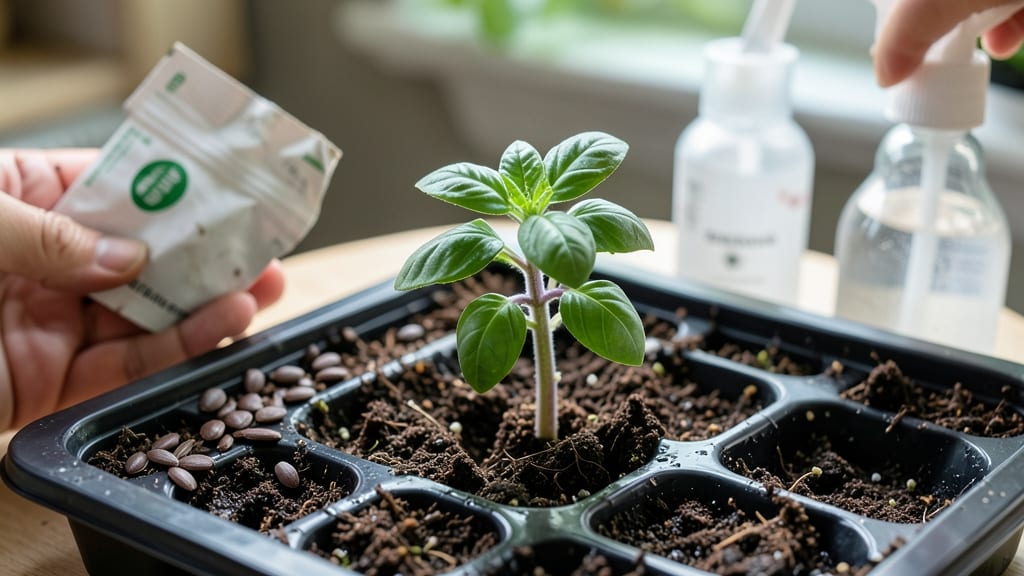
Growing basil from seed indoors gives you fresh, fragrant leaves year-round—no grocery store wilt in sight. 🌱 I started with a sunny windowsill, a handful of seeds, and a $5 pot, and now I snip basil for pesto every few weeks.
The key isn’t fancy equipment; it’s matching light, warmth, and water to what basil craves. You’ll need 4-6 seeds, a small pot with drainage, seed-starting mix, and a spray bottle for gentle watering.
Keep the soil damp but not soggy—basil hates soggy roots—and place it where it gets 6+ hours of sunlight daily. A south-facing window or grow light works best. Within 10-14 days, you’ll see tiny green sprouts pushing through the soil.
Once seedlings hit 2-3 inches tall, pinch off the top leaves to encourage bushier growth. Keep the soil moist and fertilize lightly every 2-3 weeks with diluted houseplant food.
By 6-8 weeks, you’ll have a lush, leafy basil plant ready for harvesting—just snip the outer leaves to keep it productive. This method works for any sunny spot, from kitchens to sunrooms. The first harvest feels like magic—fresh, vibrant basil straight from your windowsill. Ready to grow yours?
📚 In This Guide
- What you need
- Instructions
- Tips and common mistakes
- Wrapping up and next steps
What you need
- ● Basil seeds – 5–10 seeds (organic, non-GMO preferred for best flavor).
- ● Seed-starting trays or small pots – 2–4 (3–4" deep, with drainage holes).
- ● Seed-starting mix – 1–2 cups (lightweight, sterile, and well-draining).
- ● Grow lights or a sunny windowsill – 12–16 hours of light daily (south-facing window or LED grow light).
- ● Spray bottle – For gentle watering (1–2 sprays per day).
- ● Plastic wrap or humidity dome – To retain moisture until germination.
- ○ Small fan (optional but helpful) – For airflow (prevents mold).
- ● Heat mat – Speeds up germination (70–75°F ideal).
- ● Fertilizer – Balanced liquid fertilizer (5-5-5 or organic fish emulsion).
- ● Pencil or toothpick – For gently pressing seeds into soil.
- ● Tweezers – For delicate seed placement.
- ● Permanent marker – To label pots (basil vs. other herbs!).
Step-by-step instructions for growing basil from seed indoors
Here's my foolproof method for coaxing basil seedlings from seed—no green thumb needed.
🌱 Step 1: Prepare Containers and Seed Starting Mix
Fill 4-inch diameter pots with a sterile seed-starting mix (never garden soil—it's too dense). I like to add a handful of perlite to each pot to improve drainage and prevent root rot. Moisten the mix until it feels like a damp sponge—squeeze gently, and it should hold together but not drip.
Press the soil down lightly with your fingers to create a firm, even surface. This prevents seeds from sinking too deep during watering. Tap the pot gently on the table once to settle everything. The goal is a loose but stable base for your seeds to root into.
🌱 Step 2: Sow Seeds at the Right Depth
Sow 2-3 seeds per pot at a depth of about ¼ inch—roughly the width of a dime. Planting too deep delays germination because the seedling must push through extra soil. Cover lightly with a thin layer of additional mix, then mist the surface with a spray bottle until evenly moist.
Here's the thing—basil seeds are tiny, so I use a toothpick to gently press them into the soil. This ensures good seed-to-soil contact, which is critical for germination. Label each pot with the date and variety if you're growing multiple types.
💧 Step 3: Provide Warmth and Humidity for Germination
Cover the pots with clear plastic wrap or a humidity dome to retain moisture and warmth. Basil seeds germinate best at 70-75°F, so place them on a seedling heat mat if your home runs cooler. You should see sprouts in 7-14 days, though cooler rooms may take longer.
Check daily but resist the urge to water—condensation inside the dome provides enough moisture. Once 50% of seeds have sprouted, remove the dome immediately to prevent damping-off disease, which causes seedlings to collapse overnight.
☀️ Step 4: Move to Bright, Indirect Light
The instant seedlings emerge, they need 12-14 hours of bright, indirect light daily. A south-facing window works, but supplement with a grow light if your space is dim. Position the light 3-4 inches above the plants and raise it as they grow to maintain that distance.
Watch for leggy growth—thin, pale stems with leaves spaced far apart. This happens when light is insufficient. If you see this, move the seedlings closer to the light source or increase exposure time. Strong seedlings have thick stems and deep green leaves with minimal spacing between them.
🌿 Step 5: Thin and Care for Established Seedlings
When seedlings reach 2 inches tall and show their first true leaves (not the initial seed leaves), thin to the strongest plant per pot. Use scissors to snip the weaker seedlings at soil level—this prevents disturbing the roots of the plant you're keeping.
Water from the bottom by placing pots in ½ inch of water for 10-15 minutes, then drain. This encourages deep root growth and prevents soil-borne diseases. Fertilize lightly with a diluted liquid fertilizer (half-strength) every 2-3 weeks once seedlings have 3-4 true leaves.
Tips & tricks for perfect indoor basil growth
Here's what nobody tells you about growing basil from seed—these tricks make all the difference between struggling seedlings and thriving plants.
Soil Preparation Secret: After filling your 4-inch pots with sterile seed-starting mix, I like to add a pinch of cinnamon to each pot before planting. This natural antifungal agent prevents damping-off disease, which can wipe out your seedlings overnight. The cinnamon works quietly in the background while your seeds germinate—no one will taste it later, but it's a game-changer for seedling survival.
Lighting Strategy: For that critical 12-14 hours of light per day, position your seedlings within 3 inches of a south-facing window during winter months when sunlight is weaker. If using a grow light, opt for a full-spectrum LED bulb that covers the entire visible light spectrum—this mimics natural sunlight better than standard white bulbs. I've seen seedlings grow 30% faster with the right spectrum light compared to regular bulbs.
Germination Timing: The 7-14 day germination window can feel like an eternity, but there's a trick to speed things up. After sowing your 2-3 seeds per pot, place the pots in a plastic bag and seal it loosely. This creates a mini greenhouse effect that maintains consistent humidity and warmth. Check daily for condensation—if you see heavy droplets, you've got the perfect moisture level. Remove the bag once you see the first sprouts.
Thinning Technique: When thinning to the strongest seedling at the 2-inch mark, I use a clean pair of scissors to snip the weaker seedlings at soil level rather than pulling them. This prevents disturbing the roots of your chosen plant and reduces shock. The snipped seedlings can actually be replanted in a separate pot if you're feeling ambitious—they often recover and grow into secondary plants!
Pro Tips for Grow Basil From Seed Indoors
- Here's what nobody tells you about growing basil from seed—these tricks make all the difference between struggling se...
- Soil Preparation Secret: After filling your 4-inch pots with sterile seed-starting mix, I like to add a pinch of cinn...
- Lighting Strategy: For that critical 12-14 hours of light per day, position your seedlings within 3 inches of a south...
Frequently asked questions
Got questions about growing basil from seed indoors?
You’re not alone! Here are some of the most common concerns—and quick, practical answers to help you grow lush, flavorful basil like a pro.
How long does it take for basil seeds to germinate?
Basil seeds typically sprout in 7–14 days when kept warm (around 70–80°F) and moist. For faster results, use a seedling heat mat or place your tray on top of the fridge. Patience is key—don’t overwater, as soggy soil can delay germination.
When will my basil be ready to harvest?
You can snip leaves for cooking 6–8 weeks after germination, but full harvest readiness (plump, aromatic leaves) takes about 8–12 weeks. Pinch off the top sets of leaves to encourage bushier growth. Avoid harvesting more than ⅓ of the plant at once to keep it thriving!
Why aren’t my basil seeds sprouting? Troubleshooting tips.
If seeds aren’t germinating, check these fixes:
- Temperature: Too cold? Move to a warmer spot (like near a sunny window or under a grow light).
- Moisture: Keep soil consistently damp (not waterlogged). Mist lightly if the surface dries out.
- Depth: Seeds need light—plant them just beneath the soil surface (⅛ inch max).
- Freshness: Old seeds (over 1 year) may struggle. Try new seeds or soak them in warm water for 24 hours to soften the hull.
Can I grow basil indoors without a sunny window?
Basil thrives under grow lights (LED or fluorescent) for 12–16 hours daily. Place lights 2–4 inches above seedlings and adjust as plants grow. South-facing windows are ideal, but even a bright kitchen counter with supplemental light works—just rotate the pot weekly for even growth.
How do I keep my indoor basil from flowering too soon?
Basil flowers signal the end of its prime flavor phase. To delay blooming:
- Provide bright light (12+ hours/day) to slow maturation.
- Harvest regularly (every 2–3 weeks) to encourage leafy growth.
- Avoid overcrowding—thin seedlings to 12 inches apart in pots.
- Use a balanced fertilizer (like 10-10-10) every 4–6 weeks to support vigorous growth.
Wrapping up and next steps
Growing basil from seed indoors is a rewarding journey that brings fresh, fragrant herbs right to your kitchen! With the right containers, light, and care, you’ll enjoy a thriving basil plant in just a few weeks—perfect for pesto, salads, or gifting to fellow plant lovers. 🌱
Now that you’re equipped with the know-how, start your seeds today and watch your green thumb grow! Once your basil is flourishing, why not expand your indoor herb garden? Try your hand at growing cilantro, parsley, or even mint next—your taste buds (and countertop) will thank you! 🌿