
Propagation
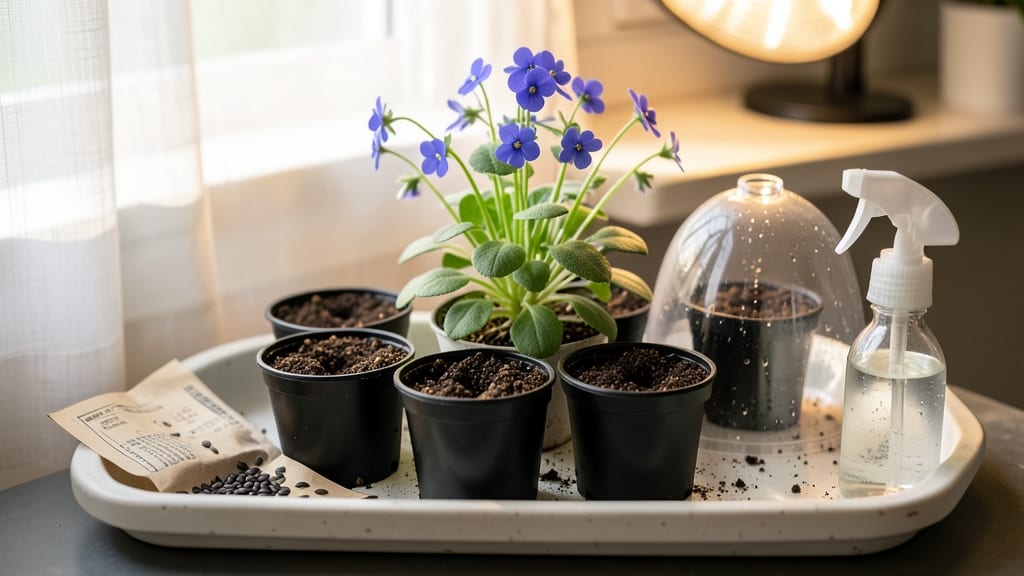
Growing forget-me-nots from seed indoors starts with a pinch of patience and a spray bottle. 🌱 These tiny blue blooms are easier to grow than you think, especially when you mimic their natural woodland habitat.
The secret lies in keeping seeds moist, warm, and shaded until those first pale green leaves appear—usually within 2-3 weeks. You’ll need a shallow tray, a fine seed-starting mix, and a clear plastic lid or plastic wrap to create a mini greenhouse.
Forget-me-not seeds are so small they look like dust, so don’t worry if they don’t cover the soil—just press them lightly into the surface. A 50°F-60°F temperature range speeds up germination, and a south-facing window or grow light keeps seedlings from stretching too tall.
Once the seedlings have their first true leaves (not the tiny seed leaves), they’ll be ready to transplant into individual pots. By late spring, you’ll see those classic sky-blue flowers popping up—6-8 weeks after sowing—and they’ll keep blooming if you deadhead spent flowers.
The key? Never let them dry out, and avoid overcrowding. Perfect for windowsills, balcony gardens, or even as a charming gift for friends. These little blooms thrive in partial shade and moist soil, making them ideal for shady spots in your yard once they’re big enough to plant out.
📚 In This Guide
- What you need
- Instructions
- Tips and common mistakes
- Wrapping up and next steps
What you need
- ● Forget-me-not seeds: A packet of Myosotis seeds (choose a variety like ‘Blue Ball’ or ‘Pink Ball’). Aim for 10-20 seeds for a small indoor batch.
- ● Seed-starting trays or small pots: 2-4 inch deep with drainage holes (biodegradable pots work great!). You’ll need 1 tray or 4-6 pots for 10-20 seeds.
- ● High-quality seed-starting mix: Lightweight, sterile, and well-draining. A 10-15 quart bag should suffice for multiple trays.
- ● Grow lights or a sunny windowsill: Forget-me-nots need 12-16 hours of light daily. A LED grow light (12-24 inches tall) is ideal if natural light is limited.
- ● Misting spray bottle: For gentle watering without disturbing seeds.
- ● Clear plastic wrap or humidity dome: To retain moisture while seeds germinate.
- ○ Heat mat (optional but helpful): Keeps soil 65-70°F to speed up germination.
- ● Fertilizer: A balanced liquid fertilizer (5-5-5 or 10-10-10) diluted to half-strength for seedlings.
- ● Plant labels: To track varieties and planting dates.
- ● Tweezers or a small spoon: For delicate seed placement.
- ● Fungicide (like hydrogen peroxide or a commercial product): Prevents damping-off in humid conditions.
Step-by-step instructions for growing forget-me-nots indoors
Here's the simple method I've used to coax these delicate blooms from tiny seeds—no fancy tools needed.
🌱 Step 1: Prepare the Seed Starting Mix
Fill your seed trays with a sterile seed-starting mix—never garden soil, which can harbor fungus that kills delicate forget-me-not seedlings. I like to add a pinch of perlite to the mix to improve drainage, since these plants hate soggy roots. Moisten the mix until it feels like a damp sponge—squeeze it gently, and it should hold its shape without dripping.
Use a small hand trowel to create shallow furrows about ¼ inch deep across the tray. Forget-me-not seeds are tiny, so spacing isn't critical yet, but I like to keep them in neat rows for easier thinning later. Tap the tray gently on the table to settle the soil evenly—this prevents air pockets that could dry out the seeds.
🌱 Step 2: Sow the Seeds and Cover Lightly
Here's where it gets fun—grab your seed packet and sprinkle the seeds along the furrows. Forget-me-not seeds are so small that I use a toothpick to space them about ½ inch apart (this prevents overcrowding later). Don't worry if they don't look perfectly even—they'll self-thin as they grow.
Cover the seeds with a thin layer of soil—just enough to hide them completely. Press lightly with your finger so they make good contact with the moist mix. Forget-me-nots need darkness to germinate, so avoid pressing too hard or you'll bury them too deep. Mist the surface with a spray bottle until the soil looks evenly damp but not wet.
💧 Step 3: Create a Humid, Warm Environment
Place the tray in a clear plastic bag or cover it with a humidity dome to trap warmth and moisture. Forget-me-nots germinate best in 65-75°F soil, so I set the tray on top of my seedling heat mat (or on a warm spot near my fridge). Keep the bag sealed but check daily for condensation—if you see water droplets, open it for 10 minutes to air out.
Germination can take 2-4 weeks, so patience is key. I place the tray on a south-facing windowsill (even without light) to keep it warm. Once you see tiny green sprouts, remove the cover immediately—excess moisture now causes damping-off, a fungal disease that collapses seedlings overnight.
☀️ Step 4: Provide Gentle Light and Thin Seedlings
When the first true leaves (not the initial seed leaves) appear, move the tray under bright, indirect light. Forget-me-nots don't need full sun yet—they'll scorch if exposed too soon. I use a grow light on a 12-hour timer, keeping it 4-6 inches above the seedlings. You'll know they're getting enough light when the leaves stay bright green and don't stretch toward the light.
Thin the seedlings to 1 inch apart when they have 2-3 true leaves. Use clean scissors to snip unwanted seedlings at soil level—don't pull them, or you'll disturb the roots of the ones you're keeping. This step might seem harsh, but crowded seedlings grow weak and leggy, and forget-me-nots need space to develop strong stems.
🪴 Step 5: Transplant and Encourage Blooms
Once seedlings have 4-5 true leaves (about 6-8 weeks after sowing), transplant them into individual 3-inch pots filled with the same seed-starting mix. Handle them by the leaves, not the stems, to avoid damage. Water gently after transplanting, and place them back under bright, indirect light for another 2 weeks before introducing them to morning sun only. Forget-me-nots are sensitive to heat, so avoid direct afternoon sun.
When flowers form, you'll see tiny blue or white blooms appear on 6-inch stems. To encourage more blooms, deadhead spent flowers by pinching them off with your fingers. Forget-me-nots are perennial in mild climates, but if you're growing them as annuals, enjoy their delicate blooms for 6-8 weeks before they fade. The key is keeping the soil evenly moist (not soggy) and providing gentle light—they'll reward you with those signature tiny flowers.
Tips & tricks for growing forget-me-nots indoors
These little tricks will help you coax those delicate blooms from tiny seeds without the guesswork.
The Humidity Factor: Forget-me-not seeds need consistent moisture during germination, but too much water causes damping-off—a fungal disease that can wipe out seedlings overnight. After sowing, place the tray in a sealed plastic bag with a small weight on top to create a greenhouse effect. Check daily for condensation; if you see water droplets, open the bag for exactly 10 minutes to air out. This balance keeps humidity high enough for germination while preventing fungal growth.
Lighting Strategy: Forget-me-nots are sensitive to light changes, so wait until you see true leaves (not the initial seed leaves) before introducing any light source. At that point, position your grow light 4-6 inches above the seedlings and keep it on a 12-hour timer. If you notice the seedlings stretching toward the light (a sign of etoliation), lower the light slightly or increase the distance to 6 inches. Bright, indirect light is key—these plants won't tolerate harsh sunlight until they're fully hardened off.
Transplanting Tip: When it's time to transplant seedlings into individual pots, handle them by the leaves rather than the stems to avoid damaging the delicate growth. After transplanting, place the pots back under bright, indirect light for 2 weeks before gradually introducing morning sun. I like to start with just 1-2 hours of morning sun per day and increase by 30 minutes every other day. This slow acclimation prevents shock and helps the plants develop strong stems.
Deadheading Done Right: To encourage continuous blooming, pinch off spent flowers between your fingers rather than cutting with scissors. This small difference prevents damaging the stem and encourages the plant to produce more blooms. I do this every 2-3 days once flowers start appearing. Forget-me-nots are self-cleaning, but giving them a little help extends their blooming period from 6-8 weeks to sometimes 10-12 weeks in ideal conditions.
Pro Tips for Grow Forget Me Nots From Seed Indoors
- These little tricks will help you coax those delicate blooms from tiny seeds without the guesswork.
- The Humidity Factor: Forget-me-not seeds need consistent moisture during germination, but too much water causes damping-off—a fungal disease that can wipe out seedlings overnight.
- Lighting Strategy: Forget-me-nots are sensitive to light changes, so wait until you see true leaves (not the initial seed leaves) before introducing any light source.
Frequently asked questions
about growing forget-me-nots from seed indoors—because every gardener deserves a little clarity!How long does it take for forget-me-not seeds to germinate?
Patience is key! Forget-me-not seeds typically germinate in 14–21 days under ideal conditions (consistent moisture, warmth, and indirect light). If you’re not seeing sprouts after 3 weeks, gently check for mold or rot—sometimes seeds need a little coaxing. Keep the soil damp but not soggy!
When is the best time to start forget-me-not seeds indoors?
For a head start, sow seeds 8–10 weeks before your last frost date. Since forget-me-nots thrive in cool weather, starting them early ensures they’ll bloom by late spring or early summer. If you’re in a warm climate, you can even try fall sowing for winter blooms!
Why aren’t my forget-me-not seeds sprouting?
Seeds might struggle due to dry soil, poor light, or old seeds. Try these fixes:
- Moisture check: Use a spray bottle to keep soil evenly damp.
- Light boost: Move trays to a brighter spot (but avoid direct sun).
- Fresh seeds: Forget-me-not seeds lose viability after 1–2 years.
- Stratification: Chill seeds in the fridge for 2–4 weeks before planting if germination is slow.
Can I grow forget-me-nots from seed in water instead of soil?
While forget-me-nots can sprout in water, it’s riskier long-term. Seeds may germinate in a jar of water, but once sprouted, they need soil immediately to develop roots. For best results, stick with moist soil or a seed-starting mix. If you try water, transfer seedlings to soil within 3–5 days!
How do I keep forget-me-not seedlings from getting leggy?
Leggy seedlings are a sign of too little light. Move your trays closer to a sunny window or use a grow light 2–3 inches above seedlings for 12–14 hours daily. Once they have 2–3 true leaves, thin them to 3–4 inches apart to prevent overcrowding and encourage sturdy growth.
Wrapping up and next steps
Growing forget-me-nots from seed indoors is a rewarding journey that lets you nurture delicate blooms from the comfort of your home! With the right light, soil, and patience, you’ll soon enjoy their charming blue and white flowers—perfect for adding a touch of whimsy to your garden.
Once your seedlings are thriving, transplant them outdoors when temperatures warm up and frost is no longer a threat.
Ready to take the next step? Experiment with different varieties or share your newfound skills by gifting seedlings to fellow plant lovers! 🌱✨