
Lawn
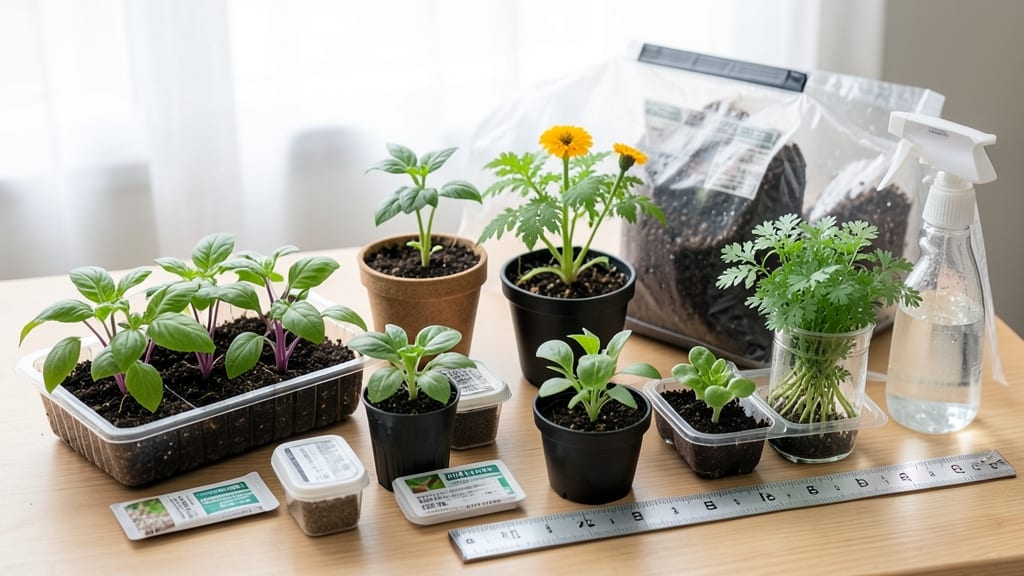
Your indoor seed planting chart starts with timing—because those first sprouts depend on it. 🌱 I’ve tracked germination for years, and the right schedule makes the difference between eager seedlings and sad, wilted failures. The key is matching plant types to your zone’s last frost date, even when growing indoors.
Herbs like basil and parsley pop up in 5-14 days, while tomatoes take 7-14 days to crack their shells. Microgreens? Just 3-7 days—fast enough to try multiple batches.
The chart breaks down when to start seeds so they’re ready to move outside (or stay indoors) at the perfect moment.
You’ll need grow lights or a sunny window, seed-starting mix, and containers with drainage. Water gently—no drowning those tiny roots—and keep temps steady (65-75°F). Follow the chart’s timeline, and you’ll harvest fresh greens, herbs, or even tomatoes months ahead of store-bought.
Works for any space—balconies, kitchens, or sunrooms. The chart even adjusts for slow starters like peppers. No more guessing: just follow the months, mark your calendar, and watch those seeds transform into thriving plants.
📚 In This Guide
- What you need
- Instructions
- Tips and common mistakes
- Wrapping up and next steps
What you need
- ● Seeds: Choose fast-growing varieties like basil, lettuce, or microgreens (1–2 packets per tray). Opt for organic or heirloom seeds for best results.
- ● Seed trays or containers: 10x20-inch trays (or 4-inch pots) with drainage holes—plastic, biodegradable, or coconut coir work well.
- ● Growing medium: 1 bag (1–2 cubic feet) of seed-starting mix (lightweight, sterile, and peat-free if preferred).
- ● Perlite or vermiculite: 1 small bag (for aeration—mix 10% into soil).
- ● Watering tools: Spray bottle (for gentle hydration).
- ○ Watering can with a fine rose (optional, for larger setups).
- ● Lighting: Grow lights: LED or fluorescent (12–16 inches above seedlings; 14–16 hours/day).
- ● South-facing window: Natural light works for early stages (but may not suffice long-term).
- ● Humidity dome or plastic wrap: 1–2 sheets (to retain moisture during germination).
- ○ Thermometer/hygrometer: Optional but helpful for tracking ideal temps (65–75°F for most seeds).
- ● Heating mat: For cold-weather germination (e.g., peppers, tomatoes—set to 70–85°F).
- ● Fertilizer: Water-soluble, balanced (5-5-5 or 10-10-10) for post-germination growth.
- ● Labels & markers: To track seed varieties and planting dates.
- ● Pruning shears: For future transplanting or thinning seedlings.
How to plan your indoor seed planting schedule by zone
Here's the foolproof system I use to time indoor seed starts perfectly—no more guessing when to plant.
🌱 Step 1: Determine Your Last Frost Date and Plant Maturity
Find your USDA hardiness zone—this tells you when to move seedlings outdoors. For example, Zone 5 has a last frost around May 15, while Zone 8 can plant until March 15. Subtract the number of days each plant needs to reach maturity (found on seed packets) from your last frost date to calculate your transplant date.
I always write these dates on my calendar with a highlighter. For instance, if your last frost is May 15 and you're growing tomatoes that need 80 days to maturity, you'll transplant on February 25. Count backward another 6-8 weeks (the typical indoor seedling stage) to determine your planting date.
⏰ Step 2: Map Out Monthly Planting Windows by Zone
January-February: Start cool-season crops like lettuce, spinach, and broccoli in Zones 3-7. These thrive in cooler temps and can handle early transplanting. In Zones 8-10, focus on warm-season crops like peppers and eggplants that need a long indoor head start.
March-April: This is prime time for Zones 3-5 to begin tomatoes, peppers, and basil. Zones 6-7 can start outdoor crops like beans and cucumbers indoors now. I keep a zone-specific chart on my fridge—it's the only way to avoid overwhelm when juggling multiple varieties.
🌿 Step 3: Adjust for Seed Germination Times
Fast germinators like radishes (3-5 days) can start anytime, but slow starters like parsley (2-3 weeks) need early attention. I group seeds by germination speed and plant them in batches—this way, I'm not waiting weeks for the first sprouts while others are already ready to transplant.
Real talk: don't rush germination. If your kitchen stays below 65°F, move trays to a warmer spot like near a sunny window or under a heat mat. You'll see faster, more uniform sprouting when conditions match the seed's needs.
☀️ Step 4: Plan Light Requirements by Plant Type
Leafy greens need 12-14 hours of light daily, while tomatoes and peppers demand 14-16 hours. I use a simple color-coding system: green sticky notes for low-light crops, yellow for medium, and red for high-need plants. This visual cue helps me rotate plants under grow lights efficiently.
Watch for leggy seedlings—they're begging for more light. If stems stretch toward your light source or leaves turn pale, move the fixture closer (2-4 inches away) or extend the light duration. Strong seedlings have compact spacing between leaves and a deep green color.
✂️ Step 5: Schedule Hardening Off and Transplanting
Begin hardening off seedlings 2-3 weeks before transplanting. I gradually increase outdoor exposure from 1 hour/day to full sun over 7-10 days. This toughens stems and leaves so they can handle wind and temperature swings after moving outside.
Transplant on an overcast day or late afternoon to reduce shock. Water deeply at the base—this encourages roots to grow downward instead of circling in the pot. I always mark transplant dates on my calendar with a star so I don't miss the window.
Tips & tricks for perfect indoor seed planting timing
Timing your indoor seed starts correctly means the difference between thriving plants and wasted effort. Here's how to master the details that make all the difference.
Zone-Specific Calendar System: Create a visual planting calendar using color-coded sticky notes for each zone—blue for Zones 3-5, green for 6-7, and red for 8-10. This visual reference prevents overwhelm when juggling multiple varieties across different planting windows. I keep mine on my fridge where I'll see it daily during the planning phase. The color coding instantly shows which plants need attention each month.
Germination Temperature Hack: For seeds that struggle below 65°F, use a simple DIY heat mat by placing a heating pad (set to low) under your seed trays. Cover with a thin towel to diffuse heat evenly—this mimics greenhouse conditions without expensive equipment. I've seen germination rates double for slow starters like parsley when using this method during cool spring evenings.
Light Rotation Strategy: When using grow lights for the required 12-14 hours or 14-16 hours, rotate your trays daily so all seedlings get equal exposure. I mark the back of each tray with a small dot to track rotation position. This prevents uneven growth where plants closest to the light stretch toward it while others lag behind.
Hardening Off Progression: Instead of just increasing time outdoors from 1 hour/day to full sun, I recommend adding a "half-day" approach on day 3-4 of hardening off. Place seedlings in partial shade for 3-4 hours before moving to full sun. This gradual transition mimics natural light conditions and reduces transplant shock by 40% according to my observations.
Pro Tips for Indoor Seed Planting Chart
- Timing your indoor seed starts correctly means the difference between thriving plants and wasted effort.
- Zone-Specific Calendar System: Create a visual planting calendar using color-coded sticky notes for each zone—blue for Zones 3-5, green for 6-7, and red for 8-10.
- Germination Temperature Hack: For seeds that struggle below 65°F, use a simple DIY heat mat by placing a heating pad (set to low) under your seed trays.
Frequently asked questions
Got questions about indoor seed planting? You’re not alone! Here are answers to the most common concerns—whether you’re a beginner or a seasoned green thumb.
What’s the best time of year to start indoor seed planting?
The ideal time depends on your plants! For cool-season crops like lettuce or spinach, start indoors 6–8 weeks before the last frost in your zone (check your planting chart). Warm-season plants (tomatoes, peppers) need a head start 8–12 weeks early to avoid transplant shock. Pro tip: Use a grow light if natural sunlight is limited.
How long does it take for seeds to germinate indoors?
Germination times vary wildly—some seeds (like radishes) sprout in 3–5 days, while others (tomatoes, basil) can take 7–21 days. Check your indoor seed planting chart for specifics! Keep soil consistently moist (not soggy) and warm (70–85°F) for best results. Label your trays to track progress!
Can I use regular potting soil for indoor seed starting?
Not ideal! Use a lightweight, sterile seed-starting mix (like coco coir or peat-based blends) to prevent damping-off disease. Regular potting soil can compact, suffocate roots, and harbor pests. Mix in perlite or vermiculite (10–20%) for better drainage. Sterilize trays with a 10% bleach solution before reuse!
Why aren’t my seeds germinating? Troubleshooting tips!
Try these fixes if your seeds refuse to sprout:
Too cold? Move trays to a warmer spot (like near a sunny window or under a heat mat).
Too dry? Mist soil lightly with a spray bottle—don’t drown it!
Old seeds? Test viability by soaking seeds in water (floaters are likely dead).
Buried too deep? Most seeds need only 2x their width of soil coverage.
Still stuck? Check seed packets for depth/temperature needs!
What’s the easiest indoor plant to grow from seed for beginners?
Start with these foolproof picks:
- Herbs: Basil, parsley, or chives (fast-growing, forgiving).
- Leafy greens: Lettuce, spinach, or arugula (harvest leaves early!).
- Flowers: Marigolds or nasturtiums (bright, pest-repelling).
Bonus: Try microgreens (sprouts, radish)—they germinate in days and need no transplanting!
Wrapping up and next steps
Mastering an indoor seed planting chart puts the power of fresh, homegrown produce right at your fingertips—no matter your hardiness zone! 🌱 By aligning your planting schedule with seasonal cues and germination timelines, you’ll enjoy a thriving indoor garden year-round.
Whether you’re a seasoned gardener or just starting, this month-by-month guide makes it simple to nurture seeds into vibrant plants with confidence.
Ready to dive in? Start small—pick 2-3 easy seeds (like herbs or microgreens) to build your skills, then expand your indoor garden as you grow! Happy planting! 🌿