
Lawn
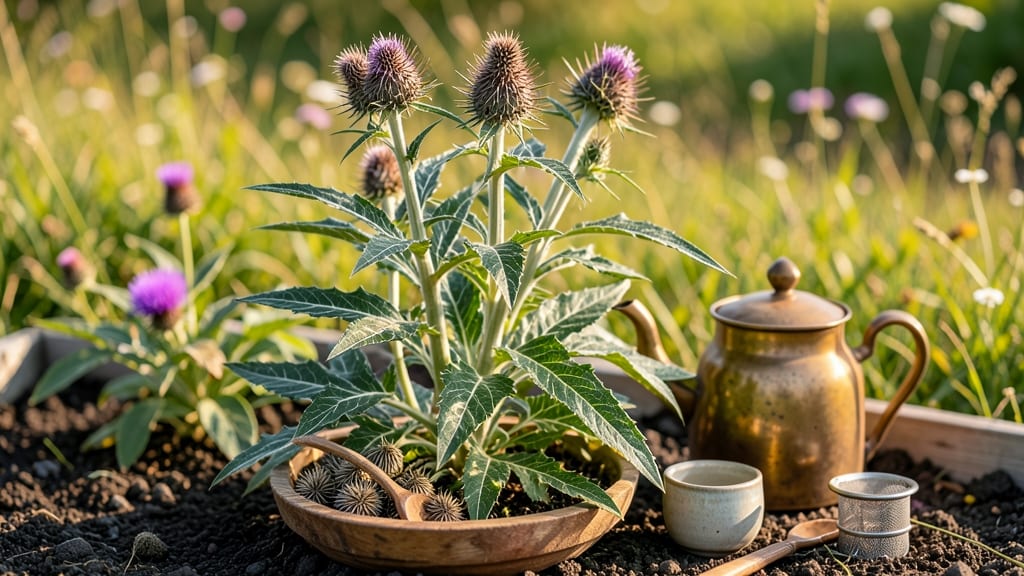
Harvesting milk thistle seed tea transforms your garden into a natural apothecary. 🌿 The spiky purple blooms of Silybum marianum yield seeds packed with silymarin—a compound often linked to liver support.
But before you brew, you’ll need to harvest, dry, and store them properly, or the flavor turns bitter and the benefits fade.
Start by harvesting fully mature seed heads in late summer when the flowers turn brown and papery. Let them dry completely on a screen or paper towel—this takes about 2 weeks—before gently rubbing the seeds free from the husks.
Store them in an airtight jar away from light, where they’ll keep their potency for up to 1 year.
For the tea, steep 1 teaspoon of seeds in 1 cup of boiling water for 10-15 minutes, then strain. The result is a rich, earthy brew with a slightly nutty aftertaste—nothing like your average herbal tea.
Sip it daily for a gentle herbal boost, but remember: it’s not a substitute for medical treatment.
Growing milk thistle is easy if you have full sun and well-drained soil. The plants thrive in USDA zones 3-10, and their striking foliage adds drama to any garden.
Just watch for aphids and keep the soil consistently moist until they establish. With a little care, you’ll have your own supply of detoxifying seeds in no time.
📚 In This Guide
- What you need
- Instructions
- Tips and common mistakes
- Wrapping up and next steps
What you need
- ● Milk thistle seeds (Silybum marianum) – 1–2 teaspoons (2–5 grams), organic or high-quality dried seeds (ensure they’re food-grade and free from pesticides).
- ● Hot water – 1 cup (8 oz or 240 mL), freshly boiled (212°F/100°C).
- ● Teapot, French press, or heatproof mug – A vessel that holds at least 1.5 cups (12 oz) to steep comfortably.
- ○ Fine-mesh strainer or cheesecloth – To filter out seed particles (optional if using a French press).
- ○ Honey, maple syrup, or lemon (optional but recommended) – A dash (½ tsp–1 tsp) to balance earthy flavors.
- ● Mortar and pestle (or coffee grinder) – For crushing seeds to release more silymarin (boosts potency).
- ● Tea infuser or reusable tea bag – If you prefer a cleaner brew without straining.
- ● Cinnamon stick or ginger slice – Adds warmth and complements the herbal profile.
- ○ Thermometer (optional) – To monitor water temp (ideal range: 195–205°F/90–96°C).
Step-by-step guide to brewing milk thistle seed tea
Here’s how to craft a potent, earthy liver-supportive tea using whole milk thistle seeds—no steeped leaves or weak infusions here.
🌱 Step 1: Toast the Seeds for Enhanced Flavor and Benefits
Preheat your oven to 350°F and spread 1 tablespoon of milk thistle seeds on a baking sheet lined with parchment paper. Toast for 8-10 minutes, stirring halfway, until the seeds turn a deeper golden brown and release a nutty aroma. This step unlocks more antioxidants and deepens the tea’s earthy, slightly bitter profile—critical for liver support.
Watch closely after 7 minutes—seeds burn quickly. Remove immediately when they smell toasty and slightly caramelized. Let them cool completely before proceeding, as residual heat can alter the flavor and reduce potency.
💧 Step 2: Cold-Steep for Maximum Potency
Place the toasted seeds in a quart-sized glass jar and cover them with 1 cup of cold, filtered water. Seal the jar tightly and let it steep at room temperature for 12 hours—this slow extraction preserves delicate compounds that heat would destroy. The longer the steep, the more silymarin (the active liver-protective compound) leaches out.
Shake the jar gently every 4 hours to agitate the seeds and ensure even infusion. You’ll notice the water take on a pale golden hue and a faintly herbal scent after just a few hours. Strain through a fine-mesh sieve or cheesecloth into a clean container, pressing gently to extract every last drop.
☀️ Step 3: Warm and Sweeten (Optional) for Palatability
Gently heat the strained tea over low heat until it reaches 160°F—just warm enough to release its aroma without boiling, which can degrade delicate compounds. If the flavor is too bitter for your palate, stir in 1 teaspoon of raw honey or a pinch of cinnamon to balance the earthiness while preserving the tea’s benefits.
For a stronger brew, repeat the cold-steep process with the same seeds for another 8-12 hours, then strain again and combine with the first batch. This double-extraction method maximizes silymarin yield, making it ideal for targeted liver support. Store the finished tea in the refrigerator for up to 5 days.
⏰ Step 4: Consume Strategically for Liver Support
Drink ½ to ¾ cup daily, split into two servings—morning and early evening—to align with your liver’s natural detox cycles. The tea’s earthy depth pairs well with light meals or as a mid-afternoon pick-me-up. For best results, sip it slowly, allowing the liquid to coat your mouth and throat, which enhances absorption of the active compounds.
If you notice the tea’s bitterness lingering, it’s a sign of high silymarin content—don’t dilute it. Instead, follow each serving with a small piece of fruit or a sip of water to cleanse your palate. Consistency matters: aim for at least 2 weeks of daily use to experience noticeable liver-supportive effects.
Tips & tricks for perfect milk thistle seed tea
Between us, these little details make all the difference when crafting a truly potent liver-supportive brew.
Toast Timing Precision: The 8-10 minute toast at 350°F is where flavor magic happens—but don't let those seeds linger past minute 7! I learned this the hard way after burning three batches. Watch for that nutty aroma (not smoke!) and remove immediately. The seeds should be golden brown, not dark brown or blackened. Pro tip: Use a timer and set it for 7 minutes—this gives you the full 3 minutes of wiggle room to catch the perfect moment.
Cold-Steep Optimization: That 12-hour cold steep isn't just arbitrary—it's when silymarin, the active liver-protective compound, reaches its peak extraction. Here's what I do: I set my steep to start right before bed, so it's ready in the morning. The 4-hour shake reminders? Use your phone's alarm feature and label it "Milk Thistle Shake" so you don't forget. This gentle agitation really maximizes what you get from those seeds.
Double-Extraction Strategy: The optional second 8-12 hour steep is where you get the most bang for your buck. Think of it like getting two cups of tea from one batch of seeds instead of one. I always do this for my first few batches to understand the flavor profile better. Just remember to strain thoroughly after each extraction—those seeds can get mushy if left too long in the second steep.
Storage Wisdom: The 5-day fridge life comes from proper storage techniques. I use dark glass jars (or wrap regular jars in aluminum foil) to block light, which degrades the delicate compounds. Also, leave about 1/2 inch of headspace—this prevents oxidation when you open the jar. For longer storage, freeze the tea in ice cube trays and transfer to a freezer bag for up to 3 months.
Pro Tips for Milk Thistle Seed Tea
- Between us, these little details make all the difference when crafting a truly potent liver-supportive brew.
- Toast Timing Precision: The 8-10 minute toast at 350°F is where flavor magic happens—but don't let those seeds linger past minute 7!
- Cold-Steep Optimization: That 12-hour cold steep isn't just arbitrary—it's when silymarin, the active liver-protective compound, reaches its peak extraction.
Frequently asked questions
Got questions about milk thistle seed tea? You’re not alone!
Here are answers to the most common queries—from preparation to effects—so you can brew with confidence.
What does milk thistle seed tea actually taste like?
Expect an earthy, slightly bitter flavor with nutty undertones—similar to roasted coffee or dark chocolate. Some compare it to dandelion root tea. If the bitterness is too strong, try steeping for shorter (5–7 minutes) or adding a touch of honey or cinnamon.
How long does it take for milk thistle tea to work?
Consistency is key! Most people notice benefits (like improved digestion or energy) after 2–4 weeks of daily use. For liver support, aim for at least 4 weeks to see noticeable changes. Short-term effects (like reduced bloating) may appear sooner.
Can I drink milk thistle tea every day?
Yes! Many herbalists recommend 1–3 cups daily for liver health, but start with 1 cup to assess tolerance. Overdoing it (e.g., >3 cups/day) might cause mild digestive upset. If you’re on medication (especially blood thinners or diabetes drugs), check with a doctor first.
What’s a good alternative if I don’t like the taste?
Try these milder options for liver support:
- Dandelion root tea – Less bitter, with a coffee-like flavor.
- Turmeric-ginger tea – Anti-inflammatory and easy to mask with lemon.
- Milk thistle capsules – Convenient if brewing isn’t your thing (but tea retains more antioxidants!).
Will milk thistle tea make me feel weird or cause side effects?
Mild side effects (like nausea or loose stools) can occur if you overdo it, but they’re rare. Start with a small dose (½ cup) to test your tolerance. If you experience severe reactions (e.g., rash, dizziness), discontinue use and consult a healthcare provider.
Pro Tip:
Store-bought milk thistle tea blends often include other herbs (like chamomile or licorice) to soften the flavor. If you’re DIY-ing, mix 1 tsp seeds with 1 cup boiling water and steep for 10 minutes—then strain through a fine mesh sieve for the smoothest brew.
Wrapping up and next steps
Incorporating milk thistle seed tea into your routine could be a delicious and natural way to support liver health and enjoy its earthy, nutty flavors. 🌿 With its rich antioxidants and silymarin content, this herbal brew offers a gentle yet powerful boost to your wellness journey—just remember to consult your healthcare provider before making it a staple.
Ready to try? Start small: brew a cup this week, savor the process, and listen to how your body responds!