
Lawn
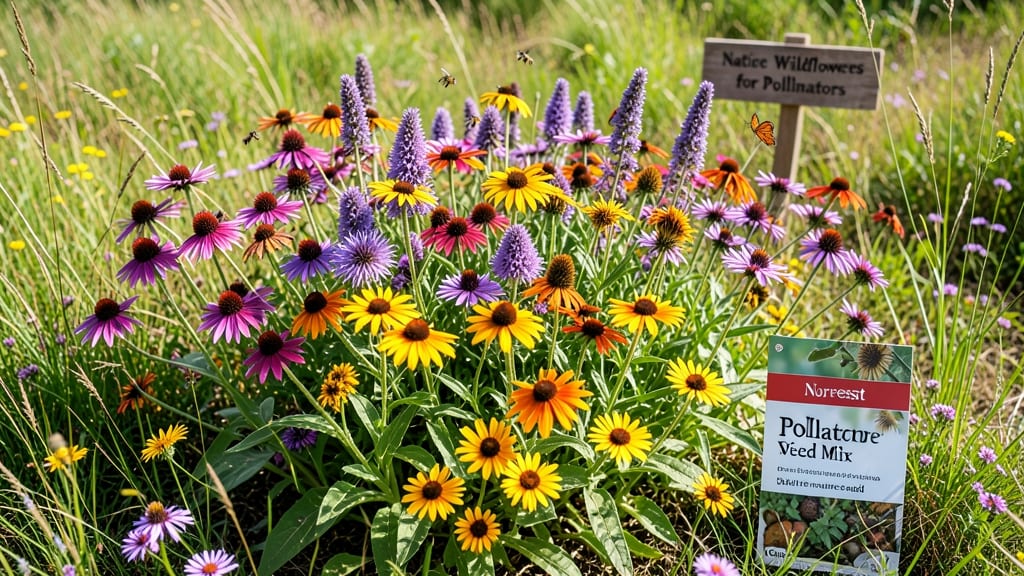
A Northeast pollinator wildflower seed mix turns your yard into a buzzing, blooming haven that keeps bees and butterflies fed from spring through fall. 🌸 I planted mine last spring along a sunny meadow edge, and now hummingbirds dart between the blooms while bees pack pollen—something store-bought lawns never do.
This mix thrives where native plants do best: sunny borders, meadows, or wildflower gardens with well-draining soil. The seeds include black-eyed Susans, milkweed, and coneflowers—all pollinator magnets that attract monarchs, bumblebees, and even rare native bees. Unlike annuals, these perennials return every year, reducing replanting work.
By summer, your garden becomes a nonstop buffet for wildlife, with blooms in every color and texture. The air hums with activity, and your neighbors will ask how you created such a vibrant, alive space. The best part? No pesticides needed—just let nature take over.
Perfect for small borders, large meadows, or even container gardens—just match the mix to your sunlight and soil. Here’s how to make it work without the guesswork.
📚 In This Guide
- What you need
- Instructions
- Tips and common mistakes
- Wrapping up and next steps
What you need
- ● Northeast Pollinator Wildflower Seed Mix – 1 lb (16 oz) per 100 sq ft (adjust based on garden size)
- ● Garden soil or prepared planting bed – Well-draining, free of weeds and debris
- ● Water source – Hose, watering can, or sprinkler (light but consistent moisture is key!)
- ● Garden rake – To loosen soil and remove rocks
- ○ Handheld or broadcast spreader – For even seed distribution (optional but helpful)
- ● Gloves – To keep hands clean and protected
- ● Measuring tape or string – To mark planting areas (if needed)
- ● Compost or organic fertilizer – Boosts soil health (mix 1–2 inches into topsoil)
- ● Mulch (straw or shredded leaves) – Retains moisture and suppresses weeds
- ● Bird netting – Protects seeds from hungry birds (if planting in high-traffic areas)
Step-by-step instructions for planting a Northeast pollinator wildflower meadow
Here’s how to create a thriving, bee-friendly wildflower meadow that blooms from spring to fall.
🌱 Step 1: Prepare the Soil for Optimal Germination
Choose a sunny location with at least 6 hours of direct sunlight daily. Clear the area of existing vegetation, then loosen the top 4-6 inches of soil with a broadfork or tiller. This breaks up compacted layers so roots can establish easily. Avoid tilling too deep—wildflowers have shallow roots and don’t need heavy disturbance.
Rake the surface smooth to create a fine seedbed. The goal is a level, loose soil that mimics natural meadow conditions. If your soil is very dense or clay-heavy, mix in 1-2 inches of compost to improve drainage and fertility. This step ensures seeds make contact with moist soil, which is critical for germination rates.
🌿 Step 2: Scatter Seeds Evenly for Natural Density
Open the seed mix and spread it evenly across the prepared area. For a 100-square-foot plot, you’ll need about 1/2 pound of seed. Walk in a crisscross pattern, scattering seeds lightly by hand—don’t press them into the soil. Wildflower seeds need light to germinate, so covering them too deeply will reduce your success rate.
After scattering, use a lightweight rake to gently press seeds into the soil surface. This ensures good seed-to-soil contact without burying them. Lightly water the area to settle the seeds, but avoid heavy watering, which can wash them away. You’ll see tiny sprouts emerge within 2-4 weeks, depending on the species and weather.
💧 Step 3: Water Strategically to Encourage Strong Growth
Keep the soil consistently moist but not soggy for the first 4-6 weeks after planting. Water deeply 2-3 times per week, aiming for about 1/2 inch of water per session. Use a gentle sprinkler or soaker hose to avoid disturbing the delicate seedlings. Overhead watering can cause seedling disease, so water at the base whenever possible.
Once seedlings reach 3-4 inches tall, reduce watering to 1-2 times per week. Mature wildflowers are drought-tolerant, so the goal is to establish deep roots early. You’ll know you’re on track when you see a mix of green foliage and the first blooms appearing in 6-8 weeks. This phase is where many gardeners overwater—resist the urge!
✂️ Step 4: Maintain the Meadow for Year-Round Blooms
Allow the wildflowers to grow and bloom naturally for the first year. In late fall or early winter, mow the area to 4-6 inches tall to remove dead plant material. This prevents seedling competition and allows sunlight to reach the soil for next year’s growth. Avoid cutting too short—wildflowers need some foliage to store energy for regrowth.
In subsequent years, mow once or twice annually, timing cuts just after the main blooming period. This encourages new growth and prevents woody plants from taking over. With proper care, your meadow will support pollinators from early spring through late fall, providing a continuous food source for bees, butterflies, and beneficial insects.
☀️ Step 5: Monitor and Enhance for Long-Term Success
Watch for invasive species like creeping charlie or dandelions, which can outcompete your wildflowers. Pull these by hand or spot-treat with vinegar-based herbicide if needed. Native wildflowers are tough once established, but they need a fighting chance early on. You’ll notice a shift in the ecosystem over time—more bees, fewer pests, and a vibrant, self-sustaining garden.
Consider adding a small water source, like a shallow dish with pebbles, to attract even more pollinators. Over time, your meadow will become a pollinator magnet, proving that a little effort yields big rewards for both your garden and local wildlife. The key is patience—wildflower meadows reach their full potential in the second or third year.
Tips & tricks for perfect Northeast pollinator wildflower meadows
Transforming your yard into a buzzing pollinator paradise takes more than just seeds—here's what I've learned from years of planting these meadows that actually thrive.
Soil Prep Secret: The key to successful germination lies in that 4-6 inch soil loosening—don't skip this! Use a broadfork instead of a tiller to avoid compacting the soil again. I've found that adding 1-2 inches of compost makes a world of difference in clay-heavy soils, helping those delicate wildflower roots establish quickly. For the best results, work when soil is slightly damp but not muddy.
Seed Scattering Strategy: When you're scattering that ½ pound of seed for your 100-square-foot plot, think "light dusting" rather than "heavy sprinkle." Wildflower seeds are tiny and need sunlight to germinate—burying them too deep will kill your chances. Walk in that crisscross pattern and take your time; uneven distribution leads to patchy meadows. I always scatter a little extra on the edges where sunlight might be slightly less intense.
Watering Wisdom: The 4-6 week moist-but-not-soggy phase is critical—this is where most failures happen. I've ruined several meadows by either underwatering (seeds dry out) or overwatering (seedlings rot). Use a rain gauge to measure that ½ inch per session—it's easier than you think! Once those seedlings hit 3-4 inches, you can back off to 1-2 times per week and watch your pollinators arrive.
Mowing Mastery: That first winter mow to 4-6 inches might seem counterintuitive, but trust me—it's essential. You're not just cleaning up, you're creating space for next year's seeds. I've seen too many meadows get mowed too short in spring and lose their vigor. Time your mow just after the main blooming period, and you'll encourage that second flush of flowers that bees love so much.
Pro Tips for Northeast Pollinator Wildflower Seed Mix
- Transforming your yard into a buzzing pollinator paradise takes more than just seeds—here's what I've learned from ye...
- Soil Prep Secret: The key to successful germination lies in that 4-6 inch soil loosening—don't skip this! Use a broad...
- Seed Scattering Strategy: When you're scattering that ½ pound of seed for your 100-square-foot plot, think "light dus...
Frequently asked questions
Got questions about planting and maintaining your Northeast Pollinator Wildflower Seed Mix? Here are answers to the most common ones to help you create a thriving pollinator garden!
When is the best time to plant this seed mix?
The ideal planting window is late summer to early fall (August–September) or early spring (March–April). Planting in fall gives seeds time to establish roots before winter, while spring planting ensures blooms by summer. Avoid planting in extreme heat or drought conditions.
Will this mix attract bees, butterflies, and hummingbirds?
This blend includes native wildflowers like black-eyed Susan, bee balm, and purple coneflower, which are irresistible to pollinators. Hummingbirds love tubular flowers, while bees and butterflies thrive on nectar-rich blooms. For maximum impact, plant in full sun with minimal competition.
How often should I water after planting?
Keep the soil consistently moist (but not soggy) for the first 4–6 weeks. Water lightly daily or every other day, especially in hot weather. Once established, these drought-tolerant plants need minimal watering—about 1 inch per week during dry spells. Mulch lightly to retain moisture.
Can I plant this mix in containers or small spaces?
Yes! While this mix thrives in meadows or open lawns, you can adapt it to containers or small gardens by choosing shallow-rooted varieties like cosmos or lupine. Use well-draining soil and larger pots (at least 12 inches deep) for better success. Just ensure full sun exposure for optimal blooms.
What should I do if weeds overtake my wildflowers?
Weeds are common in the first year, but don’t despair! Hand-pull them early to avoid competition. Once wildflowers establish (after 6–12 months), they’ll outcompete weeds naturally. Avoid herbicides—they’ll harm your pollinators too. A light mulch or strategic hoeing helps keep weeds in check.
Wrapping up and next steps
Transforming your yard into a thriving pollinator paradise with a Northeast Pollinator Wildflower Seed Mix is easier—and more rewarding—than you think! 🌸 By planting native wildflowers, you’re not just adding beauty to your landscape; you’re creating a vital food source for bees, butterflies, and other essential pollinators.
Whether you’re a seasoned gardener or just starting out, every seed sown makes a difference.
Ready to take the next step? Start small—even a 10x10-foot patch can make an impact—and watch your garden buzz with life all season long. Happy planting! 🌿