
Lawn
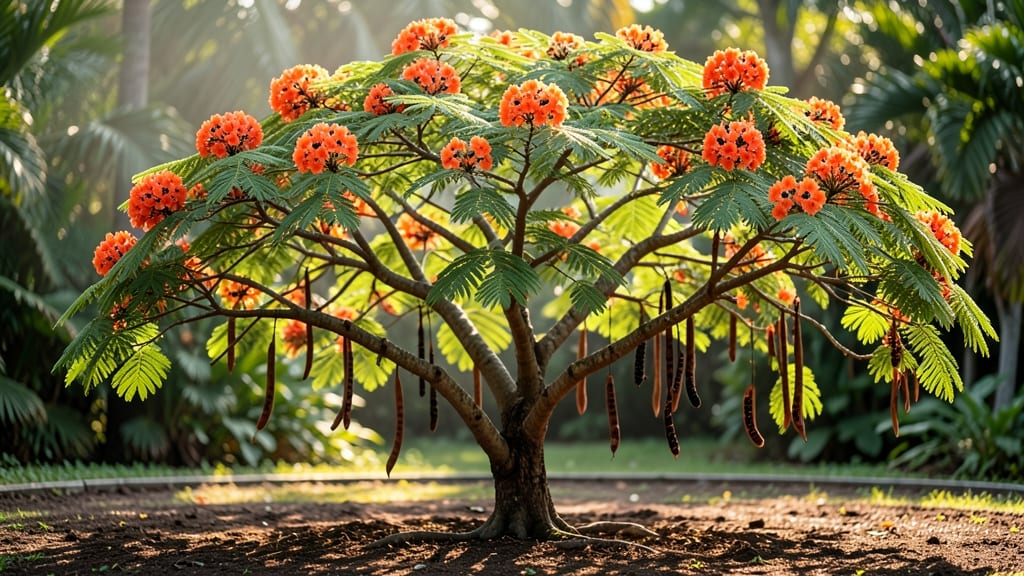
Handling Poinciana tree seed pods starts with a simple twist-free test that saves you time and waste. 🌿 These iconic golden pods look stunning in your yard but contain seeds that need careful handling—especially if you want to grow new trees without frustration.
The key is knowing exactly when to harvest and how to check if those seeds are still viable, because dried-out pods won’t give you healthy starts.
Harvest pods when they turn a deep brown and begin cracking open naturally—usually in late fall or winter. Store them in a dry, cool place until they fully release the seeds, which can take a few weeks.
The twist-free viability test comes next: gently press the seed between your fingers—if it gives slightly and feels firm, it’s good to go; if it crumbles, it’s past its prime.
Once you’ve got viable seeds, soak them overnight to break dormancy, then plant them in a well-draining mix of sand and peat moss. Keep the soil lightly moist and warm (around 70°F) until sprouts appear in 2-4 weeks.
Young seedlings need bright, indirect light at first, then gradually move them to full sun as they grow stronger.
Transplanting outdoors works best after the last frost, when soil temperatures stay above 60°F consistently. Watch for pests like scale insects on new growth and keep the soil moist but not soggy—Poincianas hate "wet feet."
With patience, you’ll have a thriving tree that rewards you with those famous golden blooms in just a few years.
📚 In This Guide
- What you need
- Instructions
- Tips and common mistakes
- Wrapping up and next steps
What you need
- ● Mature Poinciana seed pods: 10–20 pods (collect from fallen or pruned trees; ensure they’re dry and slightly cracked open).
- ● Paper towels or coffee filters: 2–3 sheets (for moisture control and seed separation).
- ● Small plastic or glass containers: 2–3 (with lids, 4–6 oz each, for stratification).
- ● Water: Distilled or tap water (room temperature).
- ● Fine-mesh strainer or sieve: 1 (to rinse seeds gently).
- ● Plastic wrap or zip-top bags: 2–3 (for humidity chambers).
- ● Notebook and pen: To track pod conditions and seed viability over time.
- ● Pruning shears or gloves: For safe pod collection (especially if thorns are present!).
- ○ Magnifying glass: To inspect seed details (optional but helpful for beginners).
- ● Spray bottle: For misting seeds if humidity needs adjustment.
- ● Ruler or measuring tape: To document pod dimensions (for research or curiosity!).
- ○ Small fan or dehumidifier: (Optional) If your climate is overly humid.
How to test Poinciana tree seed pods for viability without twisting
Skip the guesswork—this simple method reveals which pods hold life-ready seeds.
🌱 Step 1: Collect and Prepare the Pods
Harvest dry, brown pods that have naturally fallen or are ready to open. Avoid green or moist pods—they won’t yield viable seeds. Place them on a clean, dry surface like a tarp or tray to prevent debris from contaminating your test.
Gently tap each pod with a wooden spoon or your knuckles to loosen the seeds inside. Listen for a hollow thud—this means the pod is empty. If it sounds solid, it likely still contains seeds. Discard any pods that crumble or release dust instead of seeds.
💧 Step 2: Float Test for Viable Seeds
Fill a large bowl with room-temperature water (about 70°F). Place the seeds in the water and let them sit for 10-15 minutes. Viable seeds will sink to the bottom—they’re dense and full of stored energy. Non-viable seeds will float.
Use a spoon to skim off any floating seeds. These won’t germinate, so compost them instead of wasting time planting. For the sunk seeds, drain the water and pat them dry with a paper towel. This step ensures they won’t rot before you plant them.
☀️ Step 3: Inspect for Damage or Pests
Examine each viable seed under bright light. Look for smooth, unblemished surfaces—any cracks, holes, or discoloration means the seed is compromised. Healthy seeds should be plump, firm, and uniform in color, usually a deep brown or black.
If you spot signs of pests (like tiny holes or webbing), discard those seeds immediately. Even one infested seed can ruin a batch. Store the good seeds in a paper envelope in a cool, dry place until you’re ready to plant—this keeps them viable for up to 6 months.
⏰ Step 4: Prep for Germination (Optional but Recommended)
For faster germination, soak the viable seeds in lukewarm water for 24 hours before planting. This softens the outer shell and mimics natural rain conditions. After soaking, drain well and let them air-dry for 1-2 hours to prevent mold.
Plant the seeds ½ inch deep in well-draining soil, keeping it lightly moist but never soggy. Place the pot in a warm, bright spot (ideally 75-85°F) and cover it with plastic wrap to retain humidity. Check daily for sprouts—you’ll see tiny green tips in 7-14 days.
Tips & tricks for perfect Poinciana tree seed viability testing
Real talk: Testing these pods without twisting takes patience, but these small tweaks make all the difference.
Timing Secret: In Step 2, those 10-15 minutes in water are non-negotiable—any less and seeds won't fully separate, any more and they start absorbing too much moisture. Set a timer! If you're testing a large batch, divide them into smaller bowls so you can monitor each group individually.
Lighting Matters: For Step 3, natural daylight is your best friend. Hold seeds up to a window or use a bright LED lamp to spot tiny imperfections. I've caught pest damage I missed under regular kitchen lighting—don't skip this step! A magnifying glass helps if you're working with a big collection.
Storage Wisdom: When storing your viable seeds in paper envelopes, write the collection date on them. Seeds lose viability over time, and knowing when you collected them helps track freshness. Store them in a sealed container with a silica gel packet to absorb any moisture that might sneak in.
Optional Prep: If you're impatient like me, you can skip the optional 24-hour soak and plant immediately—but germination will take longer. The soak mimics natural rain conditions, which is why it's recommended. Just remember to drain thoroughly after soaking to prevent mold during those 1-2 hours of air-drying.
Pro Tips for Poinciana Tree Seed Pods
- Real talk: Testing these pods without twisting takes patience, but these small tweaks make all the difference.
- Timing Secret: In Step 2, those 10-15 minutes in water are non-negotiable—any less and seeds won't fully separate, an...
- Lighting Matters: For Step 3, natural daylight is your best friend. Hold seeds up to a window or use a bright LED lam...
Frequently asked questions
Got questions about poinciana tree seed pods? You’re not alone! Here are some common queries—and their answers—to help you navigate collection, testing, and disposal like a pro.
When is the best time to collect poinciana seed pods?
Collect pods when they’re fully dry and brown (usually late fall to early winter) but before they split open on their own. If they’re still green or moist, they’ll mold or attract pests. Aim for crisp, papery pods—like crinkling autumn leaves!
How do I test if the pods are viable without twisting?
Fill a jar with water, drop in 10–20 pods, and wait 24 hours. Viable seeds sink (ready for planting), while hollow or non-viable ones float. Pro tip: Use a mesh bag to corral pods for easier retrieval!
What should I do with non-viable pods?
Compost them if pest-free, or dispose in yard waste. Avoid burning—they release toxic fumes when combusted. For large quantities, check local green waste programs for bulk options. Bonus: Dry pods make great winter bird feeders!
Why do my pods smell bad or attract bugs?
Overripe or rotting pods emit odors and draw pests. Fix it: Collect pods immediately if they’re damp or splitting. Store them in a dry, ventilated container (like a mesh bag) to prevent mold. Prevention tip: Harvest early!
Are poinciana seed pods safe for composting?
Yes! Dry, intact pods break down in compost piles (add to the browns bin). Avoid composting if they’re moldy or insect-infested. Eco hack: Shred pods first to speed decomposition!
Can I plant poinciana seeds from these pods?
After your water test, plant viable seeds in well-draining soil, ½ inch deep, and keep moist. Germination takes 2–4 weeks in warm climates (Zone 9–11). Growth tip: Start indoors in spring for better survival rates!
Wrapping up and next steps
Discovering the twist-free viability test for Poinciana tree seed pods opens up a world of zero-waste gardening and sustainable practices! These pods aren’t just charming additions to your yard—they’re a gateway to nurturing new life while keeping your space clutter-free. 🌱
Ready to put your newfound knowledge into action? Grab those pods, test their viability, and start planting—your garden (and the planet) will thank you! 🌿
Want to go further? Share your success stories or explore other eco-friendly gardening tips—your journey is just beginning!