
Planting
Sowing grass seed in fall is the secret weapon for a lawn that outgrows weeds and survives drought. 🌱 The cooler temperatures and consistent rainfall create perfect conditions for grass seed to root deep before winter—something spring planting just can't match. My lawn went from patchy to thick in one season after switching to fall sowing, and the difference in spring growth is night-and-day.
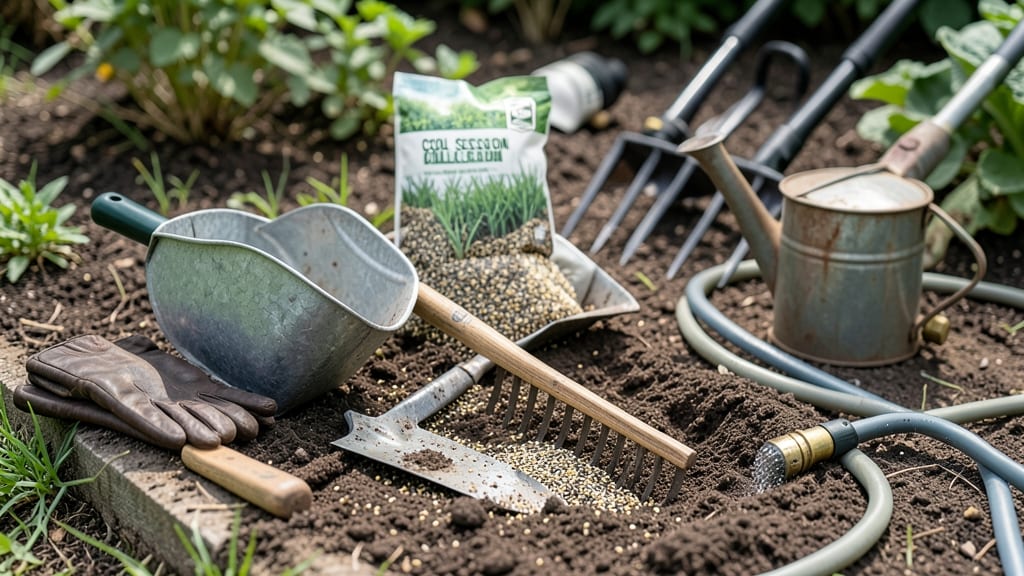
The timing is everything: aim for 4-6 weeks before your first frost, when soil stays warm enough for germination but nights cool down. You'll need a basic toolkit—a rake, a spreader, and the right seed blend for your climate.
Cool-season grasses like Kentucky bluegrass and fescue thrive in fall, while warm-season types like Bermuda need spring planting. The key is matching your seed to your zone.
By spring, you'll see a lawn so dense weeds can't get a foothold, with roots reaching 6-12 inches deep—far deeper than spring-planted grass.
The secret lies in keeping the soil moist (not soggy) for the first 3-4 weeks and avoiding heavy foot traffic until the new growth reaches 3-4 inches tall. Even my shady spots transformed into lush green carpets.
This method works for new lawns, overseeding, or repairing bare patches—no matter your yard size. The upfront effort pays off in a lawn that stays green through droughts and outcompetes weeds naturally. Ready to give it a try?
📚 In This Guide
- What you need
- Instructions
- Tips and common mistakes
- Wrapping up and next steps
What you need
- ● Grass seed: Choose a high-quality, cool-season blend (e.g., Kentucky bluegrass, fescue, or ryegrass). Aim for 5–10 lbs per 1,000 sq ft, depending on your lawn’s current condition and seed type.
- ● Lawn rake: A bendable-tine rake (for seeding) or a rigid rake (for leveling). Size: 18–24 inches for medium lawns.
- ● Broadcast spreader: A handheld or tow-behind model for even distribution. Calibrate it to match your seed’s coverage rate!
- ○ Soil test kit: Optional but highly recommended—test pH and nutrient levels. Aim for a pH of 6.0–7.0 for optimal germination.
- ● Compost or starter fertilizer: A low-nitrogen (5–10%) blend (e.g., 10-10-10) or a seed starter fertilizer with phosphorus (P) to encourage root growth. Apply 1–2 lbs per 1,000 sq ft.
- ● Straw or peat moss: 1–2 bales per 1,000 sq ft to protect seeds from birds and retain moisture.
- ● Water source: A hose with a gentle spray nozzle or a soaker hose for consistent moisture.
- ● Pre-emergent herbicide: Apply 4–6 weeks before seeding to prevent weeds (choose a pre-seed label like pendimethalin).
- ● Soil conditioner: Gypsum or lime if your soil test reveals compacted or acidic soil.
- ● Lawn roller: A lightweight (30–50 lbs) roller to press seed into soil (skip if using straw).
- ● Weed barrier fabric: For bare spots or high-weed areas—lay down landscape fabric before seeding.
- ● Seed germination blanket: A biodegradable erosion control mat for slopes or high-traffic areas.
Step-by-Step guide to sowing grass seed in fall
Fall planting gives grass roots time to establish before winter’s chill—here’s how to do it right.
🌱 Step 1: Prepare the Soil for Optimal Seed Contact
Start by mowing your lawn as short as possible—about 1 inch high—to create an even surface for seed distribution. Remove all debris, leaves, and thatch using a rake or dethatching tool, especially in high-traffic areas where compaction occurs. The goal is to expose bare soil so seeds can make direct contact, which is critical for germination.
Test your soil’s pH using a kit (ideal range is 6.0-7.0 for most cool-season grasses). If it’s too acidic or alkaline, amend with lime or sulfur as needed. Work these amendments into the top 2-3 inches of soil using a garden fork, then level the surface with a rake. Smooth out any low spots so water can distribute evenly—uneven terrain leads to patchy growth.
💧 Step 2: Choose the Right Seed and Spread Precisely
Select a high-quality, cool-season grass seed blend suited to your climate (e.g., tall fescue for durability or ryegrass for fast establishment). For a 4,000 sq ft lawn, use about 8-10 lbs of seed—check the package for exact rates. Spread half the seed in one direction (north to south), then the remaining half perpendicular (east to west) to ensure even coverage. Walk slowly to avoid overlapping or missing spots.
Lightly rake the area again to press seeds into the soil without burying them. Seeds need sunlight to germinate, so only cover them with a ¼ inch layer of fine soil or compost. Water gently afterward to settle everything in place. If birds are a problem, cover the area with a lightweight straw mulch (apply ¼ inch thick) until germination begins.
☀️ Step 3: Water Consistently for Germination and Root Growth
Keep the soil moist but never soggy for the first 2-3 weeks—this is when seeds germinate and roots establish. Water lightly 2-3 times daily (early morning, late afternoon, and evening) to maintain even moisture. Use a sprinkler with a fine mist setting or a hose with a gentle spray nozzle. You’ll know you’re doing it right when the top 1 inch of soil stays damp but not waterlogged.
Once seedlings reach 2-3 inches tall (about 3-4 weeks after sowing), reduce watering to 1 inch per week, including rainfall. Let the top layer dry slightly between waterings to encourage deep root development. Avoid heavy foot traffic until the grass is 3-4 inches tall—this prevents seedlings from uprooting and gives them time to strengthen.
✂️ Step 4: Maintain and Protect New Growth
Wait until new grass reaches 3-4 inches before your first mow—this ensures roots are deep enough to support growth. Set your mower to 3 inches high and never remove more than ⅓ of the blade height at a time. Sharp mower blades are a must; dull blades tear grass and invite disease. Leave clippings on the lawn to return nutrients to the soil naturally.
Apply a light layer of compost or organic mulch (about ¼ inch) after the first mow to retain moisture and suppress weeds. Avoid fertilizing until spring—new grass doesn’t need extra nutrients yet. If weeds appear, hand-pull them early rather than using herbicides, which can harm tender seedlings. By late fall, your lawn should look lush and uniform, ready to handle winter’s challenges.
Tips & tricks for perfect fall grass seed planting
Fall planting sets the stage for a resilient lawn—here's how to avoid common pitfalls and maximize success.
Soil Preparation Secret: When testing soil pH in Step 1, aim for the 6.0-7.0 range, but don't panic if you're slightly outside it. Most cool-season grasses tolerate 5.5-7.5—just focus on improving by 0.5 points per season. I've seen dramatic improvements even with minor adjustments. The key is working amendments into the top 2-3 inches thoroughly; use a garden fork to break up compacted layers without disturbing deeper soil structure.
Seed Distribution Technique: In Step 2, the cross-direction spreading method might seem tedious, but it's worth it for even coverage. For larger lawns, consider using a broadcast spreader—just calibrate it carefully to avoid overlaps. The ¼ inch soil coverage is critical: too deep and seeds won't get enough light, too shallow and they'll dry out. A simple trick is to sprinkle a thin layer of compost over seeds first, then cover with soil—this adds nutrients while maintaining proper coverage.
Watering Precision: The 2-3 weeks of frequent watering in Step 3 can be challenging, especially with unpredictable fall weather. I recommend setting a timer for your sprinkler—most systems need 10-15 minutes per session to achieve that 1 inch of moisture. Check soil dampness by pressing your finger 1 inch deep; it should feel like a damp sponge, not mud. Morning watering is ideal as it prevents fungal growth from evening moisture.
Maintenance Timing: That first mow at 3-4 inches in Step 4 might seem counterintuitive if you're used to shorter cuts, but taller grass shades out weeds naturally. Set your mower to 3 inches permanently—this height encourages deep root growth and reduces water needs. I've noticed lawns mowed at this height handle drought better and recover faster from foot traffic.
Pro Tips for Sowing Grass Seed In Fall
- Fall planting sets the stage for a resilient lawn—here's how to avoid common pitfalls and maximize success.
- Soil Preparation Secret: When testing soil pH in Step 1, aim for the 6.0-7.0 range, but don't panic if you're slightly outside it.
- Seed Distribution Technique: In Step 2, the cross-direction spreading method might seem tedious, but it's worth it for even coverage.
Frequently asked questions
Got questions about timing, prep, or troubleshooting? You’re not alone—here are answers to the most common concerns about sowing grass seed in fall to get that lush, resilient lawn.
When is the exact best time to sow grass seed in fall?
The ideal window is 4-6 weeks before your first hard frost—typically late August through October, depending on your climate zone. This gives seeds time to germinate, establish roots, and harden off before winter. Check your USDA Plant Hardiness Zone for precision.
Can I still plant grass seed if frost is already here?
Nope! Seeds need warm soil (at least 50°F/10°C) to germinate. If frost has arrived, wait until spring. However, you can overseed in early spring (March–April) for a second chance at a thick lawn.
Do I need to rent a seed spreader, or can I just broadcast by hand?
Both work, but a spreader ensures even coverage (critical for dense growth). If hand-broadcasting, walk in a crisscross pattern and use a calibrated hand spreader for consistency. For large areas, renting a spreader (or borrowing one) is worth the effort!
What if weeds pop up before my grass grows? How do I stop them?
Weeds are tough competitors! After sowing, apply a pre-emergent herbicide labeled for new seed (like corn gluten meal) to block weed seeds. Once grass reaches 3–4 inches tall, switch to a selective post-emergent herbicide to target weeds without harming your lawn.
How often should I water new grass seed in fall?
Keep soil consistently moist (not soggy!) with light, frequent watering:
- Water twice daily (morning/evening) for the first 2 weeks.
- Gradually reduce to 1–1.5 inches per week once sprouts appear.
- Use a sprinkler with a rain gauge to track moisture.
What if fall rains wash away my seed?
Use a starter fertilizer with a binding agent (like hydro-mulch) to anchor seeds. After planting, gently rake lightly to press seeds into soil, then cover with a thin layer of straw (not hay—it contains weed seeds!). This creates a protective barrier.
Wrapping up and next steps
Fall is the perfect time to sow grass seed for a lush, resilient lawn—just follow the right steps!
By preparing the soil, choosing the best seed blend, and timing your planting before frost, you’ll outpace weeds and create a thick, vibrant turf. Don’t wait—your future lawn is just a few weeks of prep away!
Ready to take the next step? Grab your tools, mark your calendar, and start prepping your soil this weekend! Your dream lawn is closer than you think. 🌱