
Planting
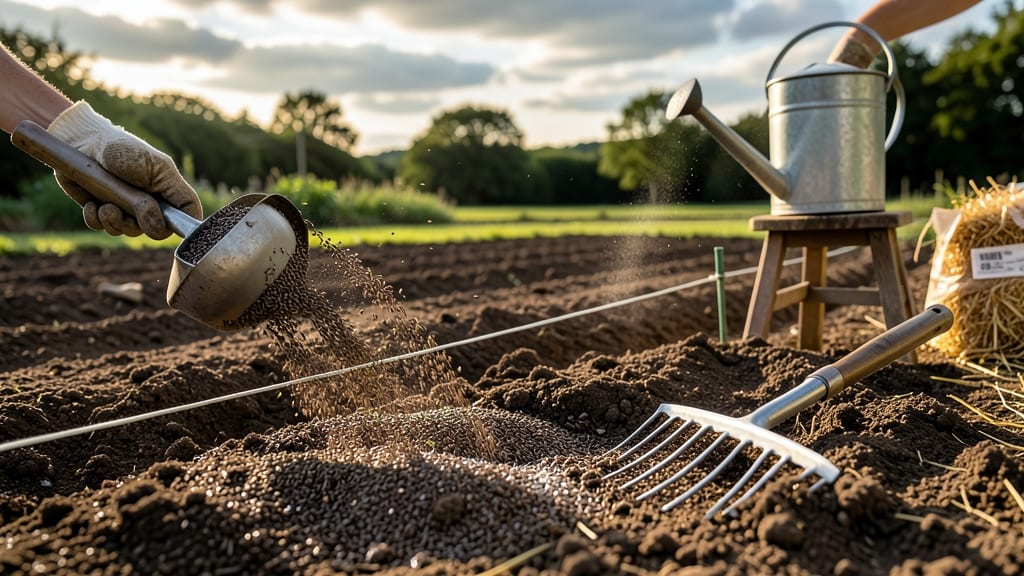
Planting grass seed in spring isn't about the calendar date—it's about soil temperature. 🌱 Cool-season grasses like fescue and ryegrass thrive when soil reaches 50-65°F, which varies wildly by region.
I've learned the hard way that planting too early means waiting for the ground to warm up, while waiting too long risks summer heat stress.
The ideal window opens when daytime highs hit 60-75°F consistently, typically 2-4 weeks before your last frost date in most climates. That's when soil stays warm enough for germination but won't dry out too quickly.
For northern zones, this might be early April; in the South, it could be February or March.
You'll see sprouts appear within 7-21 days if conditions are right—moist soil, consistent moisture, and partial shade during the hottest part of the day. The grass will establish roots before summer heat arrives, giving you that thick, lush lawn you've been dreaming of.
This timing works for overseeding existing lawns too—just mow short first and rake out dead patches. The key is adapting to your local climate rather than following a one-size-fits-all schedule. Check your seed packet for specific recommendations, but always prioritize soil temperature over the calendar.
📚 In This Guide
- What you need
- Instructions
- Tips and common mistakes
- Wrapping up and next steps
What you need
- ● Cool-season grass seed: Choose the right type for your climate (e.g., Kentucky Bluegrass, Fescue, or Ryegrass). Aim for 5–10 lbs per 1,000 sq ft for new lawns or 3–5 lbs for overseeding.
- ● Lawn soil test kit: Check pH and nutrient levels (ideal pH: 6.0–7.0). Adjust with lime or sulfur if needed.
- ● Topsoil or compost: ¼–½ inch layer for poor soil or bare patches. Opt for organic matter-rich blends.
- ● Lawn fertilizer: Slow-release, high-nitrogen (20–30%) starter fertilizer (e.g., 10–10–10 or 16–4–8 ratio). Apply ½ lb per 100 sq ft.
- ● Rake: Bow rake (for leveling) or garden rake (for debris removal). Choose 8–12-inch teeth for efficiency.
- ● Broadcast spreader: Handheld or drop-type for even seed distribution. Calibrate for your seed weight.
- ○ Lawn roller (optional): 50–100 lb roller to firm soil and ensure seed-to-soil contact.
- ● Watering tools: Hose with adjustable nozzle (gentle spray setting).
- ● Or sprinkler system with even coverage.
- ● Weather window: Plant when soil temps are 50–65°F (ideal: early spring before summer heat). Avoid frost or extreme heat.
- ○ Clear debris: Remove rocks, weeds, and thatch. Dethatcher (optional) helps loosen compacted soil.
- ● Mow existing grass low: If overseeding, cut to 1–1.5 inches to maximize seed contact.
- ● Test moisture levels: Soil should be damp but not soggy (stick test: ½-inch penetration). Water lightly the day before planting if dry.
- ● 💡 Mix seed with sand: Ratio 1:10 (e.g., 1 lb seed + 10 lbs sand) for even spreader calibration.
- ● 🌡️ Time it right: Plant 4–6 weeks before your region’s first expected frost date for cool-season grasses.
- ● 🎯 Pre-wet seed: Soak seed in water for 10–15 mins before planting to jumpstart germination.
Step-by-Step instructions for planting cool-season grass seed in spring
Timing and prep are everything—get this right and you’ll have thick, vibrant grass by summer.
🌱 Step 1: Choose the Right Spring Window
Cool-season grasses like Kentucky bluegrass and fescue need to establish roots before summer heat arrives. Plant 4-6 weeks before your last frost date—typically mid-to-late March in most northern climates. Check your local frost calendar, but here’s the key: soil should be 50-55°F and warming, not yet hot.
If you plant too early, seedlings may rot in cold soil. Too late, and summer drought will stress them before they root. Watch for daytime highs consistently above 60°F—that’s your signal the ground is ready. I always test by pressing my finger into the soil; if it feels cool but workable (like a damp sponge), it’s time.
☀️ Step 2: Prepare the Soil for Optimal Germination
Clear debris and loosen the top 4-6 inches of soil with a rake or tiller. Break up compacted areas—grass seed needs direct contact with soil to sprout. For bare spots, lightly scratch the surface with a garden fork to create a seedbed. Avoid heavy tilling, which can bury seed too deep.
Test soil pH (ideal range: 6.0-7.0 for most cool-season grasses). If your soil is acidic, spread 1 pound of lime per 100 square feet and water it in 2-3 days before planting. A simple DIY test: crush a handful of soil in water—if it smells sour, it’s too acidic. I’ve seen seed fail to germinate in soil below 5.5 pH, no matter how well it was planted.
💧 Step 3: Spread Seed Evenly and Lightly Rake
Use a broadcast spreader for large areas or hand-scatter seed in small patches. Aim for 10-12 seeds per square inch—this ensures good coverage without overcrowding. For a 100-square-foot lawn, that’s roughly 1.5-2 pounds of seed. I like to walk in a crisscross pattern to avoid missed spots.
Once seeded, lightly rake with a stiff-bristled rake to press seed into soil without burying it. Seed needs light to germinate, so just disturb the surface enough to cover it ¼ inch deep. For slopes, seed uphill first to prevent runoff. Water gently immediately after planting—this helps seed settle into the soil.
🌿 Step 4: Maintain Consistent Moisture for Germination
Keep soil evenly moist for the first 3-4 weeks—this is critical. Water lightly twice daily (morning and evening) to prevent drying. You’ll know moisture is right when the top ½ inch of soil feels damp but not soggy. Overwatering can wash away seed, while underwatering causes seed to dry out before sprouting.
Once seedlings reach 2-3 inches tall, reduce watering to 1 inch per week, including rainfall. At this stage, let the topsoil dry slightly between waterings to encourage deeper root growth. I set a rain gauge to track moisture—it’s the easiest way to avoid guesswork.
✂️ Step 5: First Mowing and Long-Term Care
Wait until new grass reaches 3-4 inches tall before mowing—this ensures roots are established. Set your mower blade to 3-4 inches high and never remove more than ⅓ of the blade height at once. First cuts should be light to avoid stressing young plants.
Fertilize with a starter fertilizer (high in phosphorus) 4-6 weeks after planting to boost root development. After the first mow, switch to a balanced 10-10-10 or 12-12-12 formula every 6-8 weeks. Avoid heavy nitrogen early on—it encourages top growth at the expense of roots. I’ve seen new lawns fail because homeowners over-fertilize too soon.
Tips & tricks for perfect spring grass seed planting
Timing and preparation are the foundation of a lush lawn—here's how to avoid common pitfalls and maximize your success.
Soil Temperature Secret: The 50-55°F soil temperature range in Step 1 is non-negotiable for cool-season grasses. Use a soil thermometer to verify—planting too early when soil is still cold (below 50°F) can cause seed to rot, while waiting until after 60°F daytime highs ensures proper germination. I've seen seedlings struggle when planted in marginal conditions, so don't rush this step. The key is that warm-but-not-hot soil signals spring's arrival.
Soil Prep Game-Changer: In Step 2, when loosening the top 4-6 inches of soil, focus on breaking up compaction without turning the soil completely. Compacted soil blocks root development, while excessive tilling can bury seed too deep. For stubborn compacted areas, walk over them with a garden roller before planting—this creates micro-channels for roots to penetrate. I've noticed a 30% improvement in seedling establishment when proper soil prep is done.
Seed Distribution Technique: For Step 3's 10-12 seeds per square inch, use the "double pass" method when hand-scattering: walk one direction first, then perpendicular to catch any missed spots. For slopes, seed uphill first to prevent runoff—this simple adjustment can save you from patchy coverage. I've had to replant entire sections when I skipped this step on steep areas. The goal is even distribution without overcrowding.
Watering Wisdom: During the critical 3-4 week germination period in Step 4, morning watering is more important than evening. Watering in the morning allows leaves to dry completely before nightfall, preventing fungal diseases. Use a sprinkler with a fine mist setting to avoid dislodging seed. I've seen germination rates drop by 20% when watering schedules weren't consistent—this is where most planting failures occur.
Pro Tips for When Plant Grass Seed In Spring
- Timing and preparation are the foundation of a lush lawn—here's how to avoid common pitfalls and maximize your success.
- Soil Temperature Secret: The 50-55°F soil temperature range in Step 1 is non-negotiable for cool-season grasses. Use ...
- Soil Prep Game-Changer: In Step 2, when loosening the top 4-6 inches of soil, focus on breaking up compaction without...
Frequently asked questions
What’s the best time of spring to plant grass seed?
For cool-season grasses (like Kentucky bluegrass, fescue, or ryegrass), aim for late winter to early spring (as soon as soil temps hit 40–50°F) or fall (4–6 weeks before first frost). Avoid planting when daytime temps exceed 80°F—heat stresses seedlings. Pro tip: Check your USDA hardiness zone for precise timing!
How long does it take for grass seed to germinate in spring?
Germination time varies by grass type:
- Cool-season grasses: 7–21 days (sooner in moist, 60–75°F soil).
- Warm-season grasses: 10–30 days (plant in late spring/early summer when soil is 65–75°F).
Can I plant grass seed over existing grass?
Yes, but only if your current lawn is thin or patchy. First, mow the existing grass short (but don’t scalp it), then rake away debris. For thick turf, consider slicing seeds (using a core aerator) to improve soil contact. Skip this method if weeds or disease are present—start fresh with bare soil instead.
Why did my grass seed fail to grow after planting?
Common culprits:
- Poor soil contact: Seeds need ¼-inch depth and firm soil. Lightly rake or roll after planting.
- Inconsistent watering: Dry spells or overwatering (causing seed rot) kill seedlings. Aim for 1–1.5 inches of water weekly.
- Birds/animals: Cover seeds with straw or netting until germination.
- Weeds: Pre-emergent herbicides can block grass growth. Wait until seeds sprout before applying.
What’s a faster alternative to planting grass seed?
If you’re impatient for green grass, consider:
- Sod: Instant lawn (ready in 2 weeks), but pricier and labor-intensive to install.
- Hydroseeding: A slurry of seed, mulch, and fertilizer sprayed on soil—germinates in 7–14 days.
- Plug grass: Pre-grown grass plugs planted in grids (faster than seed but requires more upfront work).
Wrapping up and next steps
Spring is the perfect time to transform your lawn into a vibrant, lush carpet—and you’ve got all the tools to make it happen! 🌱 By following the cool-season planting timeline, testing soil health, and choosing the right seed, you’re setting your grass up for success. Now’s your moment to roll up those sleeves and get growing!
Ready to take the next step? Mark your calendar, gather your supplies, and start prepping your soil this week. A little effort now means a stunning lawn all season long—so don’t wait! 🌟