
Lawn
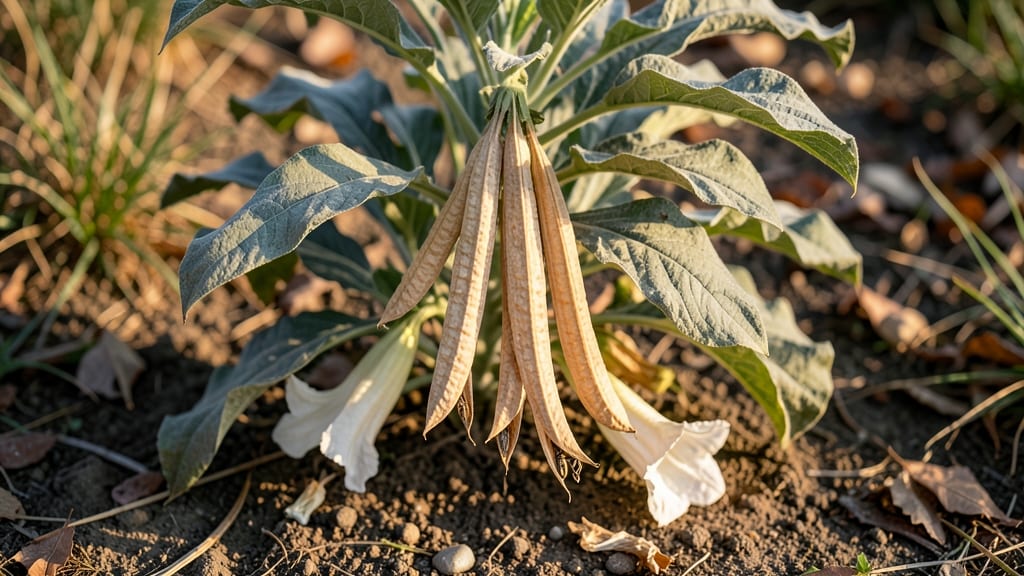
Moonflower datura seed pods are nature’s time capsules—wait until they turn deep brown and papery before harvesting, or you’ll miss the chance to grow next year’s dreamy white blooms. 🌙 I’ve learned the hard way that green pods mean wasted time, but ripe ones?
They’re packed with the potential for easy-to-grow, fast-spreading moonflowers that’ll light up your garden for seasons to come. The secret lies in patience: let pods dry on the plant until they split open naturally, then collect the seeds before they scatter.
Store them in a cool, dry place—viability lasts 2-3 years—but don’t rush germination. These seeds need a cold snap to break dormancy, mimicking winter’s natural trigger. What you’ll end up with is a foolproof way to propagate moonflowers without buying new plants.
Just scatter seeds in spring, and within 6-8 weeks, you’ll have towering vines ready to unfurl their signature night-blooming trumpets. Fair warning: all parts of datura are toxic, so wear gloves when handling pods and keep them away from pets/kids.
But with the right care, you’ll have a self-sustaining moonflower patch that’s impossible to resist.
📚 In This Guide
- What you need
- Instructions
- Tips and common mistakes
- Wrapping up and next steps
What you need
- ● Moonflower datura seed pods: 10–20 mature pods (harvest when they’re fully brown and dry but before they split open).
- ● Sharp pruning shears or scissors: For clean cuts to avoid damaging the pods.
- ● Brown paper bags or breathable mesh bags: 2–3 medium-sized bags (paper bags allow airflow; mesh prevents pests).
- ● Newspaper or cardboard: Enough to line a shallow tray or box (for even drying).
- ● Rubber bands or twine: To secure bag openings loosely.
- ○ Small fan (optional): A gentle breeze speeds up drying time.
- ● Labeling tags & marker: To mark pods by year/plant variety (trust us, it’s easy to forget!).
- ● Fine-mesh sieve or colander: For separating seeds from dried pods later.
- ● Air-tight glass jars or seed envelopes: For long-term storage (once fully dried).
- ○ Desiccant packets (optional): Toss 1–2 in storage jars to prevent moisture buildup.
- ● Gloves (recommended): Datura contains tropicamide—wear them to avoid skin irritation!
How to harvest and dry moonflower datura seed pods
Here’s my foolproof method for saving datura seeds—timing matters, so let’s get it right.
🌿 Step 1: Identify and Harvest Mature Seed Pods
Moonflower datura pods turn from green to a papery brown when ready—wait until they’re completely dry and starting to split open. The best time to harvest is on a dry, sunny morning when the pods are fully mature but haven’t yet released seeds. Use clean, sharp scissors or pruners to snip the pods from the stem, leaving a small portion attached to avoid damaging the plant.
Here’s the thing—if you harvest too early, the seeds won’t be viable. Too late, and they’ll scatter everywhere. I like to check pods weekly in late summer when they begin turning brown. Place them in a paper bag immediately after harvesting to prevent seed loss while they dry further.
🪴 Step 2: Dry Pods in a Controlled Environment
Spread the harvested pods in a single layer on a clean, dry surface—like a mesh screen or paper towel—where they can receive indirect sunlight and good airflow. A well-ventilated room with 60-70°F temperatures works perfectly. Avoid direct sunlight, which can overheat and crack the pods prematurely.
Turn the pods every 1-2 days to ensure even drying. You’ll know they’re ready when they’re completely dry, brittle, and make a hollow sound when shaken. This usually takes 2-3 weeks, depending on humidity levels. If your home feels damp, speed up drying by placing a small fan nearby to circulate air.
✂️ Step 3: Extract and Store Seeds Properly
Once fully dry, gently squeeze each pod over a clean sheet of paper or into a small bowl. The pods should open easily, releasing the large, dark seeds inside. Be patient—some pods may require a light tap with a spoon to coax the seeds out. Discard any empty or shriveled pods.
Store the seeds in a paper envelope or small glass jar in a cool, dry place. Label it with the date and variety (if applicable). Datura seeds remain viable for 2-3 years when stored properly, but they germinate best when planted fresh. Real talk: if you forget to label, just plant them all—they’re hard to kill!
💧 Step 4: Prep for Next Year’s Planting
Before spring planting, soak the seeds in lukewarm water for 12-24 hours to soften the tough outer coating. This step dramatically improves germination rates. After soaking, plant them ¼ inch deep in well-draining soil and keep them moist until sprouts appear. Moonflowers thrive in full sun and tolerate poor soil, but they reward you with stunning night-blooming flowers.
Here’s where it gets fun—watch for the first true leaves to emerge within 10-14 days. Once seedlings reach 2-3 inches tall, transplant them outdoors after the last frost. Just don’t let them get crowded; datura plants need space to grow into their iconic, moon-like blooms.
Tips & tricks for perfect moonflower datura seed pod preservation
Mastering these details transforms good harvests into foolproof seed-saving success.
Harvest Timing: The 1-2 week window between pods turning papery brown and splitting open is critical. I've learned the hard way—harvesting too early means immature seeds, while waiting too long means losing them to wind. Check pods every 3-4 days during late summer's dry mornings for that perfect moment when they're ready but not releasing seeds. A gentle squeeze test works: if they resist but feel slightly hollow, they're ready.
Environmental Control: That 60-70°F temperature range in Step 2 isn't just arbitrary—it's the Goldilocks zone for even drying. Too hot and pods crack; too cool and mold risks appear. I've had success using a small greenhouse tray on my bathroom windowsill (indirect light only!) where humidity stays moderate. For extra insurance, place a small dish of silica gel packets nearby to absorb any excess moisture during those 2-3 weeks.
Seed Extraction Technique: When pods are fully brittle, I find using a clean wooden spoon works better than fingers for tapping them open. The gentle pressure prevents crushing seeds while the spoon's flat surface catches any that might bounce. Always work over a dark-colored paper or tray—those dark seeds blend into light surfaces and disappear instantly. Pro tip: wear gloves if you're sensitive to datura's mild irritants.
Storage Wisdom: The 2-3 year viability claim holds true only if you maintain consistent conditions. I've had seeds last 5 years in my cool basement (around 55°F), but germination rates drop after year 3. For best results, store seeds in a sealed jar with a desiccant packet. Labeling isn't just helpful—it's essential. I write the harvest date, location, and any notes about plant characteristics directly on the jar with a permanent marker.
Pro Tips for Moonflower Datura Seed Pods
- Mastering these details transforms good harvests into foolproof seed-saving success.
- Harvest Timing: The 1-2 week window between pods turning papery brown and splitting open is critical.
- Environmental Control: That 60-70°F temperature range in Step 2 isn't just arbitrary—it's the Goldilocks zone for even drying.
Frequently asked questions
about moonflower datura seed pods—because growing these stunning night-bloomers from scratch can raise a few questions! Here are answers to the most common ones to help you dry, store, and replant with confidence.How long does it take for moonflower datura seed pods to dry completely?
Moonflower datura seed pods typically take 2 to 4 weeks to fully dry indoors, depending on your climate and drying conditions. Place them in a well-ventilated area (like a mesh bag or paper bag with holes) and check weekly. They’re ready when the pods turn paper-thin and rattle when shaken.
Can I speed up the drying process?
Yes! To accelerate drying, use a food dehydrator (set to 95°F/35°C for 24–48 hours) or a warm, dry spot with a fan for gentle airflow. Avoid direct sunlight or heat sources—this can crack the pods or damage the seeds. Patience is key, though; rushing risks mold or poor germination.
What’s the best way to store dried moonflower datura seed pods?
Store pods in a cool, dark, and dry place (like a sealed glass jar or airtight container with silica gel packets) to prevent moisture and pests. Label them with the year and do not refrigerate. Properly stored pods can remain viable for 2–3 years, though germination rates may drop over time.
Why aren’t my moonflower datura seeds germinating?
Common reasons include old seeds (datura seeds lose viability quickly), improper stratification (they need a warm-cold-warm cycle), or planting too deep (seeds need light). Try soaking seeds in lukewarm water for 24 hours before planting or chilling them in the fridge for 2 weeks to mimic winter. Patience—some seeds take 10–14 days to sprout!
Are there alternatives to drying moonflower datura seed pods?
If drying isn’t an option, you can harvest seeds directly from fresh pods (once they turn brown and split open) or buy fresh seeds online. However, dried pods are ideal for long-term storage and ensure higher germination rates. For quick results, some gardeners plant fresh pods in fall—they’ll often sprout naturally in spring!
Wrapping up and next steps
Drying moonflower datura seed pods is a simple yet rewarding way to ensure next year’s garden bursts with those enchanting, fragrant blooms! 🌙 With the right tools—like breathable bags, patience, and a watchful eye for moisture—you’ll have healthy seeds ready to plant. Now’s the time to act: harvest those pods before they split, and you’ll be well on your way to a magical garden revival.
Ready to dive in? Grab your supplies, follow the steps, and share your success with fellow gardening enthusiasts—your future moonflowers will thank you!