
Lawn
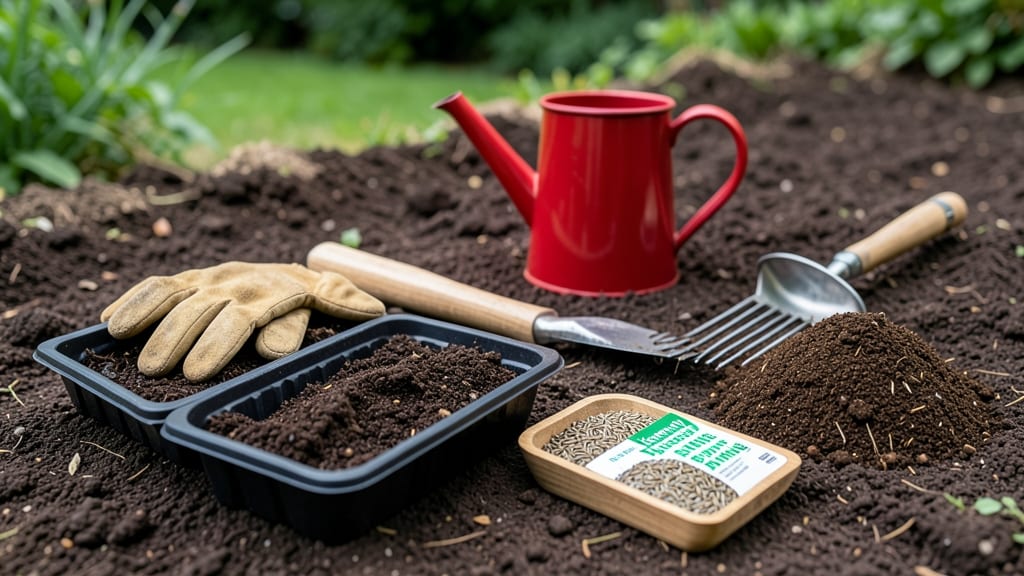
September is the perfect time to plant grass seed in most of the country—before frost sets in but after summer’s brutal heat. 🌱 I’ve seen lawns go from patchy to lush just by timing it right, and cool-season grasses like fescue and rye thrive when planted now.
The key? Soil that’s still warm enough to germinate seeds but cool enough to prevent stress.
You’ll need a few simple tools: a rake, a spreader, and some quality seed for your climate zone. Test your soil first—aim for a pH between 6.0 and 7.0—and loosen the top 2-3 inches to help roots establish.
Overseed existing lawns or start fresh in bare spots, then keep the soil consistently moist for the first 2-3 weeks.
The payoff? A thicker, greener lawn by spring, with fewer weeds and less watering needed once established. Cool-season grasses grow slowly but steadily in fall, so you avoid the summer heat stress that kills spring plantings.
Just watch for early frosts—if your first freeze is coming soon, hold off until spring.
Works best in USDA Zones 3-8, where cool nights and mild days create ideal conditions. For warmer climates, stick to spring or late winter. Either way, September gives you a head start on a lawn that’ll outshine your neighbors’ all year.
📚 In This Guide
- What you need
- Instructions
- Tips and common mistakes
- Wrapping up and next steps
What you need
- ● Grass seed: Choose a cool-season variety (e.g., Kentucky bluegrass, fescue, or ryegrass). Aim for 4–8 lbs per 1,000 sq ft, depending on your lawn’s condition.
- ● Lawn soil tester kit: Check pH levels (ideal range: 6.0–7.0). Adjust with lime or sulfur if needed.
- ● Rake: A bow rake (for leveling) and a garden rake (for seed-to-soil contact).
- ○ Broadcast spreader: For even seed distribution. Optional: Hand-spreader if your lawn is small.
- ● Lawn fertilizer: A slow-release, high-nitrogen blend (e.g., 24-0-6). Apply ½ lb of nitrogen per 1,000 sq ft.
- ● Straw or peat moss: ¼ inch layer to protect seeds from birds and retain moisture.
- ● Water source + hose/nozzle: A fine mist setting for gentle watering.
- ● Soil conditioner: Compost or gypsum to improve drainage.
- ● Pre-emergent herbicide: If weeds are a problem, apply 4–6 weeks before seeding.
- ● Lawn roller: Lightly compact soil after seeding for better seed-to-soil contact.
- ● Weatherproof cover: Temporary netting to deter birds or heavy rain.
Step-by-step instructions for planting grass seed in September
September's mild temps and consistent moisture make it perfect for cool-season grass—here's how to get thick, lush growth before winter sets in.
🌱 Step 1: Prepare the Soil for Optimal Seed Contact
Start by mowing your lawn as short as possible—about ½ inch—to maximize sunlight exposure for new seedlings. Remove any existing thatch by raking or using a dethatching tool until the soil looks loose and crumbly. This ensures seeds make direct contact with the soil rather than sitting on top where they'll dry out.
Test your soil's pH using a simple kit (aim for 6.0-7.0). If it's too acidic, spread 1 pound of lime per 100 square feet and water it in. For compacted soil, aerate with a core aerator to create ¼-inch deep holes every 3-4 inches. You'll know you've done enough when the soil feels soft and fluffy like cake batter.
💧 Step 2: Spread Seed Evenly and Lightly Cover
Use a broadcast spreader to distribute ½ pound of seed per 100 square feet (check your seed packet for exact rates). Walk in a crisscross pattern to avoid streaks. For high-traffic areas, increase to ⅔ pound per 100 square feet—thicker seed coverage means faster germination and better wear resistance.
After spreading, lightly rake the area with a stiff-bristled rake, covering seeds with just ¼ inch of soil. This prevents them from drying out while allowing enough light to penetrate. Avoid pressing down too hard—you want seeds snug but not buried deeper than their width. A gentle sweep with the rake will show seeds nestled just below the surface.
☀️ Step 3: Water Deeply and Maintain Moisture for Germination
Water immediately after planting with ¼ inch of water to settle the seeds into the soil. Use a sprinkler with fine mist settings to avoid displacing seeds. For the next 2-3 weeks, keep the soil consistently moist—like a wrung-out sponge—by watering twice daily (morning and evening). You'll know you're doing it right when the top inch of soil stays damp but never soggy.
Once seedlings reach 2-3 inches tall, reduce watering to once daily in the morning. Avoid overhead watering after germination to prevent fungal diseases. If rain provides ½ inch or more, skip watering that day to let nature handle it. Watch for yellowing patches—this usually means either overwatering or poor seed-to-soil contact.
✂️ Step 4: Protect New Growth and Maintain Through Fall
Wait until new grass reaches 3-4 inches tall before mowing for the first time. Set your mower blade to 3 inches and remove only the top third of the grass blade. This prevents scalping and helps roots establish deeper. Mow when the grass is dry to avoid clumping, and always sharpen mower blades for clean cuts.
Apply a light nitrogen fertilizer (like 20-0-0) when grass is 4-6 inches tall to encourage root growth. Use ½ pound per 100 square feet and water immediately after application. Avoid heavy foot traffic until the lawn is fully established—typically 6-8 weeks after planting. You'll know it's ready when you can walk on it without leaving visible prints.
⏰ Step 5: Winterize for Spring Success
Once temperatures drop below 50°F at night, reduce mowing frequency to every 2-3 weeks or when grass grows 3-4 inches tall. Leave clippings on the lawn—they act as natural mulch, returning nutrients to the soil. In late fall, apply a winterizer fertilizer (high in potassium and phosphorus) to strengthen roots for spring.
If frost is forecasted, give your new lawn one final deep watering to 1 inch before the ground freezes. This hydrates roots through winter dormancy. In early spring, remove any thatch or debris that accumulated over winter, then apply a light nitrogen boost when temperatures consistently stay above 50°F. Your September planting should green up beautifully by early spring.
Tips & tricks for planting grass seed in September
September's perfect balance of warmth and moisture is your secret weapon for lawn success—here's how to make the most of it.
Soil Prep Secret: After mowing to ½ inch, don't just rake—use a stiff-bristled rake to create tiny furrows in the soil. This gives seeds tiny trenches to nestle into, improving contact by up to 30%. Think of it like making tiny seed beds rather than just scattering them on flat ground. For compacted areas, rent a core aerator for just a few hours—it creates those perfect ¼-inch holes every 3-4 inches that let roots establish immediately.
Seed Application Strategy: When using the broadcast spreader, walk in a grid pattern (not just back and forth) to avoid thick patches. For high-traffic areas, increase to ⅔ pound per 100 square feet—but don't overdo it. Too much seed creates competition between plants, leading to weak growth. A good rule is to spread seeds as thinly as possible while still achieving full coverage. The ¼-inch soil covering after raking is crucial: press too hard and you'll suffocate seeds; too light and they'll dry out.
Watering Wisdom: That ¼-inch initial watering after planting is just the beginning. For the first 2-3 weeks, water twice daily—but here's the trick: use a rain gauge or empty tuna can to measure. Fill it to ¼ inch per watering (about 10 minutes with most sprinklers). Morning watering should be light to wake up the lawn, while evening watering should be deeper to hydrate roots. If you see yellowing patches after germination, it's usually either overwatering (roots can't breathe) or poor seed-to-soil contact (seeds didn't get that critical ¼-inch coverage).
Fall Maintenance: When applying that light nitrogen fertilizer at 4-6 inches tall, water it in immediately—but here's what nobody tells you: use a sprinkler with a fine mist setting, not a strong stream. This prevents fertilizer from running off while ensuring even distribution. For the winterizer in late fall, spread it when temperatures are above 50°F at night (typically mid-to-late October). This gives roots time to absorb nutrients before dormancy sets in. The final deep watering before frost should be 1 inch—think of it as giving your lawn a drink to last through winter.
Pro Tips for Planting Grass Seed In September
- September's perfect balance of warmth and moisture is your secret weapon for lawn success—here's how to make the most of it.
- Soil Prep Secret: After mowing to ½ inch, don't just rake—use a stiff-bristled rake to create tiny furrows in the soil.
- Seed Application Strategy: When using the broadcast spreader, walk in a grid pattern (not just back and forth) to avoid thick patches.
Frequently asked questions
Got questions about planting grass seed in September? You’re not alone! Here are some of the most common concerns—and straightforward answers—to help you get started with confidence.
Is September really the best time to plant grass seed?
September is ideal for cool-season grasses (like Kentucky bluegrass, fescue, or ryegrass) because soil temps are warm but dropping, encouraging strong root growth before winter. You’ll avoid summer heat stress and beat frost by a few weeks—giving your lawn a head start in spring. Pro tip: Aim for early September in most regions for optimal results.
How long does it take for grass seed to germinate in fall?
Germination time varies by grass type, but most cool-season seeds sprout within 7–21 days in ideal conditions (moist soil, 60–75°F temps). Ryegrass is the fastest (5–10 days), while fine fescue may take up to 3 weeks. Keep soil consistently moist during this period—water lightly daily (or every other day) to avoid washing seeds away.
Do I need to water my new grass seed every day?
Yes, but not necessarily every single day. Water lightly (about ¼ inch) 2–3 times daily to keep the top 1–2 inches of soil moist—like a damp sponge. Once seedlings reach 3–4 inches tall, reduce to 1 inch per week (including rain). Overwatering can suffocate seeds, while underwatering stunts growth. Pro tip: Water in the early morning to reduce evaporation and fungal risks.
What if frost hits before my grass grows?
Don’t panic! Cool-season grasses are frost-tolerant, but young seedlings may slow down. If frost is forecasted, cover the area lightly with straw or a breathable frost blanket to protect tender sprouts. Once frost passes, resume watering and fertilizing (lightly) to revive growth. Most grasses bounce back once temps rise above freezing—just give them time!
Can I overseed an existing lawn in September?
Yes! September is perfect for overseeding to fill thin or bare spots. Mow your lawn short (1–1.5 inches), rake to loosen soil, spread seed, and top-dress with compost or straw. This method works especially well for fine fescue or ryegrass. Just avoid overseeding if your lawn has active weeds—tackle those first with pre-emergent herbicide (applied in late summer).
What if my grass doesn’t grow evenly?
Uneven growth often stems from uneven seed distribution, soil compaction, or moisture issues. Double-check your seeding rate (follow package instructions!) and use a broadcast spreader for consistency. If spots stay bare, re-seed those areas and keep them extra moist. Pro tip: Test your soil’s pH—cool-season grasses thrive in 6.0–7.0 range. Adjust with lime or sulfur if needed.
Wrapping up and next steps
September is your golden opportunity to grow a lush, resilient lawn—cool-season grasses thrive when planted now!
By following the right steps—prepping soil, choosing quality seed, and keeping moisture consistent—you’ll set the stage for a vibrant yard next spring. Don’t wait for frost! Grab your gloves, roll up your sleeves, and give your lawn the care it deserves.
Ready to take the next step? Start with a small section to test your technique, then expand as you gain confidence. Before you know it, you’ll be the envy of the neighborhood with that perfectly manicured green carpet! 🌱