
Planting
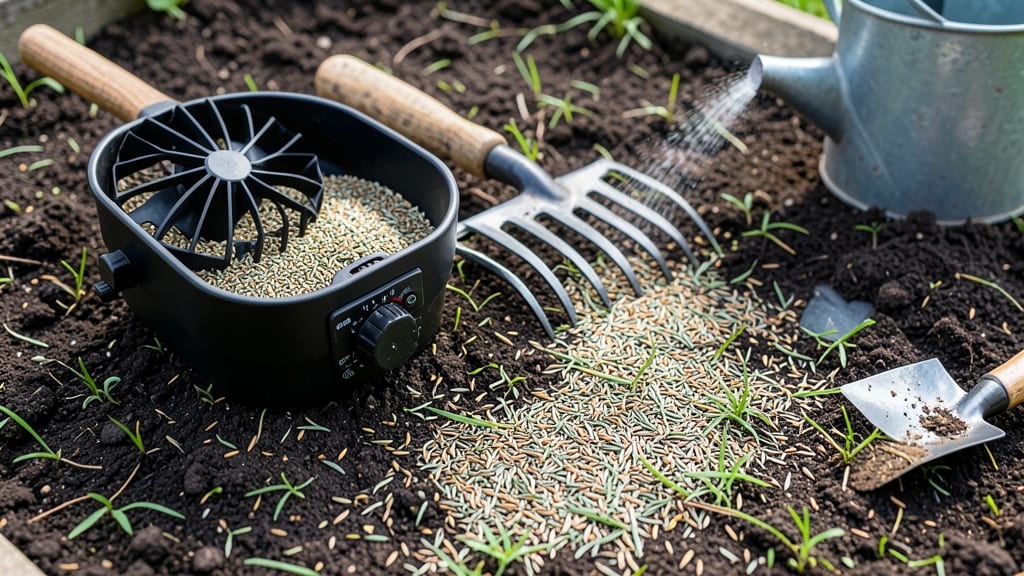
Autumn lawn seed sowing gives grass roots a head start before winter—the secret to a lush spring lawn that outcompetes weeds from day one.
I learned this the hard way after my spring planting got smothered by crabgrass, but now my lawn establishes stronger in cooler weather when seeds germinate steadily without drying out. The key?
Timing it right—4-6 weeks before your first frost—when soil stays warm enough for growth but weeds slow down.
You’ll need a basic toolkit: a rake for soil prep, a broadcast spreader (or even a simple hand spreader), a light layer of straw mulch, and a watering can or hose with a gentle nozzle.
Cool-season grasses like tall fescue and Kentucky bluegrass thrive in autumn’s mild temperatures, while warm-season grasses like Bermuda go dormant—so choose your seed mix carefully. The goal is thick roots before frost, not fast top growth.
After spreading seed, keep the soil consistently moist (not soggy) for the first 2-3 weeks—the most critical period for germination. A light morning watering prevents fungal issues, and a slow-release starter fertilizer gives young roots the nutrients they crave.
By late fall, you’ll see grass blades thicken, and those roots will stay active until spring, giving you a head start on weeds and a stronger lawn by summer.
This method works best in USDA Zones 3-8, where autumn temperatures stay above 50°F but drop below freezing by winter. In warmer climates, winter dormancy may pause growth, so adjust your timeline.
The payoff? A lawn that’s weed-resistant, drought-tolerant, and ready to shine when spring arrives—without the spring planting rush.
📚 In This Guide
- What you need
- Instructions
- Tips and common mistakes
- Wrapping up and next steps
What you need
- ● Lawn seed: Choose a cool-season grass mix (e.g., Kentucky bluegrass, fescue, or ryegrass) suited to your climate. Quantity: 5–8 lbs per 1,000 sq ft (check seed bag for exact coverage rates).
- ● Rake: A bow rake (for clearing debris) and a garden rake (for leveling soil and seeding).
- ○ Soil tester kit: Optional but helpful to check pH (ideal: 6.0–7.0) and nutrients before planting.
- ● Compost or organic matter: 1–2 inches of well-aged compost or peat moss to improve soil texture and fertility.
- ● Fertilizer: A slow-release, balanced fertilizer (e.g., 10-10-10 or 16-4-8) with 0.5 lbs of nitrogen per 1,000 sq ft.
- ● Watering supplies: A hose with a sprinkler head or watering can (for gentle, even moisture).
- ● Water: At least 1–1.5 inches per week (including rainfall) until germination.
- ● Straw or erosion control blanket: Lightweight straw mulch (3–4 lbs per 1,000 sq ft) or biodegradable blankets to protect seeds from wind and birds.
- ● Lawn roller: Lightweight (100–150 lbs) to press seed into soil gently.
- ● Pre-emergent herbicide: Apply after seeding to prevent weeds (choose a product labeled for new seed).
- ● Soil conditioner: Gypsum (if your soil is clay-heavy) or lime (if pH is below 6.0).
- ● Seed spreader: Handheld or drop-type for even distribution (especially for large areas).
- ● Garden gloves: To keep hands clean and protect against prickly debris.
Step-by-Step instructions for sowing lawn seed in autumn
Here's how to establish a resilient lawn by leveraging autumn's ideal conditions for seed germination and root development.
Prepare the Soil for Optimal Seed Contact
Begin by mowing the existing grass as short as possible—no taller than 1 inch—to create an even surface for seed distribution. Remove all debris, rocks, and thatch using a stiff rake, ensuring the soil is completely exposed. This step is critical because seeds need direct contact with moist, fertile soil to germinate efficiently.
Test the soil pH using a home kit; cool-season grasses thrive in a range of 6.0 to 7.0. If your soil is acidic or alkaline, apply lime or sulfur according to package instructions and water thoroughly. Let the soil settle for 3-5 days before seeding to allow amendments to integrate fully. The goal is to create a loose, crumbly texture that mimics the ideal seedbed conditions of a well-tended nursery.
Choose the Right Seed and Spread Evenly
Select a cool-season grass blend suited to your climate zone—options like tall fescue, Kentucky bluegrass, or perennial ryegrass are excellent choices for autumn planting. For a 4,000-square-foot lawn, use approximately 8-10 pounds of seed, spreading it evenly with a broadcast spreader set to the recommended setting. Walk in a crisscross pattern to ensure uniform coverage, avoiding overlaps that can create thick patches.
Lightly rake the area again after seeding to press seeds into the soil without burying them deeper than ¼ inch. This depth ensures adequate moisture contact while preventing smothering. If you're overseeding an existing lawn, use a slit seeder to create small furrows where seeds can nestle directly into the soil, improving germination rates significantly.
Apply Starter Fertilizer and Water Consistently
Spread a low-nitrogen starter fertilizer (typically 10-20-10 ratio) evenly over the seeded area, following the package rate for your grass type. This provides essential nutrients without overwhelming the young seedlings. Gently rake the fertilizer into the top ¼ inch of soil to prevent it from washing away during watering.
Water immediately after fertilizing to activate the nutrients and settle the seed into the soil. For the first 2 weeks, keep the soil consistently moist—about 1 inch of water per week—by watering lightly twice daily (morning and evening). Avoid heavy watering, which can dislodge seeds or cause erosion. You’ll know you’re doing it right when the top ½ inch of soil remains damp but not soggy—this encourages strong root development before winter.
Protect New Growth and Monitor Progress
Once germination begins—typically 7-14 days after sowing—reduce watering frequency to once daily but increase depth to ½ inch per session. This encourages deeper root growth, preparing seedlings for winter dormancy. Avoid walking on the lawn until the grass reaches 3 inches tall, as this can damage tender roots and seedlings.
Watch for signs of disease or pests, such as discolored patches or chewed blades, which are more common in newly seeded lawns. If issues arise, treat them promptly with organic fungicides or insecticides labeled for cool-season grasses. By late autumn, the lawn should establish a dense network of roots, setting the stage for a lush, resilient spring growth spurt.
Transition to Winter Care and Spring Maintenance
As temperatures drop below 40°F at night, reduce watering to once every 10-14 days unless there’s a prolonged dry spell. This allows the grass to harden off naturally. Apply a winterizer fertilizer in late fall to provide slow-release nutrients that will fuel early spring growth without promoting excessive top growth before dormancy.
In early spring, resume mowing when the grass reaches 3-4 inches tall, and adjust your watering schedule to 1 inch per week during the growing season. The thick roots you’ve cultivated will give your lawn a competitive edge, crowding out weeds and reducing the need for frequent reseeding in future years.
Tips & tricks for perfect autumn lawn establishment
Autumn planting gives your lawn a head start—here’s how to maximize those cool-season advantages without common pitfalls.
Soil Preparation Secret: When clearing debris in Step 1, don’t just remove what’s visible. Use a stiff rake to loosen compacted soil beneath—this mimics the aeration of professional turf farms. For clay-heavy soils, mix in 1-2 inches of compost during this step to improve drainage and nutrient retention. The goal is to create a seedbed so fine that seeds would "float" if placed on water.
Seed Distribution Technique: In Step 2, if you don’t have a broadcast spreader, walk in straight lines first (north-south), then perpendicular (east-west) to eliminate gaps. For large areas, divide the lawn into quadrants and mark boundaries with stakes—this prevents overlapping that creates thick patches. Remember: 8-10 pounds covers 4,000 sq ft, but double-check your spreader’s calibration by weighing a small sample.
Watering Precision: The 1 inch per week guideline in Step 3 requires morning watering between 6-10am to prevent fungal growth. Use a rain gauge or tuna can to measure—most sprinklers overapply. For the first 2 weeks, check soil moisture by pressing your finger ½ inch deep; it should feel like a damp sponge, not mud. Overwatering suffocates seeds just as much as underwatering.
Winter Transition Strategy: When nights drop below 40°F in Step 5, switch to deep watering every 10-14 days—this encourages roots to seek moisture below the frost line. Apply winterizer fertilizer only after the first hard frost, as warm fall temperatures can trigger premature top growth that weakens before winter.
Pro Tips for Sowing Lawn Seed In Autumn
- Autumn planting gives your lawn a head start—here’s how to maximize those cool-season advantages without common pitfalls.
- Soil Preparation Secret: When clearing debris in Step 1, don’t just remove what’s visible.
- Seed Distribution Technique: In Step 2, if you don’t have a broadcast spreader, walk in straight lines first (north-south), then perpendicular (east-west) to eliminate gaps.
Frequently asked questions
Got questions about sowing lawn seed in autumn?
You’re not alone! Here are answers to the most common concerns—so you can tackle your project with confidence.
What’s the best time to sow lawn seed in autumn?
For cool-season grasses, aim for late summer to early fall—typically 4–6 weeks before your first frost. This gives seeds time to germinate and establish roots before winter. If you miss this window, wait until spring, but autumn is ideal for deeper root growth and fewer weeds.
How long does it take for autumn-sown lawn seed to germinate?
Germination time varies by grass type, but most cool-season seeds sprout within 7–21 days in warm soil (60–75°F). Keep the soil moist and shaded until sprouts appear. If germination takes longer, check moisture levels—consistent hydration is key!
Can I still sow lawn seed if frost is forecasted?
Nope! Seeds need warm soil and mild air temps to germinate. If frost is imminent, delay planting until spring. However, established seedlings can handle light frost—just cover them with a thin layer of straw if a hard freeze hits.
Is autumn seeding cheaper than spring?
Yes! Autumn seeding often costs less because fewer contractors are busy, and seeds are sometimes discounted. Plus, you’ll avoid spring’s competitive pricing and summer’s high maintenance demands. Just factor in potential frost protection costs if needed.
Will autumn seeding attract more pests or weeds?
Actually, autumn is less competitive for weeds than spring! Cool temps slow weed growth, and pests are less active. Still, keep soil moist and use pre-emergent herbicide in early spring to stay ahead. A healthy lawn crowds out weeds naturally.
Can I overseed an existing lawn in autumn?
Overseeding in autumn is a great way to thicken thin patches or transition between grass types. Just mow low, rake the soil lightly, and follow the same seeding steps. Perfect for reviving tired lawns before winter.
Wrapping up and next steps
Autumn is your secret weapon for a lush, resilient lawn—cool-season grasses thrive when sown before frost, giving them time to develop deep roots and outpace weeds.
By following the right steps—preparing the soil, choosing quality seed, and keeping moisture consistent—you’ll set your lawn up for successful growth next spring. 🌱
Now that you’re armed with the know-how, roll up your sleeves and get planting! Start with a small section to test your technique, then expand as you gain confidence. Soon, you’ll be the envy of the neighborhood with a thick, vibrant lawn that’s the talk of the block.